Zhen Jia (Jack) Zhu, Amy Deng, Vincent H Mabasa, Dora Geng, and Jordan PeraltaTo cite: Zhu ZJ, Deng A, Mabasa VH, Geng D, Peralta J. Assessing the benefits of simulation-based learning for emergency preparedness training in the hospital pharmacy dispensary. Can J Hosp Pharm. 2025;78(2):e3576. doi: 10.4212/cjhp.3576
ABSTRACT
Background
Simulation-based learning (SBL) has been used in various professions to fill knowledge gaps and facilitate training in essential skills. The concept of SBL in hospital pharmacy dispensaries is new, and evidence is still emerging. Preparing for operational emergencies in the hospital pharmacy dispensary setting is crucial for maintaining effective and safe provision of essential services.
Objectives
The primary objective was to determine the proportion of staff who thought simulations were effective in preparing them for real-world operational emergencies in the dispensary. A key secondary objective was to report the proportion of staff who would prefer to participate in additional simulations.
Methods
This study involved developing, executing (from September to December 2022), and reflecting on 3 simulations: (1) system downtime, (2) power outage, and (3) major water leak. Participants completed a paper-based survey before and after each simulation to evaluate the perceived benefit of the simulation as a tool for emergency preparedness training in the pharmacy dispensary.
Results
In simulation 1, only 1 of 12 participants felt effectively prepared before the simulation, compared with 10 of 12 participants after. In simulation 2, the proportions were 1 of 10 participants before the simulation and 8 of 10 participants after. In simulation 3, the proportions were 2 of 12 participants before and all 12 participants after. Most participants across all 3 simulations expressed a preference to participate in future simulations.
Conclusions
Most pharmacy staff perceived that simulations in the pharmacy dispensary were beneficial as a tool for operational emergency preparedness training and wanted to participate in future simulations.
Keywords: simulation, dispensary, hospital, benefit
RÉSUMÉ
Contexte
L’apprentissage par simulation (APS) a été utilisé dans diverses professions pour combler des lacunes en matière de connaissances et faciliter l’acquisition de compétences essentielles. Le concept de l’APS dans les dispensaires des pharmacies d’hôpitaux est nouveau, et les données probantes à son sujet continuent de nous parvenir. Se préparer aux urgences opérationnelles dans le cadre des dispensaires des pharmacies d’hôpitaux est crucial pour assurer la prestation efficace et sécurisée des services essentiels.
Objectifs
L’objectif principal consistait à déterminer la part du personnel de la pharmacie qui estimaient que les simulations étaient efficaces pour se préparer aux urgences opérationnelles réelles dans le cadre du dispensaire. Un objectif secondaire clé consistait à rapporter la part du personnel qui aimeraient participer à des simulations supplémentaires.
Méthodologie
Cette étude visait à développer, mettre en œuvre (de septembre à décembre 2022) et à analyser trois simulations : (1) les temps morts du système, (2) une coupure de courant et (3) une importante fuite d’eau. Les participants ont répondu à un questionnaire sur papier avant et après chaque simulation afin d’évaluer les avantages perçus de la simulation en tant qu’outil de formation pour se préparer à l’urgence dans le dispensaire de pharmacie.
Résultats
Dans la simulation 1, seul 1 participant sur 12 se sentait efficacement préparé avant la simulation, contre 10 sur 12 après la simulation. Dans la simulation 2, les proportions étaient de 1 participant sur 10 avant la simulation et de 8 sur 10 après celle-ci. Dans la simulation 3, 2 participants sur 12 se sentaient préparés avant la simulation, contre les 12 participants (la totalité) après. Parmi l’ensemble des personnes ayant participé aux simulations, la majorité ont indiqué qu’ils aimeraient participer à des simulations à l’avenir.
Conclusions
La plupart des membres du personnel de la pharmacie estimaient que les simulations dans le milieu du dispensaire de pharmacie étaient bénéfiques en tant qu’outil de formation pour se préparer aux urgences opérationnelles et désiraient participer à de futures simulations.
Mots-clés: simulation, dispensaire, hôpital, avantage
Simulation-based learning (SBL) has been used in various professions to fill knowledge gaps and facilitate essential skills training.1,2 Simulation is an educational technique that involves replicating real-world scenarios in a controlled and guided environment, with reliance on participant engagement for optimal benefit.1 Simulations should be designed to provoke critical thinking of the situation at hand, yet not be so complicated as to hinder learning.3 The debriefing session that follows completion of the simulation allows learners to reflect on their experience and performance.3 With the help of the facilitators, learners can pinpoint the gaps in their systematic approach to the scenario and the changes that are needed. As a result, participants can apply and integrate this new knowledge into their long-term practice.3
In addition to its benefits, SBL has some limitations. Because simulations are conducted in controlled environments, there are no real consequences for not fully participating in the activity.4 Even though simulations mimic real-life situations, participants may feel a lack of urgency in wanting to resolve the situations presented and therefore may not achieve the intended learning outcomes.4 Additionally, depending on the technology used and staff members involved, there may be concerns about cost, which can be a barrier for implementation.4
Some evidence supports the use of SBL in the settings of pharmacy education, pharmacy residency programs, and clinical pharmacy practice, such as advanced cardiac life support training for pharmacy students and management of rapid medical decompensation for pharmacists.5–9 Although evidence exists for the use of SBL in various aspects of direct patient care in the pharmacy setting, the application of SBL in hospital pharmacy dispensaries is relatively new, and the supporting evidence is still emerging. Operational emergencies, such as system downtimes, power outages, and major water leaks, are rare, yet preparing for such emergencies in the hospital pharmacy dispensary setting is crucial for maintaining effective and safe provision of essential services, as well as for identifying areas of potential future risks. Such training and preparation aim to improve staff efficiency and confidence in following contingency protocols during these emergencies, enhancing patient safety, maintaining continuity of care by minimizing disruption, ensuring adherence to regulatory standards, and mitigating identified potential risks. The purpose of the current study was to assess the perceived benefits of hospital pharmacy dispensary–focused simulations at Burnaby Hospital, in Burnaby, British Columbia, to better prepare staff members for operational emergencies.
This quality improvement study involved developing, executing, and reflecting on 3 pharmacy dispensary–focused operational emergency simulations. The simulations, which took place from September to December 2022, addressed the following emergency situations: system/network downtime, an unplanned power outage in the absence of a back-up generator, and a major flood in the department.
All of the simulations were designed by the investigators and took place in the pharmacy dispensary at Burnaby Hospital. The 3 scenarios were based on the investigators’ belief that they represented pharmacy emergencies encompassing diverse dispensary functions. The investigators were assigned various roles appropriate to each simulation, such as nurses, physicians, intercom announcer, and technical support. A pharmacy leader was chosen from among the participants to help in making any final decisions and to delegate tasks to fellow participants as needed. The simulations provided opportunities for practical experiences, including locating physical and electronic procedure manuals, prompt notification of affected personnel, and documentation, that they could leverage in real-world situations. Therefore, being familiar with the appropriate steps for dealing with these scenarios would have been beneficial to participants.
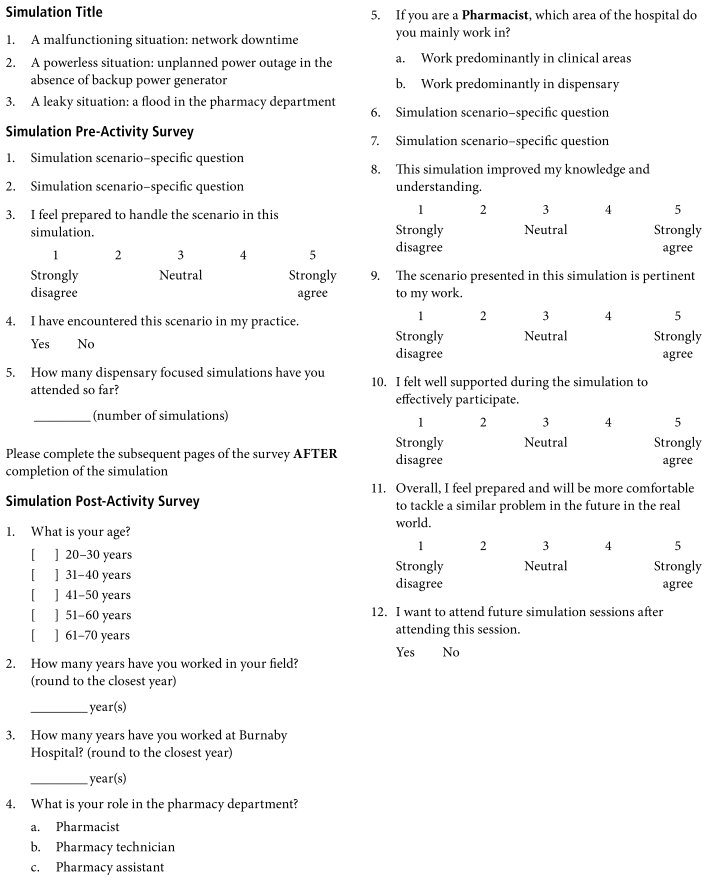
Each simulation was planned to take 1 hour and 15 minutes, subdivided into the following 3 components. The first 15 minutes was to be used to obtain consent and complete the pre-simulation survey. The next 40 minutes was to be used to conduct the simulation. The final 20 minutes was to be used for debriefing and completion of the post-simulation survey. The surveys consisted of quantitative questions to evaluate the benefits of simulations in the pharmacy dispensary, based on a 5-point Likert scale,10 ranging from 1 (strongly disagree) to 5 (strongly agree). Refer to Appendix 1 for the pre- and post-simulation surveys.
The primary objective was to determine the proportion of participants who thought the simulations were effective in preparing them for real-world operational emergencies in the pharmacy dispensary setting. The secondary objectives included determining the proportions of participants who thought the simulations were effective in improving their knowledge and understanding, who thought the simulations were pertinent to their practice, who felt well supported during the simulation to allow effective participation, and who would prefer to participate in additional simulation sessions.
All pharmacy staff members, such as pharmacists, pharmacy technicians, and pharmacy assistants, were eligible to participate. Incomplete surveys and those for which consent was withdrawn were excluded from the data analysis. Descriptive statistical methods, specifically top box analysis and calculation of means (with standard deviations), medians (with interquartile ranges), and proportions, as appropriate, are used to report the primary and secondary outcomes.
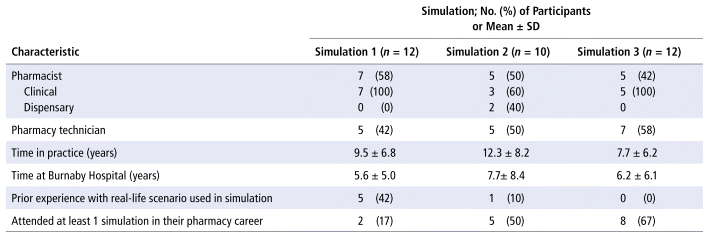
A total of 12, 10, and 12 participants attended simulations 1 (system downtime), 2 (power outage), and 3 (major water leak), respectively (Table 1). About half of the participants in the 3 simulations were pharmacists, and the majority of these were clinical pharmacists. The other participants were pharmacy technicians.
TABLE 1 Participant Characteristics
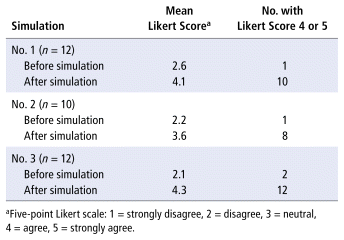
The results were assessed using top box analysis, with the number of participants choosing 4 or 5 (agree or strongly agree) on the Likert scale for various questions deemed to represent the proportion who felt “effectively prepared”. In simulation 1 (system downtime), only 1 of the 12 participants felt effectively prepared before the simulation, whereas 10 of 12 felt effectively prepared after the simulation (Table 2). Similarly, in simulation 2 (power outage), 1 of 10 participants felt effectively prepared before the simulation, and 8 of 10 after. In simulation 3 (major water leak), 2 of 12 participants felt effectively prepared before the simulation, compared with all 12 participants after the simulation.
TABLE 2 Proportion of Participants Who Felt Effectively Prepared for Real-World Operational Emergencies in Pharmacy Dispensary Setting
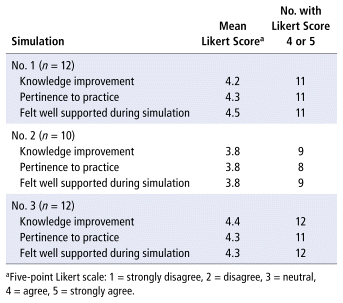
After each simulation, most participants reported that they felt the simulations had improved their knowledge and were pertinent to practice, and that they felt well supported during the simulation. Table 3 presents the complete post-simulation results. Additionally, most participants across all 3 simulations expressed a preference to participate in future simulations. Of the participants in each group from the 3 simulations, at least 9 reported a preference for future simulations.
TABLE 3 Proportion of Participants Who Felt Simulation Improved Knowledge Pertinent to Practice and Felt Well Supported to Effectively Participate
By conducting 3 simulations, we explored the benefits of SBL in the Burnaby Hospital pharmacy dispensary. The simulations improved participants’ perceptions of their anticipated responses to similar real-life operational emergencies. Following the simulations, most participants either agreed or strongly agreed that they felt more prepared for a similar problem in the real world than they did before participating in the simulation. This observation may stem from the effectiveness of SBL in cultivating participants’ ability to develop and execute systematic approaches to handling the scenarios presented. The educational benefit of SBL was in offering an appreciable experience for the learners to recognize knowledge gaps, reflect, and apply new knowledge in real-life situations.3
Similar results have been documented in the literature, demonstrating the efficacy of SBL in preparing clinical pharmacists to serve as important members of the rapid response team, able to promptly deliver care to patients experiencing rapid clinical deterioration in an operational emergency.8 Most participants in the study by Salimnejad and others8 reported a significant increase in self-efficacy, such as knowing where to locate resources during a “code”, offering medication dosing regimens, and communicating effectively with other team members. The basic principles that were achieved through simulations in that earlier study were apparent in our study as well, such as where to find information about procedural steps during urgent situations and how to communicate efficiently within the team in response to operational emergencies.
The simulations also allowed investigators to identify areas of procedural deficiencies. For instance, in simulation 1, participants initially had trouble locating the manual outlining procedural steps during network downtime, because the location of the manual was not apparent. However, they found the manual after a thorough search of the dispensary. Since then, the manual has been moved to a more visible location. Given the objectives of the current study, the deficiencies discovered in the course of the simulations were not analyzed quantitatively or qualitatively, but could be explored in future studies. Overall, the benefits of SBL observed in the hospital pharmacy dispensary setting aligned with the literature concerning SBL in other areas of pharmacy practice.
Most participants reported significant improvements in knowledge, appreciated the simulations’ relevance to practice, and would like to attend future simulation sessions, having seen the value of SBL. The 3 simulations examined in this study helped to enhance participants’ understanding of the protocolized response to these operational emergencies. Given the rarity of these events, retaining procedural knowledge presents a challenge for staff, thus making immersive experiences invaluable for learning and retention.
Our study had several limitations. First, because the study hospital is relatively small, the sample size for each simulation was similarly small, ranging from 10 to 12 participants, whereas a larger hospital would have a larger pool of potential participants. On a given workday at Burnaby Hospital during the study period, about 18 technicians/assistants, 7 clinical pharmacists, and 3 dispensary pharmacists were on site, and the participation rate was about 35% for each simulation. The greater number of scheduled clinical pharmacists than dispensary pharmacists could have resulted in a lack of participation from dispensary pharmacists, who would have been occupied with the dispensary workload during the simulation. A potential solution would be to schedule more dispensary pharmacists on the simulation day or to have clinical pharmacists help with order verification for a set amount of time after the simulation. None of the assistants participated in the simulations, perhaps because they were occupied with specific tasks that had to be completed in a timely manner. Hospital sites with higher staffing levels would have to determine the logistics of effectively facilitating the simulations. Another limitation was the limited number of scenarios explored; other scenarios might not result in benefits similar to those observed here.
To our knowledge, this is the first quality improvement project of its kind exploring the benefits of running simulations in the hospital pharmacy dispensary. Similar benefits have been observed in other studies examining SBL in nondispensary pharmacy settings.5–8 Given the benefits observed in our study, exploration of this form of learning at other hospitals is encouraged.
Even so, several factors would need to be considered when conducting such simulations. First, formulating the simulations requires time, given the need to gather information and revise the simulation scenario. Second, it may be necessary to increase staff numbers on simulation days to allow for optimal participation and maximal benefit. Third, the simulation exercises should be well publicized, through email messages and announcements, to increase awareness and participation. Lastly, the potential impact on workflow of both the dispensary and clinical wards should be considered.
In this study, most pharmacy staff participants perceived that simulations in the hospital pharmacy dispensary setting were beneficial as a tool for operational emergency preparedness training and expressed a preference to participate in future simulations.
1 Lateef F. Simulation-based learning: just like the real thing. J Emerg Trauma Shock. 2010;3(4):348.
Crossref PubMed PMC
2 Issenberg SB, Gordon MS, Gordon DL, Safford RE, Hart IR. Simulation and new learning technologies. Med Teach. 2001;23(1):16–23.
Crossref PubMed
3 Zigmont JJ, Kappus LJ, Sudikoff SN. Theoretical foundations of learning through simulation. Semin Perinatol. 2011;35(2):47–51.
Crossref PubMed
4 Gray WD. Simulated task environments: the role of high-fidelity simulations, scaled worlds, synthetic environments, and laboratory tasks in basic and applied cognitive research. Cogn Sci Q. 2002 [cited 2022 Jun 28];2:205–27. Available from: https://www.researchgate.net/publication/288264303
5 Seybert AL, Smithburger PL, Benedict NL, Kobulinsky LR, Kane-Gill SL, Coons JC. Evidence for simulation in pharmacy education. J Am Coll Clin Pharm. 2019;2(6):686–92.
Crossref
6 Davis LE, Storjohann TD, Spiegel JJ, Beiber KM, Barletta JF. High-fidelity simulation for advanced cardiac life support training. Am J Pharm Educ. 2013;77(3):59.
Crossref PubMed PMC
7 Bartel BJ. Impact of high-fidelity simulation and pharmacist specific didactic lectures in addition to ACLS provider certification on pharmacy resident ACLS performance. J Pharm Pract. 2014;27(4):412–5.
Crossref PubMed
8 Salimnejad S, Schultheis JM, Wolcott MD, Mando-Vandrick JD, Yang S, Lee HJ, et al. Simulation-based training to improve clinical pharmacist self-efficacy in the management of a rapidly decompensating patient. J Pharm Pract. 2023;36(5):1118–24.
Crossref
9 Ruthworth GF, Innes C, Macdonald A, Macdonald C, McAuley L, McDavitt A, et al. Development of innovative simulation teaching for advanced general practice clinical pharmacists. Int J Clin Pharm. 2021;43(4):817–24.
Crossref
10 5-point Likert scale: the key to easily understanding your audience [blog]. Ombea AB; 2023 [cited 2023 Jul 4]. Available from: https://www.ombea.com/resources/articles/5-point-likert-scale-the-key-to-easily-understanding-your-audience
Address correspondence to: Zhen Jia (Jack) Zhu, Surrey Memorial Hospital, 13750 96 Avenue, Surrey BC V3V 1Z2, email: zhenjia.zhu@fraserhealth.ca
Competing interests: None declared.
Funding: None received.
Submitted: February 22, 2024
Accepted: October 24, 2024
Published: April 9, 2025
1 Ruthworth GF, Innes C, Macdonald A, Macdonald C, McAuley L, McDavitt A, et al. Development of innovative simulation teaching for advanced general practice clinical pharmacists. Int J Clin Pharm. 2021; 43(4):817–24.
© 2025 Canadian Society of Healthcare-Systems Pharmacy | Société canadienne de pharmacie dans les réseaux de la santé
Canadian Journal of Hospital Pharmacy, VOLUME 78, NUMBER 2, 2025