Innovations in Pharmacy Practice: Clinical Practice
Health Care Workers’ Perceptions of a Pharmacist-Led Collaborative Practice Agreement for Prescribing Nirmatrelvir/Ritonavir to Eligible Patients with COVID-19
Britney Sansom, Bradley B Adams, Donaldo D Canales, Douglas Doucette, Josée Gagnon, Michael LeBlanc, Julie Levesque, Faith Louis, Timothy MacLaggan, Heather K Naylor, and Bryn Nurse
To cite: Sansom B, Adams BB, Canales DD, Doucette D, Gagnon J, LeBlanc M, et al. Health care workers’ perceptions of a pharmacist-led collaborative practice agreement for prescribing nirmatrelvir/ritonavir to eligible patients with COVID-19. Can J Hosp Pharm. 2025;78(1):e3596. doi: 10.4212/cjhp.3596
INTRODUCTION
The initially limited supply of nirmatrelvir/ritonavir for treatment of COVID-19 created demand for equitable and efficient patient access.1 In New Brunswick, the Pharmacy Assessment Clinic (PAC) was developed to address these challenges, as described in a previous article.1 Here, we describe how PAC staff perceived the implementation and impact of this innovative care model.
PROGRAM DESCRIPTION
Clinic Setup
Both of the New Brunswick regional health authorities (Horizon and Vitalité Health Networks), in collaboration with the New Brunswick College of Pharmacists, designed and implemented the innovative PAC quickly, within 1 week in early 2022.1 A pharmacist-led collaborative practice agreement involving 16 hospital pharmacists and 13 collaborating prescribers was used for the assessment and prescribing of nirmatrelvir/ritonavir.
Collaborating prescribers were available to the pharmacists on a rotating basis for consultation. Reasons for consulting the prescriber, such as identifying strategies to manage drug–drug interactions, were defined in the collaborative practice agreement. Pharmacists’ roles included assessing patients, implementing treatment plans, counselling patients, notifying primary care providers, reporting adverse effects, and documenting information in patients’ records. The PAC pharmacists prescribed nirmatrelvir/ritonavir within their scope of practice, knowledge, and competence for the indications approved by the New Brunswick Department of Health, with patient consent. Follow-up was arranged by the PAC pharmacists, who collaborated with the community pharmacist and/or primary care provider as needed.
Achieving rapid implementation and ensuring service 7 days a week necessitated adjustments in pharmacist staffing. Differences between health authorities in terms of staff availability led to different approaches. For example, some pharmacists were temporarily reassigned from regular duties to work in the PAC. Infectious disease pharmacists completed PAC referrals on top of their regular duties. New staff pharmacists were hired into temporary PAC positions 2 months after PAC implementation, at which point seconded pharmacists could return to their regular duties.
The PAC was a virtual clinic, which allowed remote provision of bilingual care across the province. The PAC pharmacists were initially the sole prescribers of nirmatrelvir/ritonavir; they received 1140 referrals from January 24 to July 22, 2022.
Prescribing Process
PAC referrals were primarily received from 7 nurse pre-screeners, who received information for patients with positive results on polymerase chain reaction testing and testing with the ID Now rapid point-of-care isothermal system (Abbott) and then assessed those patients’ eligibility for nirmatrelvir/ritonavir against detailed provincial criteria. The nurses sent referrals for eligible patients to the shared PAC email address. For each referral, a PAC pharmacist then completed a virtual assessment, which generally included assessment of potential drug interactions, symptoms and their date of onset, and laboratory values (notably renal and hepatic function). PAC pharmacists contacted eligible patients by telephone to seek consent, review the risks and benefits of treatment, and provide patient education. PAC pharmacists prescribed nirmatrelvir/ritonavir at the full or a reduced dose, as appropriate. As supplies of the drug increased over time, prescribing authority was extended to primary care providers and community-based pharmacists.
EVALUATION OF THE PROGRAM
A mixed-methods study was used to evaluate how health care workers involved with the PAC perceived the implementation and impact of this innovative care model. Surveys based on 5-point Likert-type questions were developed and distributed to 4 target groups: the PAC pharmacists (n = 13), the PAC physicians (n = 13), community pharmacists initially eligible to dispense nirmatrelvir/ritonavir (n = 55), and nurse pre-screeners (n = 7). Three PAC pharmacists (B.S., B.B.A., H.K.N.) were members of the research team and therefore excluded from responding to the survey. Respondents were given the opportunity to participate in a virtual interview regarding the PAC, and those interested were contacted by email to arrange the interview. Participants provided informed consent for interviews. The study was approved by Horizon Health Network Research Ethics Board.
Quantitative Results
Of the 23 survey respondents, most (n = 20, 87%) were pharmacists; more specifically, the sample consisted of 10 PAC pharmacists, 10 community pharmacists, 1 PAC physician, and 2 nurse pre-screeners. The mean age of all respondents was 39 (standard deviation 10.35) years, and 12 (52%) were female.
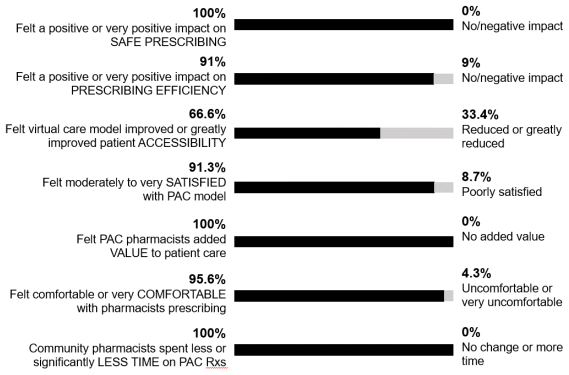
Most respondents felt that the PAC had a positive impact on safe prescribing (n = 23/23, 100%) and prescribing efficiency (n = 20/22, 91%), and that the virtual PAC model improved patients’ access to nirmatrelvir/ritonavir (n = 14/21, 67%) (Figure 1). More than 90% felt satisfied with the PAC model, felt that pharmacists added value to patient care, and were comfortable with PAC pharmacists prescribing nirmatrelvir/ritonavir. Community pharmacists indicated that they spent less time assessing prescriptions when PAC pharmacists were the prescribers. More than 90% of respondents felt that a similar pharmacist-led virtual model of care could potentially be beneficial in other clinical areas, such as oral chemotherapy, oral anticoagulation, heart failure, HIV, diabetes, and deprescribing.
| |
| |
|
FIGURE 1 Impact of Pharmacy Assessment Clinic (PAC). Only valid percentages are reported. For the first 6 questions, n = 21–23 (out of 23 survey participants); the final question was directed only to community pharmacists, and all 10 responded (i.e., n = 10). Rxs = prescriptions. |
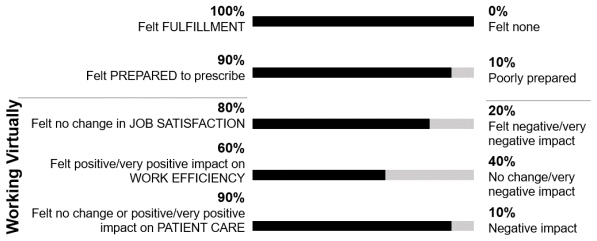
Nearly all (n = 9/10, 90%) of the PAC pharmacists who responded to the survey felt prepared for prescribing nirmatrelvir/ritonavir, with all (100%) reporting a sense of personal fulfillment through this clinical model (Figure 2). Regarding the virtual nature of PAC work, 60% of respondents (n = 6/10) felt there had been a positive impact on work efficiency, and 90% (n = 9/10) reported no negative impact on patient care. More generally, 80% (n = 8/10) felt there had been no change in their level of job satisfaction with virtual PAC work.
| |
| |
|
FIGURE 2 Pharmacists’ perceptions of their work in the Pharmacy Assessment Clinic (PAC). Only valid percentages are reported, with n = 10 for every question (i.e., all 10 PAC pharmacists answered all questions reported in this figure). |
Qualitative Results
Five of the PAC pharmacists agreed to participate in one-on-one interviews, which were conducted virtually. Thematic analysis revealed 3 key themes: facilitators of success, challenges associated with the PAC model, and PAC pharmacists’ experiences.
Facilitators of Success
Communication and collaboration were key contributors to PAC success. Other facilitators included strong and consistent team communication/collaboration, regular virtual team huddles, collaboration between the health authorities involved, and having easy access to PAC physician collaborators. For example, one participant stated, “I really liked the team-based approach that although we were doing … consults on our own, we could still run it by … other pharmacists who are doing the same thing who might have had … different experiences or [run] into that situation before. So, I really enjoyed bouncing ideas off other people, that was great.”
Developing and sharing new clinical tools, guidelines, and standardized documentation tools were viewed as beneficial. Having sufficient information technology support was considered a key reason for the virtual clinic’s success.
Clearly defined patient eligibility criteria and the participation of nurse pre-screeners were believed to optimize appropriate patient access to nirmatrelvir/ritonavir and improve PAC efficiency.
Combining a bilingual virtual service with a collaborative practice agreement was identified as a success facilitator. The PAC was noted to “help with the burden in the health care system of patients not being able to reach their physician” and “freeing up other facilities and workers, so they’re not going somewhere else and clogging up a waiting room and giving everyone COVID.” The virtual model also helped with clinic staffing since clinicians could work remotely from anywhere in the province.
Challenges Associated with the PAC Model
The interview participants identified several challenges associated with such a novel clinic model. The rapid time-line for PAC setup and implementation led to a patchwork information technology infrastructure, meaning that multiple systems were required to complete each referral. Pharmacists’ lack of access to patients’ full electronic medical records also impeded efficiency.
Initial staffing requirements were difficult to predict without knowing PAC referral numbers. Thus, the PAC pharmacists found the initial workload challenging when referral volume exceeded staff capacity, especially for pharmacists who took on PAC referrals in addition to their regular duties. The 5-day window to start nirmatrelvir/ritonavir required a quick turnaround on referrals, which further contributed to workload challenges. Capacity for follow-up care by pharmacists was also limited during times of high referral volume. Once the referral volume became predictable and pharmacists were hired specifically for the PAC, scheduling and workload became less challenging.
The PAC pharmacists reported difficulties gathering patient information and performing assessments over the phone: “[W]hen patients were at home, especially [given that] our population was older, it was hard to judge how well did they understand over the phone. I think that was the hardest thing.” It was additionally noted that some referrals from the nurse pre-screeners did not meet provincial eligibility criteria, which wasted pharmacists’ time and reduced clinic efficiency.
PAC Pharmacists’ Experience
The PAC pharmacists expressed that awareness of one’s own scope of knowledge and competency and utilization of professional judgment are important factors when implementing a collaborative practice agreement.
Despite initial prescribing hesitancy, most pharmacists achieved confidence with prescribing through experience. Several participants even became more comfortable with prescribing nirmatrelvir/ritonavir than they were with adapting other medications.
The PAC pharmacists were satisfied with the clinic’s virtual work, noting it was much better than anticipated. PAC work was viewed as contributing to pride and job satisfaction, with positive and rewarding patient interactions: “… the most rewarding part about it was having those conversations and helping people make decisions about using therapy.” Participants also enjoyed developing new knowledge and expertise.
IMPLICATIONS AND SIGNIFICANCE FOR PRACTICE
Participants in the current study perceived the PAC as having a positive impact on patient care and the pharmacist’s role. Adoption of this clinic model in other clinical areas may improve patients’ access to timely and valuable care and enhance pharmacists’ job satisfaction and scope of practice. Consequently, a new virtual antimicrobial stewardship program, stemming from the success of the PAC, has been implemented in New Brunswick. Other potential areas for future virtual pharmacist-led clinics identified by the researchers, survey respondents, and interview participants included oral chemotherapy, oral anticoagulation, heart failure, HIV, diabetes, deprescribing, and mental health.
This study had several limitations. First, the participants were primarily pharmacists; thus, bias may exist due to underrepresentation of other health care professionals. Second, although the PAC in New Brunswick was successful, the success of a similar model in other health care settings is unknown, and caution is therefore warranted if the PAC model is replicated in other settings. Lastly, one-third of respondents felt that virtual care generally reduced patients’ access to the drug of interest, but specific reasons for this perception were not identified or explained within our qualitative data and could be clarified by future research.
CONCLUSION
We hope that the information gathered in this study, specifically the perceived facilitators of success and the learning from challenges faced, will assist in the future development and promotion of virtual pharmacist-led clinics.
Reference
1 Adams BB, Sansom B, Doiron N, Doucette D, Gagnon J, Landry D, et al. The New Brunswick Pharmacy Assessment Clinic: a novel, pharmacist-led, virtual collaborative practice hub for the assessment and prescribing of nirmatrelvir/ritonavir for patients with COVID-19. Can J Hosp Pharm. 2023;76(4):327–30.
Crossref PubMed PMC
Britney Sansom, BSc(Pharm), is with Horizon Health Network, Sackville, New Brunswick.
Bradley B Adams, BSc(Pharm), PharmD, is with Vitalité Health Network, Moncton, New Brunswick, and the Dalhousie University College of Pharmacy, Halifax, Nova Scotia.
Donaldo D Canales, MA, is with Horizon Health Network – Research Services, Saint John, New Brunswick.
Douglas Doucette, BSc(Pharm), PharmD, FCSHP, is with Horizon Health Network, Moncton, New Brunswick, and the Dalhousie University College of Pharmacy, Halifax, Nova Scotia.
Josée Gagnon, MSc, RD, is with Vitalité Health Network, Moncton, New Brunswick.
Michael LeBlanc, BSc(Chem), BSc(Pharm), PharmD, FCSHP, is with Horizon Health Network, Moncton, New Brunswick, and the Dalhousie University College of Pharmacy, Halifax, Nova Scotia.
Julie Levesque, BSc(Pharm), is with Horizon Health Network, Moncton, New Brunswick.
Faith Louis, BSc(Pharm), MBA, is with Horizon Health Network, Fredericton, New Brunswick.
Timothy MacLaggan, BSc(Pharm), PharmD, ACPR, is with Horizon Health Network, Moncton, New Brunswick.
Heather K Naylor, BSc(Pharm), ACPR, is with Horizon Health Network, Saint John, New Brunswick, and the Dalhousie University College of Pharmacy, Halifax, Nova Scotia.
Bryn Nurse, BSc(Pharm), ACPR, was, at the time of original submission, a candidate for the ACPR designation. She has now completed her residency and is with Horizon Health Network, Moncton, New Brunswick.
Address correspondence to: Britney Sansom, Horizon Health Network, Sackville Memorial Hospital, 8 Main Street, Sackville NB E4L 4A3, email: britney.sansom@horizonnb.ca
(Return to Top)
Competing interests: For activities unrelated to the study reported here, Douglas Doucette has received reimbursement for travel expenses from the Canadian Society of Hospital Pharmacists (now the Canadian Society of Healthcare-Systems Pharmacy) and has served, since 2011, on the Society’s Hospital Pharmacy in Canada Survey Board. No other competing interests were declared.
Funding: None received.
Submitted: February 2, 2024
Accepted: August 20, 2024
Published: February 12, 2025
© 2025 Canadian Society of Healthcare-Systems Pharmacy | Société canadienne de pharmacie dans les réseaux de la santé
Canadian Journal of Hospital Pharmacy, VOLUME 78, NUMBER 1, 2025