Alina R Rashid and Philip KuruvillaTo cite: Rashid AR, Kuruvilla P. Multiple successful desensitizations to brentuximab vedotin in the setting of relapsed peripheral T-cell lymphoma: case report. Can J Hosp Pharm. 2025;78(1):e3614. doi: 10.4212/cjhp.3614
Monoclonal antibodies are used to treat both solid and hematologic malignancies. Brentuximab vedotin (BV) is an antibody–drug conjugate directed against the CD30 antigen. 1 This antigen is present on the cells of multiple tumour types, including lymphomas such as peripheral T-cell lymphoma.2 The anti-CD30 chimeric immunoglobulin G1 (IgG1) antibody on BV is conjugated by a protease-cleavable linker to monomethyl auristatin E (MMAE), an antimicrotubule agent.3 BV binds to the CD30 complex on tumour cells, releasing MMAE into the lysosome, which in turn allows the MMAE to bind to tubulin, disrupting the microtubule structure. This process ultimately results in arrest of the cell cycle and apoptosis of the tumour cells.4
Hypersensitivity reactions to BV have been previously reported.5 These reactions pose a challenge when multiple lines of therapy have already been exhausted and patients have no therapeutic alternatives. However, cases of successful administration of BV with use of rapid desensitization protocols have been reported.6,7 A desensitization protocol allows for a gradual increase in the concentration and rate of administration of the medication, thereby reducing the chance of a hypersensitivity reaction.
A man in his late 40s first presented to the emergency department of our community hospital 4 years prior to the current presentation with a 1-month history of left-sided chest pain and swelling in the left chest.* Imaging showed a large retrosternal mass with extension through the left chest wall and moderate bilateral pleural effusions in conjunction with pericardial effusion. A large-core stereotactic biopsy of the chest wall confirmed the diagnosis of peripheral T-cell lymphoma.
The patient was initially treated with 6 cycles of CHEOP chemotherapy followed by stem cell transplant. He returned after 1 year with a lung mass, which was determined to represent inflammatory changes and organizing scar tissue. A year later (i.e., 2 years after the stem cell transplant), the patient presented again with shortness of breath, weight loss (3.2 kg), and night sweats. Repeat biopsy confirmed anaplastic lymphoma kinase–negative (ALK-negative) large-cell lymphoma, which was strongly CD30 positive.
Treatment with BV monotherapy was initiated at 1.8 mg/kg (which amounted to 130 mg for this patient), to be given on day 1 of each 21-day cycle. Within 1 to 2 days after the first BV treatment, the patient experienced epigastric abdominal pain. The pain was treated with narcotics and pregabalin; however, no obvious cause for the pain could be identified, despite hospitalization and thorough investigation. Mucositis and pancreatitis were ruled out, and the patient was referred to our pain clinic. After a 1-week break, BV monotherapy was restarted. The patient experienced an anaphylactic reaction following the second dose of BV 130 mg. More specifically, within 15 minutes of receiving the dose, he became acutely short of breath, with development of hives. For this reaction, he received diphenhydramine 50 mg IV, montelukast 10 mg PO, and hydrocortisone 100 mg IV in the oncology clinic. Despite initial improvement, the symptoms returned after the patient left the clinic, and he presented to the emergency department later that night, where he received epinephrine 0.5 mg IM. Complete resolution of anaphylactic symptoms was achieved within 24 hours of the BV dose.
For the patient’s third dose of BV, he was admitted to the step-down intensive care unit (ICU) for close monitoring of any hypersensitivity reactions. Pretreatment consisted of high-dose prednisone (100 mg PO daily for 5 days starting 3 days before systemic therapy and to be continued for 2 days after) and montelukast 10 mg PO daily for 3 days starting the day before treatment. Despite these premedications, he experienced wheezing and rash after the third BV dose. He was treated with epinephrine 0.5 mg IM, salbutamol by inhalation, famotidine 20 mg IV, and methylprednisolone 120 mg IV. The respiratory symptoms resolved completely within 24 hours of the BV dose.
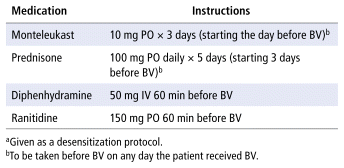
Given that the patient’s disease was responding very well clinically to the BV treatment, as evidenced by symptomatic and radiologic improvement, it was important for the BV infusions to continue. Therefore, for the patient’s fourth dose of BV, the 12-step Castells desensitization protocol was used, and the BV treatment was given in an ICU step-down unit (which allowed for close monitoring and availability of hemodynamic supports).8 The premedications for the fourth dose are outlined in Table 1.
TABLE 1 Medications Administered before Patient’s Fourth Dose of Brentuximab Vedotin (BV)a
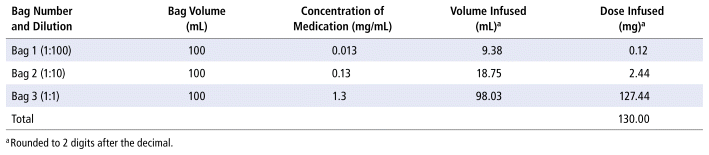
The Castells protocol allowed for a step-wise increase in both the rate and concentration of the infusion, with successive steps occurring at 15-minute intervals (Table 2). It was thought that if administration of this protocol with the fourth dose was successful, subsequent BV infusions could be administered in the outpatient oncology systemic therapy suite, given that total administration time for the protocol fell within operating hours. The desensitization protocol used 3 bags of BV, with dilutions of 1:100, 1:10, and 1:1, respectively (Table 3). The patient received the fourth dose of BV successfully in the step-down ICU with no hypersensitivity reactions. As a result, subsequent doses were successfully administered within the outpatient oncology systemic therapy suite using the 12-step desensitization protocol in combination with the premedications.
TABLE 2 Twelve-Step Desensitization Protocol for Brentuximab Vedotin
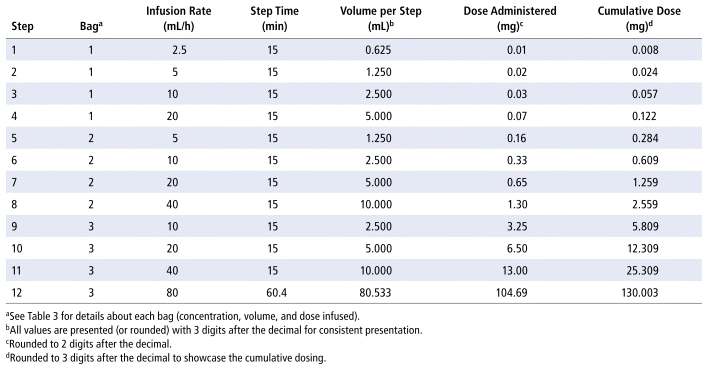
TABLE 3 Content of Bags Prepared with Different Dilutions of Brentuximab Vedotin
Oncology practice is continually evolving, and new anti-cancer treatments are changing the landscape of cancer care. In particular, targeted therapies have revolutionized the treatment of patients with cancer, providing subsequent-line treatment options for patients with solid and hematologic malignancies.
However, the risk of hypersensitivity reactions can pose a challenge for administering these treatments safely. Hypersensitivity reactions can be characterized as type 1 reactions (mediated by mast cells), type IV cell-mediated reactions, or cytokine release reactions.9 Given the frequent introduction of new anticancer treatments to the market, it is difficult to find data suitable to guide clinicians on the frequency and severity of these reactions. The reactions do not necessarily occur only with the first treatment, and the risk remains throughout all treatment cycles.10 The clinical presentation of hypersensitivity reactions can range from simple cutaneous manifestations to more severe, potentially fatal anaphylactic reactions.11
Rapid desensitization protocols have allowed patients to safely receive life-saving medications, thereby improving their prognosis and quality of life.11 Desensitization also saves health care dollars, as patients who have undergone such protocols have been shown to experience fewer hospital encounters than those without desensitization.12 Although there is always a risk of breakthrough reactions during a desensitization protocol, the severity and frequency of such reactions declines over time.12 If the patient described here had experienced a breakthrough reaction during the desensitization protocol, our plan was to treat him with a medication regimen similar to that used for the previous breakthrough reactions (epinephrine 0.5 mg IM, salbutamol by inhalation, famotidine 20 mg IV, and methylprednisolone 120 mg IV). The treatment plan was then to be revisited to determine whether a 16-step protocol, along with adjustment of the premedications, might be better suited for a rechallenge. The 16-step protocol, which ultimately proved unnecessary, would have involved a fourth bag at 1:1000 of the full dose. Desensitization protocols can also be customized to the patient. For example, breakthrough reactions most commonly occur during the last step, and so, for a patient with onset of a reaction during the final step, the protocol could be further modified to reduce the risk by subdividing the last step into multiple steps.12 Despite the long half-lives of monoclonal antibodies, delayed reactions to them following desensitization are rare.12
Desensitization protocols should be performed in a controlled environment, especially during the first attempt, which is associated with the highest likelihood of breakthrough reactions.12 Desensitization should also be reserved for patients with no therapeutic alternatives. In the case reported here, the first desensitization protocol was attempted in a step-down ICU, and subsequent administrations occurred in the outpatient oncology systemic therapy suite. Given the positive clinical response to this third-line therapy for our patient, it was important to create a desensitization protocol that would allow for safe administration of BV. Collaboration among the primary hematologists and oncologist, the clinical pharmacist, the pharmacy technician preparing the medication, the treatment nurses, and the rest of the clinical team is imperative to the success of a desensitization protocol. The lead oncology pharmacist (A.R.R.) championed this treatment plan along with the primary hematologist (P.K.).
The case reported here highlights that successful treatment with a desensitization protocol can be achieved at a community hospital. Rapid desensitization to monoclonal antibodies allows for the safe administration of life-saving cancer treatment and can improve the patient’s quality of life and prognosis. It can also result in savings for the health care system.
1 van de Donk NWCJ, Dhimolea E. Brentuximab vedotin. MAbs. 2012;4(4):458–65.
Crossref PubMed PMC
2 Brentuximab vedotin. In: Drug formulary. Cancer Care Ontario; [cited 2023 Jun 29]. Available from: https://www.cancercareontario.ca/en/drugformulary/drugs/monograph/44316
3 Sutherland MSK, Sanderson RJ, Gordon KA, Andreyka J, Cerveny CG, Yu C, et al. Lysosomal trafficking and cysteine protease metabolism confer target-specific cytotoxicity by peptide-linked anti-CD30-auristatin conjugates. J Biol Chem. 2006;281(15):10540–7.
Crossref PubMed
4 Francisco JA, Cerveny CG, Meyer DL, Mixan BJ, Klussman K, Chace DF, et al. cAC10-vcMMAE, an anti-CD30-monomethyl auristatin E conjugate with potent and selective antitumor activity. Blood. 2003; 102(4):1458–65.
Crossref PubMed
5 Wolska-Washer A, Robak T. Safety and tolerability of antibody-drug conjugates in cancer. Drug Saf. 2019;42(2):295–314.
Crossref PubMed PMC
6 DeVita MD, Evens AM, Rosen ST, Greenberger PA, Petrich AM. Multiple successful desensitizations to brentuximab vedotin: a case report and literature review. J Natl Compr Canc Netw. 2014;12(4):465–71.
Crossref PubMed
7 Villarreal-Gonzalez RV, Gonzalez-Diaz SN, de Lira-Quezada CE, Gómez-Almaguer D, Gómez-De León A, Acuña-Ortega N. Rapid desensitization to brentuximab vedotin after severe anaphylaxis in the treatment of refractory Hodgkin’s lymphoma. J Oncol Pharm Pract. 2021;27(2):505–8
Crossref
8 Castells M. Rapid desensitization for hypersensitivity reactions to medications. Immunol Allergy Clin North Am. 2009;29(3):585–606.
Crossref PubMed
9 Hong D, Sloane DE. Hypersensitivity to monoclonal antibodies used for cancer and inflammatory or connective tissue diseases. Ann Allergy Asthma Immunol. 2019;123(1):35–41.
Crossref PubMed
10 Galvão VR, Castells MC. Hypersensitivity to biological agents— updated diagnosis, management, and treatment. J Allergy Clin Immunol Pract. 2015;3(2):175–85.
Crossref
11 Bonamichi-Santos R, Castells M. Diagnoses and management of drug hypersensitivity and anaphylaxis in cancer and chronic inflammatory diseases: reactions to taxanes and monoclonal antibodies. Clin Rev Allergy Immunol. 2018;54(3):375–85.
Crossref
12 Sloane D, Govindarajulu U, Harrow-Mortelliti J, Barry W, Hsu FI, Hong D, et al. Safety, costs, and efficacy of rapid drug desensitizations to chemotherapy and monoclonal antibodies. J Allergy Clin Immunol Pract. 2016;4(3):497–504.
Crossref PubMed
Address correspondence to: Dr Philip Kuruvilla, William Osler Health System, 2100 Bovaird Drive East, Brampton ON L6R 3J7, email: Philip.Kuruvilla@williamoslerhs.ca
*Consent could not be obtained from the patient or a family member. Therefore, details not pertinent to the diagnosis and treatment have been omitted from this report.
Competing interests: For activities not directly related to the case reported here, Philip Kuruvilla has received speaker’s fees from, and has served on data safety monitoring boards for, Janssen, Astra-Zeneca, Takeda, Novartis, Gilead, Amgen, Sanofi, BMS, and BeiGene. No other competing interests were declared.
Funding: None received.
Acknowledgements: The authors would like to acknowledge the work of their pharmacist, pharmacy technician, nursing, and clerical colleagues in supporting the administration of this desensitization protocol.
Submitted: March 13, 2024
Accepted: June 26, 2024
Published: January 15, 2025
© 2025 Canadian Society of Healthcare-Systems Pharmacy | Société canadienne de pharmacie dans les réseaux de la santé
Canadian Journal of Hospital Pharmacy, VOLUME 78, NUMBER 1, 2025