Vanessa Phommavong, Cathy Burger, M Khaled Shamseddin, and Holly MansellTo cite: Phommavong V, Burger C, Shamseddin MK, Mansell H. Characterizing the use of prolonged-release once-daily tacrolimus (LCPT) across Canada. Can J Hosp Pharm. 2025;78(1):e3624. doi: 10.4212/cjhp.3624
ABSTRACT
Background
Tacrolimus is the most common calcineurin inhibitor given to kidney and liver transplant recipients. Prolonged-release once-daily tacrolimus (LCPT) is the newest formulation of this drug, but prescribing practices for tacrolimus across Canada are unknown.
Objectives
To investigate the use of tacrolimus across Canada, by determining coverage for the drug, exploring prescribing practices and factors related to decision-making, and identifying management methods for patients with rapid metabolism of tacrolimus.
Methods
A mixed-methods, descriptive study using survey-based data collection and qualitative interviews was undertaken. The medical director and a pharmacist from each adult kidney and liver transplant centre in Canada were invited to complete an electronic questionnaire consisting of 8 open-ended questions concerning their respective transplant programs’ coverage for and use of tacrolimus. Interested participants completed a one-on-one virtual follow-up interview to explore experiences.
Results
A total of 28 health care providers participated in the survey, of whom 18 completed an interview, achieving representation from 15 (79%) of 19 kidney transplant programs and 3 (38%) of 8 liver transplant programs. Prescribing habits varied, with immediate-release tacrolimus (IR-Tac) being the most commonly preferred formulation (due to provider experience), followed by extended-release tacrolimus (ER-Tac) and LCPT. Most survey respondents (26/28) indicated that their centres used LCPT for maintenance but not de novo immunosuppression. The most common reason for conversion to LCPT was to reduce tremors or to address suspected rapid metabolism; barriers to uptake of LCPT included perceived disadvantages related to cost and coverage.
Conclusions
Prescribing practices for tacrolimus varied across Canada. IR-Tac was the most commonly used formulation, followed by ER-Tac. LCPT was used primarily in the maintenance phase for people with neurotoxicity or rapid metabolism, but there was a lack of consistency in how rapid metabolism was defined.
Keywords: tacrolimus, rapid metabolism, Canada, prolonged-release tacrolimus
RÉSUMÉ
Contexte
Le tacrolimus est l’inhibiteur de la calcineurine le plus couramment administré aux receveurs de greffes de rein et de foie. Le tacrolimus à libération prolongée pris une fois par jour (LCPT) est la nouvelle formulation de ce médicament, mais les pratiques en matière de prescription au Canada sont inconnues
Objectifs
Étudier l’utilisation du tacrolimus au Canada, en déterminant sa présence (ou non) sur les listes de médicaments, en étudiant les pratiques en matière de prescription et les facteurs liés à la prise de décision et en identifiant les méthodes de gestion pour les patients ayant un métabolisme rapide du tacrolimus.
Méthodologie
Une étude descriptive de méthodes mixtes utilisant la collecte de données par sondage et des entretiens qualitatifs a été réalisée. Le directeur médical et un pharmacien de chaque centre de greffe de rein et de foie pour adultes au Canada ont été invités à remplir un questionnaire électronique composé de 8 questions ouvertes portant sur la présence (ou non) du tacrolimus sur les listes de médicaments dans leurs programmes de greffe respectifs et sur son utilisation. Les participants intéressés ont ensuite effectué un entretien de suivi virtuel individuel pour examiner leurs expériences.
Résultats
Au total, 28 professionnels de la santé ont participé à l’enquête, dont 18 ont effectué un entretien, ce qui a permis d’obtenir une représentation de 15 (79 %) des 19 programmes de greffe de rein et de 3 (38 %) des 8 programmes de greffe de foie. Les habitudes en matière de prescription étaient variables, mais le tacrolimus à libération immédiate (IR-Tac) était la formulation la plus couramment choisie (en raison de l’expérience du professionnel de la santé), suivie du tacrolimus à libération prolongée (ER-Tac) et du LCPT. La plupart des répondants à l’enquête (26/28) ont indiqué que leur centre utilisait le LCPT pour le maintien, mais pas pour l’immunosuppression de novo. La raison la plus fréquente pour le passage au LCPT visait la réduction des tremblements ou le traitement d’un métabolisme rapide suspecté; les obstacles à son adoption comprenaient les inconvénients perçus liés au coût et à la couverture.
Conclusions
Les pratiques de prescription du tacrolimus varient au Canada. L’IR-Tac était la formulation la plus couramment utilisée, suivi de l’ER-Tac. Le LCPT était principalement utilisé pendant la phase de maintien pour les personnes présentant des neurotoxicités ou un métabolisme rapide. Cependant, la définition du métabolisme rapide était caractérisée par son manque de cohérence.
Mots-clés: tacrolimus, métabolisme rapide, Canada, tacrolimus à libération prolongée
A complex regimen of immunosuppressants is necessary to prevent acute rejection of solid organ transplants.1,2 Tacrolimus, the most commonly used calcineurin inhibitor, functions by inhibiting T lymphocyte activation.3,4 Although tacrolimus is highly efficacious, using it can be challenging. This drug has a narrow therapeutic range, so consistent monitoring of serum concentrations is needed to maintain a balance between efficacy and toxicity.5,6 Although a sufficient (i.e., therapeutic) level is needed to decrease the risk of acute rejection, adverse effects such as nephrotoxicity, headaches, and tremor are associated with higher levels.6 Optimization of dosing regimens can be difficult because of wide inter-individual variability in absorption and low bioavailability.7–10
Three formulations of tacrolimus are available in Canada. Immediate-release tacrolimus (IR-Tac; brand name Prograf), which is administered every 12 hours, and extended-release tacrolimus (ER-Tac; brand name Advagraf), which is administered once daily, have been available since 1995 and 2007, respectively.11,12 Both of these formulations exhibit low oral bioavailability and attain similar peak concentrations, with potential for elevated peak concentrations that could be associated with neurologic adverse reactions.12,13 Various factors, such as the patient’s sex, age, concomitant medications, and cytochrome P450 3A5 isozyme (CYP3A5) phenotype, can influence and contribute to variability in the absorption and metabolism of these formulations.8,9,14,15 Once-daily ER-Tac is advantageous for reducing pill burden and potentially increasing patient adherence, which is important to prevent acute rejection15,16; this formulation also has lower 24-hour variability.16,17
Prolonged-release once-daily tacrolimus (known as LCP-tacrolimus or LCPT; brand name Envarsus PA) became available in Canada in 2019.18 LCPT was formulated using MeltDose technology,19 which reduces the particle size of the drug to single molecules, resulting in broader dissolution in the gut and potentially decreased first-pass metabolism. 18,20,21 Relative to IR-Tac and ER-Tac, LCPT exhibits greater bioavailability and has a steadier concentration-versus-time profile from peak to trough concentration.22 This lower peak concentration and delayed time to maximum concentration may decrease the risk of neurotoxicity (e.g., tremor).21 Because similar concentration–time pharmacokinetics are observed in patients who express the CYP3A5*1 allele,23 another potential use of LCPT may be for patients who metabolize tacrolimus rapidly. In stable and de novo kidney transplant recipients, LCPT has shown evidence of non-inferiority to IR-Tac in terms of efficacy (composite end point consisting of graft loss, death, biopsy-proven acute rejection, or loss to follow-up).24–26 Nevertheless, clinicians may prefer IR-Tac for reasons of cost, coverage, or greater flexibility for dose adjustments in the immediate post-transplant period.
Although all formulations of tacrolimus are indicated for the prevention of rejection in kidney and liver transplant recipients, much is unknown about their use in Canada. Because each province has its own health care system, the cost and coverage of tacrolimus may vary depending on location, and current practices remain unexplored. Prescriber experiences with LCPT in other countries have been described,20,22,26,27 and pivotal trials establishing efficacy were conducted in the United States using ER-Tac as the comparator.24–26 Anecdotal reports indicate that some practitioners prefer LCPT for patients with rapid metabolism of the drug (so-called “rapid metabolizers”), but there is a dearth of literature regarding how programs identify such patients. Rapid metabolizers (patients with polymorphisms in the CYP3A5 system) may require higher doses of IR-Tac20,24,25 to prevent the risk of organ rejection,16 but there is no consensus definition or published literature on this topic.
Our purpose here was to investigate the use of tacrolimus across Canada. We sought to understand coverage for this drug across the country and to explore prescribing practices and factors related to decision-making about tacrolimus. We also investigated why centres choose LCPT for transplant patients and how they define and manage patients who rapidly metabolize tacrolimus.
The study received ethics approval from the University of Saskatchewan Behavioural Research Ethics Board (Beh# 3897).
An internet search of provincial formularies in February 2023 was used to determine the coverage of tacrolimus (Prograf, Advagraf, Envarsus PA, generics) in each jurisdiction, later confirmed by interview. A list of Canadian transplant programs was supplied by Canadian Blood Services. ER-Tac and LCPT are indicated only for adult kidney and liver transplant recipients, so programs for other organs were excluded. A study invitation was sent by email to the medical director and a pharmacist from each centre, inviting them to participate or to pass the invitation to a colleague who could speak to the use of tacrolimus within their centre. In cases of nonresponse, another individual (e.g., nephrologist or hepatologist) identified through the program’s website or the Canadian Society of Transplantation was invited.
The first part of the study was an electronic questionnaire (Research Electronic Data Capture [REDCap]), which consisted of 8 questions about the program’s provincial and in-centre coverage for and use of tacrolimus. The questions were pilot-tested with a pharmacist who was not involved in the study. A one-on-one virtual interview was scheduled for participants who were interested in providing more in-depth information.
The semistructured interview guide was developed by a researcher/pharmacist (H.M.), a transplant pharmacist (C.B.), a transplant nephrologist (M.K.S.), and a research student (V.P.). The primary investigator (H.M., the researcher/pharmacist) and the research student (V.P.) had no experience with LCPT use, and the student (who conducted the interviews) had no prior relationships with the participants. The interviews, which were conducted virtually (Zoom videoconference application) or by telephone, consisted of open-ended questions regarding use, maintenance, and administration of tacrolimus, as well as de novo and maintenance experience with using LCPT. Responses were transcribed verbatim by the Canadian Hub for Applied and Social Research at the University of Saskatchewan. Participants were given the opportunity to review and edit their transcripts and the draft manuscript. A $75 honorarium was offered to each participant.
The transcripts were analyzed by 2 of the authors (H.M., V.P.) using qualitative content analysis28 in Dedoose qualitative software. A code book was developed based on topics from the interview guide, and deductive descriptive coding was used to code participant responses. More specifically, the transcripts were reviewed line by line, sentences or meaning units were coded, and the information was organized into categories. Given that the aim was to apply categorization only as needed to organize ideas, the categories coincided with topics in the interview guide. These included administration and monitoring practices with tacrolimus, frequency of and interest in LCPT use, LCPT use for maintenance immunosuppression, LCPT in the de novo transplant setting, perceived advantages and disadvantages of LCPT, and rapid metabolizers.
Descriptive statistics are presented for the quantitative data.
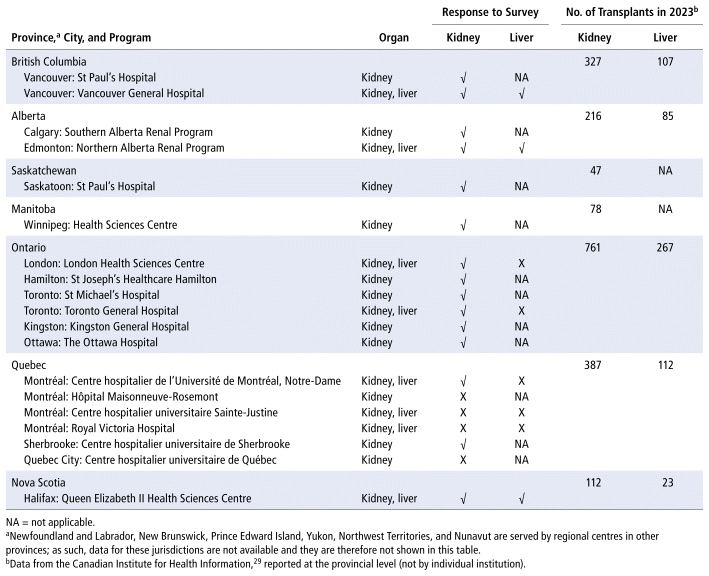
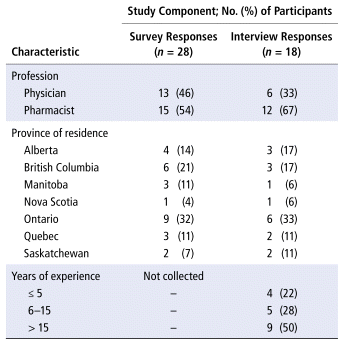
Twenty-seven adult transplant centres were identified in Canada: 19 for kidney transplant and 8 for liver transplant. Participants were recruited from February to June 2023. Of the 58 pharmacists, nephrologists, and hepatologists invited to participate, 28 (48%) returned completed surveys. Eighteen of those who submitted a survey response participated in a subsequent virtual or telephone interview. We achieved representation from 15 (79%) of the 19 kidney transplant programs and 3 (38%) of the 8 liver transplant programs (Table 1, Table 2).
TABLE 1 Transplant Centres Performing Adult Kidney or Liver Transplants in Canada and Responses
TABLE 2 Demographic Characteristics of Participants
All of the provinces provided drug formulary coverage for all formulations of tacrolimus, but the criteria for approval of LCPT varied. For example, one participant noted that “Advagraf, Prograf, Envarsus, mycophenolate, and sirolimus are covered by the specialized high-cost drug program. Envarsus still has the restriction ‘access to stable kidney or liver graft function for intolerance or unable to maintain target level’.” With respect to IR-Tac, all but 2 of the provinces covered generic formulations; the exceptions used the brand-name product. Survey results indicated variation in in-hospital coverage for LCPT.
A variety of prescribing practices for tacrolimus were noted. IR-Tac (Prograf or generics) was the most common first-line formulation, with centres in 5 provinces (British Columbia, Alberta, Saskatchewan, Quebec, and Nova Scotia) using it for both liver and kidney recipients. However, the Northern Alberta Renal Program used ER-Tac for renal transplant recipients. Although most centres covered generic IR-Tac, some had access to and coverage for brand-name formulations for use in specific circumstances. Industry-sponsored discount programs were often used to access brand-name IR-Tac in provinces where generics were preferred. All kidney transplant centres in Ontario used ER-Tac as their first-line agent for de novo transplant recipients, with 2 centres (in Kingston and London) indicating that they were starting to use LCPT as their standard therapy. The Manitoba centre indicated that they used LCPT for de novo renal transplant recipients.
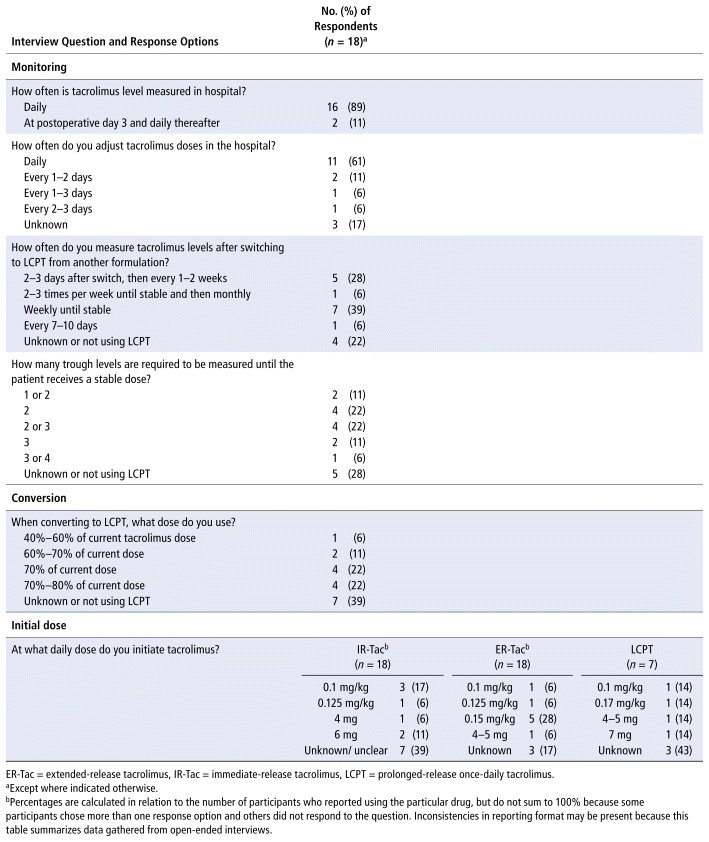
Administration and monitoring practices are presented in Table 3. According to the product monograph,18 LCPT should be taken at least 1 hour before or 2 hours after a meal, and high-fat meals should be avoided. (Patients converting from immediate-release tacrolimus formulations who routinely took their medication with meals should continue to do so.) Three participants recommended to patients that all formulations of tacrolimus be taken on an empty stomach or spaced out at specific intervals in relation to meals to avoid fluctuations in serum levels and potential issues with absorption. One participant reported making this recommendation for LCPT but not for IR-Tac or ER-Tac. Others agreed that consistency on the part of patients (once discharged) was most important.
TABLE 3 Administration and Monitoring Practices with Tacrolimus
Most survey respondents (26/28) indicated that they used LCPT in the outpatient setting for maintenance immunosuppression. All but one of the interview participants estimated using LCPT for fewer than 100 patients; the remaining centre had 200 to 250 patients who were receiving maintenance LCPT. De novo LCPT use was minimal, with only 6 transplant centres reporting use in this setting. Most of these 6 centres reported having up to 10 patients on de novo LCPT, with one centre estimating 100–150 patients.
Some participants indicated relatively more interest in incorporating LCPT into their practice (n = 3/4). One participant, who had less than 5 years of experience, said, “I do think from the papers I have reviewed that we could be having some benefit from using Envarsus instead.” In contrast, others expressed relatively less interest. For example, one participant, who had more than 15 years of experience, stated, “We don’t have that much experience with it. And if things are going fine right now for our patients, we don’t feel like it is a big problem.”
Most participants perceived LCPT to be an appropriate alternative when another formulation yielded suboptimal management. The most common reasons for conversion from IR-Tac or ER-Tac to LCPT were to minimize tremors or other neurologic adverse effects (e.g., headaches). One participant said, “I think there seems to be, at our program, a deeper conviction that Envarsus might address tremors more than Advagraf. It seems like an obvious reason to switch for tremor.” Prescribers perceived this strategy as a “hit or miss” approach, with some but not all patients experiencing resolution of the adverse effect. Participants also indicated that LCPT was used as an alternative when patients could not reach a stable trough tacrolimus blood level with “fairly high daily doses” of other formulations (Table 4).
TABLE 4 Reasons for Using and Not Using LCPT, as Reported by Interview Participants
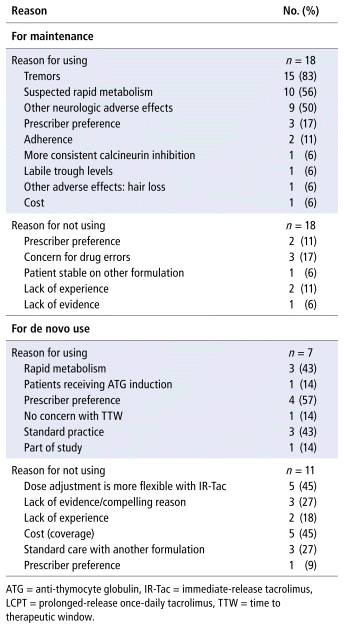
The most common reasons cited for not using LCPT for maintenance immunosuppression were prescriber preference and a perceived lack of compelling evidence and experience. Other concerns, such as potential drug errors, were also mentioned. For example, one participant said, “We’re transplanting more complex patients, more elderly patients; a lot of patients that have diabetes as well. So, they have retinopathy and other complications and they’re unable to tell the difference between the tablets. ... The tablets look alike and they’re all white and they’re very similar in size.”
Suspected rapid metabolism of tacrolimus (such as occurs frequently among African Canadians), prescriber preference, and cost were the most commonly cited reasons for using de novo LCPT. One participant said, “If prescribers perceive cost–benefit to be an issue for the patient, especially if they’re paying cash or if they have some kind of co-payment”, then de novo use of LCPT would be considered. Conversely, others indicated cost as a barrier to prescribing LCPT for new (kidney and liver) transplant recipients due to a lack of hospital formulary coverage or coverage restrictions. Perceived lack of evidence and/or experience were other reasons for limited use. Another participant said, “[we] haven’t found, at this point, a compelling reason to make a switch, with regards to clinical efficacy, as well as other logistic, financial, or patient preference–related motivations”. Additionally, 5 prescribers indicated that de novo LCPT was not used due to the lack of flexibility in dose adjustments and serum tacrolimus levels (in contrast to the situation for IR-Tac, which allows for quicker and more flexible dose adjustments). For example, one participant said, “in terms of dose titration, once daily is a little bit more challenging. … By the time you get your level, the next time you can intervene is the next day.”
The most commonly mentioned advantages of LCPT were related to the perceived resolution of peak-related neurotoxicity adverse effects such as tremors (largely) and headaches and potential benefit in patients with suspected rapid metabolism. Many participants noted the lower doses required to achieve therapeutic concentrations. Additionally, one participant mentioned, “I think their level stabilizes a lot more compared to somebody on Prograf where some days they can be under therapeutic or over therapeutic. But I have seen the stability of their levels instantly better with Envarsus”.
Concerns related to titration were cited as a disadvantage. Participants noted that because LCPT is a long-acting agent, dose adjustments cannot be made quickly, and determining the correct tacrolimus dose can become difficult. Lack of experience, lack of evidence, and the potential for drug errors were also discussed. Specifically, the tablet strengths of LCPT (0.75 mg, 1 mg, 4 mg) differ from those of Prograf and Advagraf, and all tablets are white with some variation in size. An additional barrier was that some hospital formularies do not include LCPT.
Various definitions of rapid metabolism of tacrolimus were provided by participants. Most participants suspected a patient of having rapid metabolism if they were unable to achieve therapeutic tacrolimus levels with “high doses” of the drug, but there was no consensus on the threshold defining a high dose. Some participants considered rapid metabolism to be present when patients surpassed a total daily dose of more than 15–20 mg. One participant stated that they used the ratio of trough concentration to total dose to identify patients with rapid metabolism. Participants from 2 other centres specifically identified patients with rapid metabolism using pharmacogenetic testing (and one of these reported using this method regularly).
Our study provides insight on the use of tacrolimus in kidney and liver transplantation across Canada. Overall, the most commonly prescribed formulation was IR-Tac, followed by ER-Tac. Although most provinces covered generic IR-Tac, some centres indicated that they accessed Prograf using patient support programs, which suggests a preference for the brand-name formulation. With respect to monitoring practices in hospital, 89% of participants reported that their centres monitored tacrolimus daily, and 61% reported making daily adjustments, even though steady state is not generally reached for at least 2–3 days30 or longer with LCPT.18
Compared with the other formulations, LCPT was not used as commonly throughout Canada, with only 6 centres describing use of this agent in de novo transplant recipients. LCPT can reach therapeutic concentrations in the immediate post-transplant period and has about 30% greater relative bioavailability and lower peak-to-trough fluctuation compared with ER-Tac21,22,31; nonetheless, titration challenges were voiced as a concern. Interestingly, a previous study reported greater time in the therapeutic range with de novo LCPT relative to both IR-Tac and ER-Tac,32 which has been associated with less acute rejection.33
Use-limiting provincial criteria or lack of coverage on the hospital formulary also hindered de novo use of LCPT, even though lower LCPT doses compared with IR-Tac (−30%) and ER-Tac (−36%) would theoretically be less expensive.21 While some participants perceived cost to be a barrier to LCPT use, others perceived cost to be advantageous, which likely reflects provincial variation in tacrolimus coverage.
Some participants voiced concern about the lack of evidence supporting the benefit of LCPT over other formulations. Although the current literature consists primarily of non-inferiority studies,24–27 clinical trials aiming to show superiority are unlikely, as very large sample sizes would be required. We suggest that transplant programs collaborate to combine observational data and explore the potential implications of the lower tacrolimus peak-to-trough ratio observed with LCPT.22 For example, in a recent study of 105 liver transplant recipients, those randomly assigned to receive LCPT had a significantly lower prevalence, relative to those who received ER-Tac, of a composite end point of post-transplant diabetes, new-onset hypertension, and/or chronic kidney disease.34
LCPT was considered a reasonable formulation to use for suspected rapid metabolizers, but there was no consensus on the definition of “rapid metabolism”. Most participants defined such individuals as those who did not achieve therapeutic levels of tacrolimus despite a consistently high daily dose of the drug. As defined in the literature,35 a rapid metabolizer of tacrolimus is an individual carrying 2 functional CYP3A5 alleles. Pharmacogenetic testing before initiation of tacrolimus could be beneficial in reducing the risk of drug overexposure, but the economic feasibility of routine testing remains questionable.36 One participant indicated that pharmacogenetic testing was routinely employed at their centre, but most perceived testing to be of no clinical benefit. The ratio of predose concentration to daily dose (C0/D) for tacrolimus has been proposed as a prognostic marker for poor outcomes, including the development of nephrotoxicity related to calcineurin inhibitors or BK virus nephropathy.37 Furthermore, the tacrolimus C0/D ratio was considered a simple and inexpensive tool to categorize patients according to the following definitions: < 1.05 ng/mL/mg, fast metabolizers; 1.05–1.54 ng/mL/mg, intermediate metabolizers; and ≥ 1.55 ng/mL/mg, slow metabolizers.38 A national consensus on how to identify rapid metabolizers could be beneficial for designing clinical trials and pooling single-centre data to examine clinical end points with LCPT use.
The limitations of this study deserve consideration. We attempted to interview a health care provider from each transplant centre in Canada, but were unable to achieve representation from 4 centres in Quebec. Our survey was distributed in English, which may have been a limiting factor in this regard. Caution should be used when interpreting data from the perspective of liver transplant programs, given that we were able to interview participants from only 3 centres. Because qualitative feedback provides the opportunity to obtain additional context,39 we conducted interviews with health care providers in addition to collecting survey data. In most cases, we spoke to only one individual from each site. Although we asked participants to comment from the perspectives of their colleagues and other programs, as well as their own, this limitation should be acknowledged. Finally, the study was funded by a grant from Paladin Pharma Inc, which distributes Envarsus PA in Canada, and the authors have collectively participated on advisory boards and/or given presentations for Paladin, Astellas, Astra Zeneca, and Takeda. Nonetheless, this was an investigator-initiated study, and therefore the development of methods, interpretation of findings, and writing of this manuscript were performed exclusively by the authors, without outside influence. The primary investigator and research student who conducted the data collection and analysis had no clinical experience with using LCPT, and the transcripts and draft manuscript were provided to the participants for review, to ensure the trustworthiness of the data.
Cost, coverage, and prescribing practices for tacrolimus varied across Canada. IR-Tac was the most commonly used formulation, followed by ER-Tac. LCPT was used primarily in the maintenance phase for people with neurotoxicity or rapid metabolism, but there was no consistency in how the latter was defined. A national consensus on identifying rapid metabolism could be beneficial for designing clinical trials and pooling single-centre data to examine clinical end points with LCPT use.
1 Halloran PF. Immunosuppressive drugs for kidney transplantation. N Engl J Med. 2004;351(26):2715–29. Erratum in: N Engl J Med. 2005; 352(10):1056.
Crossref PubMed
2 Moini M, Schilsky ML, Tichy EM. Review on immunosuppression in liver transplantation. World J Hepatol. 2015;7(10):1355–68.
Crossref PubMed PMC
3 Hart A, Smith JM, Skeans MA, Gustafson SK, Stewart DE, Cherikh WS, et al. OPTN/SRTR 2015 annual data report: kidney. Am J Transplant. 2017;17(Suppl 1):21–116.
Crossref PubMed PMC
4 Kim WR, Lake JR, Smith JM, Skeans MA, Schladt DP, Edwards EB, et al. OPTN/SRTR 2015 annual data report: liver. Am J Transplant. 2017;17(Suppl 1):174–251.
Crossref PubMed
5 Laskow D, Vincenti F, Neylan JF, Mendez R, Matas A. An open-label, concentration-ranging trial of FK506 in primary kidney transplantation: a report of the United States Multicenter FK506 Kidney Transplant Group. Transplantation. 1996;62(7):900–5.
Crossref PubMed
6 Venkataramanan R, Shaw LM, Sarkozi L, Mullins R, Pirsch J, MacFarlane G, et al. Clinical utility of monitoring tacrolimus blood concentrations in liver transplant patients. J Clin Pharmacol. 2001;41(5):542–51.
Crossref PubMed
7 Gatault P, Kamar N, Büchler M, Colosio C, Bertrand D, Durrbach A, et al. Reduction of extended-release tacrolimus dose in low-immunological-risk kidney transplant recipients increases risk of rejection and appearance of donor-specific antibodies: a randomized study. Am J Transplant. 2017;17(5):1370–9.
Crossref
8 Stratta P, Quaglia M, Cena T, Antoniotti R, Fenoglio R, Menegotto A, et al. The interactions of age, sex, body mass index, genetics, and steroid weight-based doses on tacrolimus dosing requirement after adult kidney transplantation. Eur J Clin Pharmacol. 2012;68:671–80.
Crossref
9 Staatz CE, Tett SE. Clinical pharmacokinetics and pharmacodynamics of tacrolimus in solid organ transplantation. Clin Pharmacokinet. 2004;43(10):623–53.
Crossref PubMed
10 Venkataramanan R, Swaminathan A, Prasad T, Jain A, Zuckerman S, Warty V, et al. Clinical pharmacokinetics of tacrolimus. Clin Pharmacokinet. 1995;29(6):404–30.
Crossref PubMed
11 Notice of compliance information [for Prograf]. Health Canada, Drugs and Health Products; 2022 Nov 25 [cited 2023 Jun 11]. Available from: https://health-products.canada.ca/noc-ac/nocInfo?no=5261
12 ADVAgraf® (tacrolimus extended release capsules) [product monograph]. Astellas; 2007 Oct 9.
13 Prograf® (tacrolimus injection and capsules) [product monograph including patient medication information]. Astellas Pharma Canada Inc; 2011 Nov 15 [cited 2023 Jun 30]. Available from: https://www.astellas.com/ca/system/files/prograf_pm_hc-approved_eng_23sep2024.pdf
14 Andrews LM, De Winter BC, Van Gelder T, Hesselink DA. Consideration of the ethnic prevalence of genotypes in the clinical use of tacrolimus. Pharmacogenomics. 2016;17(16):1737–40.
Crossref PubMed
15 Caillard S, Moulin B, Buron F, Mariat C, Audard V, Grimbert P, et al. Advagraf®, a once-daily prolonged release tacrolimus formulation, in kidney transplantation: literature review and guidelines from a panel of experts. Transplant Int. 2016;29(8):835–956.
Crossref
16 Stifft F, Stolk LM, Undre N, van Hooff JP, Christiaans MH. Lower variability in 24-hour exposure during once-daily compared to twice-daily tacrolimus formulation in kidney transplantation. Transplantation. 2014;97(7):775–80.
Crossref PubMed
17 van Hooff J, Van der Walt I, Kallmeyer J, Miller D, Dawood S, Moosa MR, et al. Pharmacokinetics in stable kidney transplant recipients after conversion from twice-daily to once-daily tacrolimus formulations. Ther Drug Monit. 2012;34(1):46–52.
Crossref PubMed
18 Envarsus PA (tacrolimus prolonged-release tablets) [product monograph]. Paladin Labs Inc; 2020 Jun 16 [cited 2023 Jun 30]. Available from: https://www.paladin-labs.com/our_products/EnvarsusPA__EN.pdf
19 Holm P, Buur A, Elema MO, Møllgaard B, Holm JE, Schultz K, inventors. Life Cycle Pharma A/S, assignee. MeltDose® Technology. United States patent US7217431. 2007 May.
20 Trofe-Clark J, Brennan DC, West-Thielke P, Milone MC, Lim MA, Neubauer R, et al. Results of ASERTAA, a randomized prospective crossover pharmacogenetic study of immediate-release versus extended-release tacrolimus in African American kidney transplant recipients. Am J Kidney Dis. 2018;71(3):315–26.
Crossref
21 Tremblay S, Nigro V, Weinberg J, Woodle ES, Alloway RR. A steady-state head-to-head pharmacokinetic comparison of all FK-506 (tacrolimus) formulations (ASTCOFF): an open-label, prospective, randomized, two-arm, three-period crossover study. Am J Transplant. 2017;17(2): 432–42.
Crossref PMC
22 Kamar N, Cassuto E, Piotti G, Govoni M, Ciurlia G, Geraci S, et al. Pharmacokinetics of prolonged-release once-daily formulations of tacrolimus in de novo kidney transplant recipients: a randomized, parallel-group, open-label, multicenter study. Adv Ther. 2019;36(2):462–77.
Crossref PMC
23 Haufroid V, Wallemacq P, VanKerckhove V, Elens L, De Meyer M, Eddour DC, et al. CYP3A5 and ABCB1 polymorphisms and tacrolimus pharmacokinetics in renal transplant candidates: guidelines from an experimental study. Am J Transplant. 2006;6(11):2706–13.
Crossref PubMed
24 Bunnapradist S, Ciechanowski K, West-Thielke P, Mulgaonkar S, Rostaing L, Vasudev B, et al.; MELT Investigators. Conversion from twice-daily tacrolimus to once-daily extended release tacrolimus (LCPT): the phase III randomized MELT Trial. Am J Transplant. 2013;13(3):760–9.
Crossref PubMed PMC
25 Budde K, Bunnapradist S, Grinyo JM, Ciechanowski K, Denny JE, Silva HT, et al. Novel once-daily extended-release tacrolimus (LCPT) versus twice-daily tacrolimus in de novo kidney transplants: one-year results of phase III, double-blind, randomized trial. Am J Transplant. 2014;14(12):2796–806
Crossref PubMed
26 Rostaing L, Bunnapradist S, Grinyó JM, Ciechanowski K, Denny JE, Silva HT Jr, et al. Novel once-daily extended-release tacrolimus versus twice-daily tacrolimus in de novo kidney transplant recipients: two-year results of phase 3, double-blind, randomized trial. Am J Kidney Dis. 2016;67(4):648–59.
Crossref PubMed
27 Budde K, Rostaing L, Maggiore U, Piotti G, Surace D, Geraci S, et al. Prolonged-release once-daily formulation of tacrolimus versus standard-of-care tacrolimus in de novo kidney transplant patients across Europe. Transpl Int. 2022;35:10225.
Crossref PubMed PMC
28 Elo S, Kyngäs H. The qualitative content analysis process. J Adv Nurs. 2008;62(1):10715.
Crossref
29 Summary statistics on organ transplants, wait-lists and donors. Canadian Institute for Health Information; 2024 [cited 2024 July 25]. Available from: https://www.cihi.ca/en/summary-statistics-on-organ-transplants-wait-lists-and-donors
30 Gaber AO, Alloway RR, Bodziak K, Kaplan B, Bunnapradist S. Conversion from twice-daily tacrolimus capsules to once-daily extended-release tacrolimus (LCPT): a phase 2 trial of stable renal transplant recipients. Transplantation. 2013;96(2):191–7.
Crossref PubMed PMC
31 Mendoza Rojas A, Hesselink DA, van Besouw NM, Baan CC, van Gelder T. Impact of low tacrolimus exposure and high tacrolimus intra-patient variability on the development of de novo anti-HLA donor-specific antibodies in kidney transplant recipients. Expert Rev Clin Immunol. 2019;15(12):1323–331.
Crossref PubMed
32 Khalil K, West-Thielke P, Lichvar AB, Benedetti E, Okoroike H, Patel S. Time within therapeutic range: a comparison of three tacrolimus formulations in renal transplant recipients. J Clin Nephrol. 2022;6(1): 019–025.
Crossref
33 Nguyen TVA, Nguyen HD, Nguyen TLH, Le VT, Nguyen XK, Tran VT, et al. Higher tacrolimus trough levels and time in the therapeutic range are associated with the risk of acute rejection in the first month after renal transplantation. BMC Nephrol. 2023;24(1):131.
Crossref PubMed PMC
34 Mulder MB, van Hoek B, Polak WG, Alwayn IPJ, de Winter BCM, Darwish Murad S, et al. Modifying tacrolimus-related toxicity after liver transplantation comparing life cycle pharma tacrolimus versus extended-released tacrolimus: a multicenter, randomized controlled trial. Transplant Direct. 2024;10(4):e1612.
Crossref PubMed PMC
35 Birdwell KA, Decker B, Barbarino JM, Peterson JF, Stein CM, Sadee W, et al. Clinical Pharmacogenetics Implementation Consortium (CPIC) guidelines for CYP3A5 genotype and tacrolimus dosing. Clin Pharmacol Ther. 2015;98(1):19–24.
Crossref PubMed PMC
36 Rancic N, Dragojevic-Simic V, Vavic N, Kovacevic A, Segrt Z, Djordjevic N. Economic evaluation of pharmacogenetic tests in patients subjected to renal transplantation: a review of literature. Front Public Health. 2016;4:189.
Crossref PubMed PMC
37 Thölking G, Schmidt C, Koch R, Schuette-Nuetgen K, Pabst D, Wolters H, et al. Influence of tacrolimus metabolism rate on BKV infection after kidney transplantation. Sci Rep. 2016;6:32273.
Crossref PubMed PMC
38 Thölking G, Fortmann C, Koch R, Gerth HU, Pabst D, Pavenstädt H, et al. The tacrolimus metabolism rate influences renal function after kidney transplantation. PLoS One. 2014;9(10):e111128.
Crossref PubMed PMC
39 Renjith V, Yesodharan R, Noronha JA, Ladd E, George A. Qualitative methods in health care research. Int J Prev Med. 2021;12:20
Crossref PubMed PMC
Address correspondence to: Dr Holly Mansell, College of Pharmacy and Nutrition, University of Saskatchewan, Health Sciences Building (E3208), 107 Wiggins Road, Saskatoon SK S7N 5E5, email: holly.mansell@usask.ca
Competing interests: For activities not directly related to the study reported here, Cathy Burger has received speaker’s honoraria from Astellas and Paladin, has received payment for participation on data safety monitoring boards for Astellas and Paladin, and has served in a leadership role with the Pharmacy Examining Board of Canada; Holly Mansell has received honoraria for participation on advisory boards for Astellas and Paladin; and Khaled Shamseddin has received honoraria for participation on advisory boards of Paladin, Astra Zeneca, and Takeda. No other competing interests were declared.
Funding: Completion of the survey and development of the manuscript by a pharmacy student (V.P.) were sponsored by Paladin Pharma Inc.
Acknowledgements: The authors thank the clinicians who took time to participate in this study.
Submitted: April 13, 2024
Accepted: September 5, 2024
Published: March 12, 2025
© 2025 Canadian Society of Healthcare-Systems Pharmacy | Société canadienne de pharmacie dans les réseaux de la santé
Canadian Journal of Hospital Pharmacy, VOLUME 78, NUMBER 1, 2025