
FIGURE 1 World Health Organization’s Workload Indicators of Staffing Need (WISN) equation, validated for clinical pharmacy staffing.16,18
Shelly ZQ Lu, Michael Legal, Karen Dahri, and Shazia DamjiTo cite: Lu SZQ, Legal M, Dahri K, Damji S. Further defining optimal pharmacist-to-patient ratios to ensure comprehensive direct patient care in medical and surgical units across British Columbia hospitals. Can J Hosp Pharm. 2025;78(1):e3655. doi: 10.4212/cjhp.3655
ABSTRACT
Background
Patient care ratios for pharmacists are not well defined in Canada. A recent work-sampling study involving 6 medium and large hospitals within the region served by Lower Mainland Pharmacy Services, British Columbia, reported pharmacist-to-patient ratios of 1:13, 1:26, and 1:14 in internal medicine teaching units, hospitalist or internal medicine nonteaching units, and surgical units, respectively.
Objective
To determine the pharmacist-to-patient ratios required to provide comprehensive pharmaceutical care to adult patients admitted to medical and surgical units in medium and large hospitals in British Columbia.
Methods
In this cross-sectional electronic survey study, participants were asked to provide estimates of the time spent on and the frequency of 17 comprehensive pharmaceutical care tasks identified in the previous study, which was based on a Delphi method. The survey data were used to calculate pharmacy staffing ratios according to the World Health Organization workforce calculator.
Results
Fifty-eight pharmacists responded to the survey, of whom 41 (71%) were from medium and large hospitals. The optimal pharmacist-to-patient ratios were calculated as 1:7 for internal medicine teaching units; 1:10 for internal medicine nonteaching, hospitalist, and family practice units; and 1:14 for surgical units.
Conclusions
The pharmacist-to-patient ratios calculated in this study, using only pharmacists’ self-reported information, were lower than those found previously. Further research is required to determine whether completion of every comprehensive care task is necessary, or if staffing ratios should reflect combinations of comprehensive care tasks based on patient complexity. National consensus guidelines on pharmacist staffing ratios may be valuable, given the current lack of standardization of pharmacy staffing ratios in hospitals.
Keywords: pharmacists, hospital pharmacy service, personnel staffing and scheduling, hospitals, workforce
RÉSUMÉ
Contexte
Les ratios de prise en charge des patients par les pharmaciens ne sont pas clairement définis au Canada. Une récente étude par échantillonnage du travail menée dans 6 hôpitaux de moyenne et grande taille dans la région desservie par les Lower Mainland Pharmacy Services en Colombie-Britannique a rapporté des ratios pharmacien-patients de 1:13 dans les unités d’enseignement de médecine interne, de 1:26 dans les unités de médecine interne ou d’hospitalisation sans enseignement, et de 1:14 dans les unités chirurgicales.
Objectif
Déterminer les ratios pharmacien-patients nécessaires pour offrir des soins pharmaceutiques complets aux patients adultes admis dans les unités médicales et chirurgicales dans les hôpitaux de moyenne et grande taille en Colombie-Britannique.
Méthodologie
Dans cette étude transversale menée à l’aide d’un sondage électronique, les participants ont été invités à estimer le temps et la fréquence consacrés à 17 tâches de soins pharmaceutiques complets, définies dans une étude précédente utilisant la méthode Delphi. Les données recueillies ont été utilisées pour calculer les ratios de personnel en pharmacie selon le calculateur de main-d’oeuvre de l’Organisation mondiale de la santé.
Résultats
Cinquante-huit pharmaciens ont répondu au sondage, dont 41 (71 %) provenaient d’hôpitaux de moyenne et grande taille. Les ratios pharmacien-patients optimaux ont été calculés comme suit : 1:7 pour les unités d’enseignement en médecine interne; 1:10 pour les unités non enseignantes de médecine interne, d’hospitalisation et de médecine familiale; et 1:14 pour les unités chirurgicales.
Conclusions
Les ratios pharmacien-patients calculés dans cette étude, basés uniquement sur les informations autodéclarées des pharmaciens, étaient inférieurs à ceux trouvés précédemment. Des recherches supplémentaires sont nécessaires pour déterminer si l’accomplissement de chaque tâche de soins complets est indispensable, ou si les ratios de personnel devraient refléter des combinaisons de tâches de soins complets en fonction de la complexité des patients. Des lignes directrices nationales sur les ratios de personnel pharmaceutique pourraient être utiles, étant donnée l’absence actuelle de normalisation des ratios de personnel en pharmacie dans les hôpitaux.
Mots-clés: pharmaciens, service de pharmacie hospitalière, dotation en personnel et planification des horaires, hôpitaux, main-d’oeuvre
Over the past several decades, clinical pharmacy has evolved from a product-focused to a patient-focused profession, with the goal of providing comprehensive pharmaceutical care in order to optimize patient outcomes.1,2 The benefits of clinical pharmacy services are well documented in the literature.3–8 Interventions such as participating in medical rounds, providing in-service education, and collecting drug histories on admission have all been shown to decrease mortality.3–5
In contrast to physicians and nurses, for whom patient care ratios are well established,9–13 pharmacist staffing ratios are not well defined in Canada. As the scope of practice of hospital pharmacists continues to expand, pharmacists are expected to do more for each patient. However, patient assignments have generally not changed in response to changes in pharmacists’ scope, and workload pressures have therefore increased. As such, it is critical to establish optimal pharmacy staffing ratios. Although there have been previous attempts to establish benchmarks for hospital pharmacist workload in Canada,14 there are no nationally accepted standards in this area. In recent years, groups in Australia15 and the United Kingdom16 have investigated optimal staffing ratios in clinical pharmacy practice. However, the applicability of these ratios to Canadian practice is unclear, because of differences in patient populations, hospital funding models, the range of clinical services provided, and pharmacists’ scope of practice.
A previous research study used a multiphase method to establish pharmacist staffing ratios: first, a modified Delphi survey to define a list of comprehensive pharmaceutical care tasks, and then a work-sampling, time-andmotion study using pharmacists’ self-reported time and task frequencies to calculate pharmacist-to-patient ratios. A total of 31 pharmacists from 6 selected medium and large hospitals within British Columbia participated in the earlier study.17 The optimal pharmacist-to-patient ratios were determined to be 1:13, 1:26, and 1:14 for internal medicine teaching units, hospitalist and internal medicine nonteaching units (including family practice [FP] units), and surgical units, respectively.17 The time-and-motion method used in the previous study was regarded as the gold standard for describing workload. However, given the intensive nature of this method, the overall sample size of the previous study was relatively modest.
In the current study, we aimed to further explore these findings by expanding the study setting to include more hospitals in British Columbia and by using a more easily scalable method to further define the optimal patient care ratios for pharmacists working in a medical or surgical unit. Determining pharmacist-to-patient ratios that reflect current clinical practice will empower the profession to advocate for staffing sufficient to provide comprehensive pharmaceutical care and thus to optimize patient outcomes.
The primary objective was to determine the pharmacist- to-patient ratios required to provide comprehensive pharmaceutical care to all adult patients admitted to various types of inpatient medical and surgical units across medium and large hospitals in British Columbia. The secondary objectives were to confirm the list of comprehensive care tasks developed in the previous study,17 to determine the pharmacist-to-patient ratios in medical and surgical subspecialty units, and to explore whether the pharmacist-to-patient ratios in medium and large hospitals apply to smaller hospitals.
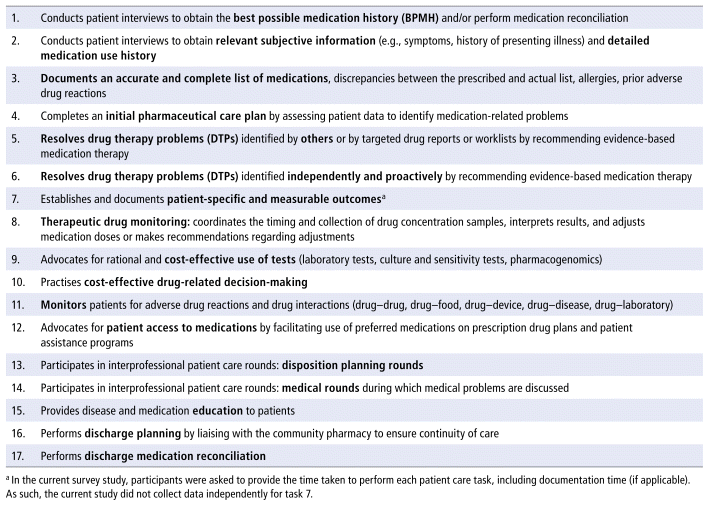
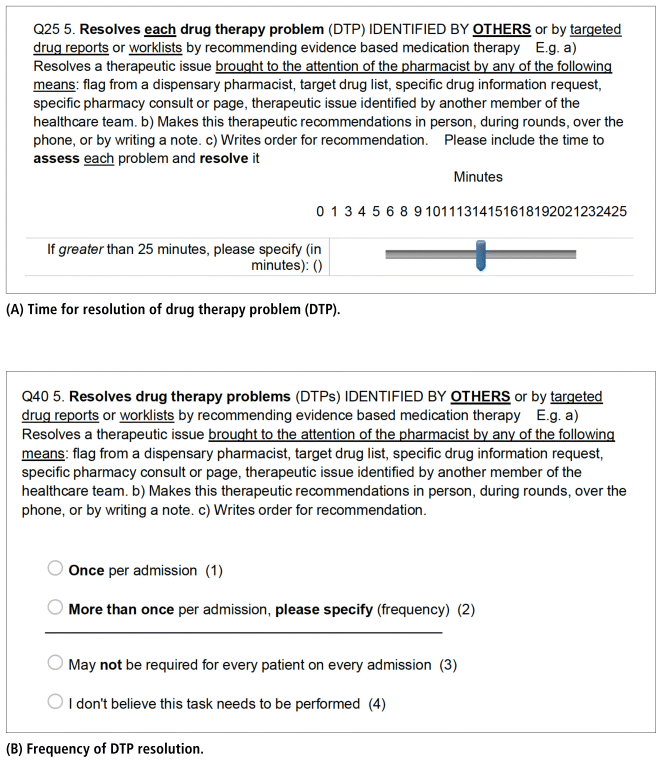
In this cross-sectional electronic survey study, participants were asked to provide estimates of the time spent on and frequency of a set of comprehensive patient care tasks. Participants’ demographic information was gathered, including clinical area of practice, hospital size, years of work experience, and current patient care ratios. A list of comprehensive patient care tasks derived from the previous study17 was presented (see Appendix 1), and participants were asked if they agreed or disagreed with the tasks. “Time” was defined as the amount of time spent performing each comprehensive care task once. “Frequency” was defined as how often each task was performed for a single patient per admission. Participants were asked to provide their best estimate of the average time and frequency for each task (see Appendix 2 for an example), based on their experiences of providing care for a general medical or surgical patient of typical complexity. The self-reported time and frequency data were then input into a validated equation (Figure 1), which was used to calculate pharmacist-to-patient ratios in the medical and surgical units defined in the study.16,18
|
| ||
|
FIGURE 1 World Health Organization’s Workload Indicators of Staffing Need (WISN) equation, validated for clinical pharmacy staffing.16,18 | ||
This study involved pharmacists working within any of the health authorities in British Columbia and spending 25% or more of their work hours per year providing clinical services within a medical, surgical, subspecialty medical, subspecialty surgical, or mixed medical surgical unit. Medical units consisted of internal medicine (teaching and nonteaching), hospitalist medicine, and family practice (FP) units. Surgical units covered general surgery, vascular surgery, and orthopedic surgery. Subspecialty medical units covered cardiology, neurology, and nephrology. Subspecialty surgical units covered cardiac surgery, neurosurgery, thoracic surgery, and gastrointestinal/hepatobiliary surgery. We excluded pharmacists who worked exclusively in pediatrics, ambulatory care, transplant services, or critical care units (including general intensive care unit [ICU], emergency department, cardiac care unit or cardiac ICU, cardiac surgical ICU, and neurological ICU); we also excluded those whose surveys were incomplete. The study was intended to sample the entire population of eligible clinical pharmacists in British Columbia. With approximately 1120 hospital pharmacists in British Columbia, and assuming that 50% of them perform clinical duties and that among that group, 80% cover medical or surgical units, we estimated a potential sample of 448 eligible participants.19
The survey was anonymous and was hosted on the University of British Columbia (UBC) Qualtrics survey platform.20 Ethics approval was obtained from the UBC Behavioural Research Ethics Board, and operational approval from each of the health authorities. Survey data were collected over 54 days, from December 15, 2022, to February 6, 2023.
All survey responses were analyzed using descriptive statistics within the UBC Qualtrics survey platform.20 Continuous variables, such as time and frequency of tasks, were reported as medians with interquartile ranges. The pharmacist-to-patient ratios were calculated with Excel software, version 16.59 (Microsoft), using the World Health Organization’s Workload Indicators of Staffing Need (WISN) equation18 (Figure 1), which has been validated for use in clinical pharmacy staffing.16
The ratios were based on the average length of stay (LOS) for each unit type, which was collected from self-reported data in the survey. The following additional assumptions were made in the calculation of ratios: that the pharmacist worked 5 days per week, had 8-hour clinical shifts with no distribution responsibilities, took a 60-minute break daily, and had no teaching responsibilities, and that the department was fully staffed. The assumptions of no teaching responsibilities and a fully staffed department are important because they do not necessarily represent actual practice. Participants were asked to report the time and frequency of tasks based on patients of average or typical complexity.
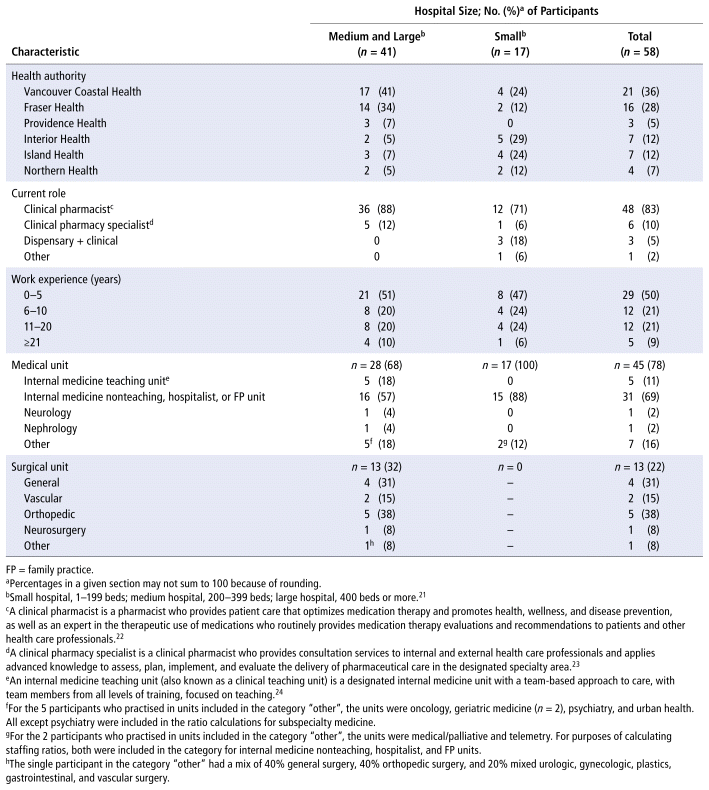
A total of 58 pharmacists met the inclusion criteria for the study and completed the survey, yielding an estimated response rate of 13%. Forty-one (71%) of these pharmacists were from medium and large hospitals (Table 1). Among the pharmacists from medium and large hospitals, most were residency-trained clinical pharmacists (88%) and had 5 years or less of work experience (51%). In addition, the majority (68%) of pharmacists worked in medical units, with the most common area being internal medicine nonteaching, hospitalist, and FP. Other prespecified subspecialty areas were explored, but there were very few responses from pharmacists working in these areas (Table 1). Also, there were no responses from pharmacists working in surgical units in small hospitals. In the medium and large hospitals, the primary patient assignments for each pharmacist were reported to be 22 patients for those in internal medicine teaching units, 35 patients for those in internal medicine nonteaching, hospitalist, and FP units, and 30 patients for those in surgical units. A majority (56%, n = 23/41) of participants from medium and large hospitals were also responsible for providing care for additional patients in a secondary area, often referred to as an off-service unit, with a median secondary patient assignment of 14 patients. For small hospitals, the primary patient assignment was reported to be 36 patients in internal medicine nonteaching, hospitalist, FP units, with 88% (n = 15/17) of participants also being responsible for a median of 19 patients in off-service units.
TABLE 1 Baseline Characteristics
Participants were surveyed to determine their agreement with the list of comprehensive care tasks generated in our previous study17; for 13 of the 17 tasks, agreement was 95% or greater. Agreement rates were lower for 4 tasks: cost-effective use of tests (88%), best possible medication history (BPMH) interview (86%), attending disposition rounds (83%), and discharge planning (78%). Agreement with the BPMH interview as a comprehensive care task was lower because participants felt that the BPMH should be compiled by a dedicated BPMH pharmacist or pharmacy technician instead of the clinical pharmacist. Other reasons given by participants for disagreement with specific tasks in the comprehensive care list were that cost-effective use of tests was not within the pharmacist’s scope of practice; that discharge planning that involves faxing the discharge prescription should be the responsibility of the unit clerk, patient care coordinator, or care management leader; and that disposition rounds are not relevant to pharmacists.
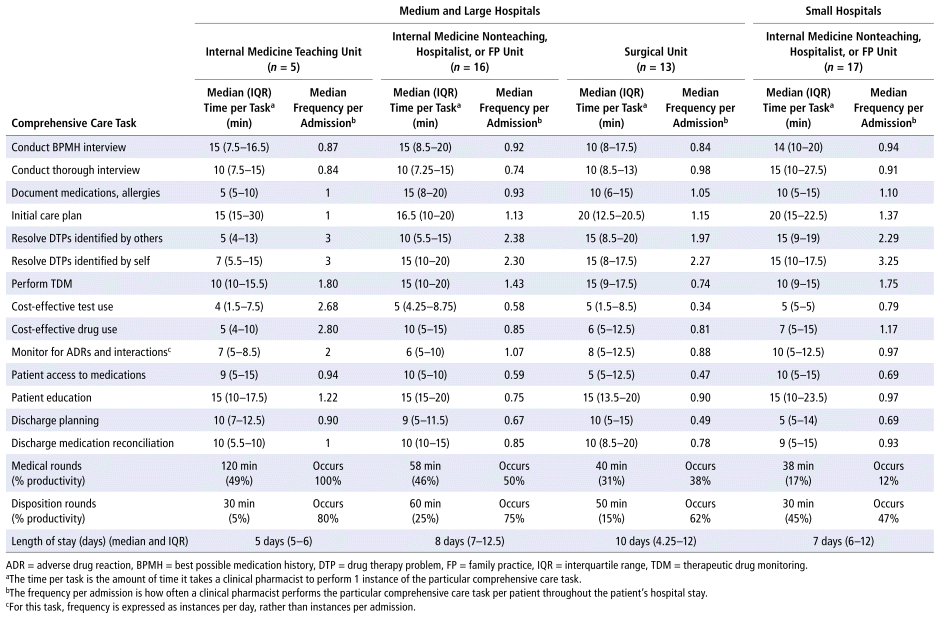
The time spent on and frequency of each comprehensive care task are reported in Table 2. Aside from attending medical and disposition rounds, the tasks that consistently took the longest time, regardless of hospital size or unit type, were completing the initial care plan and providing patient education. The tasks reported to occur most frequently were resolving drug therapy problems (DTPs) identified by self and others and monitoring patients for adverse drug reactions or drug–drug interactions. In medium and large hospitals, 100% (n = 5/5) of participants from internal medicine teaching units reported attending medical rounds, with a median length of 120 minutes per session; in internal medicine nonteaching, hospitalist, and FP units, 50% (n = 8/16) of participants reported attending medical rounds, with a median duration of 58 minutes per session. Participants reported spending a median 66 minutes on nonclinical activities per workday, excluding a 60-minute break, assuming they were not responsible for a pharmacy learner or any distribution-related activities.
TABLE 2 Median Times for and Frequencies of Comprehensive Care Tasks, by Hospital Size and Clinical Unit
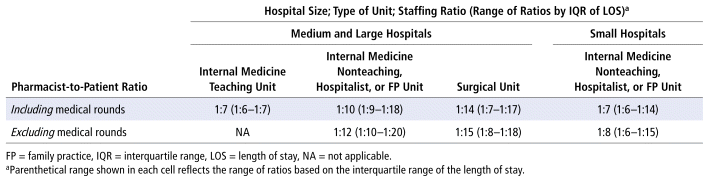
The optimal pharmacist-to-patient ratios required to provide comprehensive pharmaceutical care for medium and large hospitals were calculated to be 1:7 in internal medicine teaching units; 1:10 in internal medicine nonteaching, hospitalist, and FP units; and 1:14 in surgical units (Table 3). The number of participants was insufficient to reliably estimate ratios for subspecialty medical areas outlined in our secondary objectives. Nonetheless, despite the small sample size for the subspecialty subgroups (n = 6), we performed the ratio calculation, which yielded an estimate of 1:16 for subspecialty medicine. The estimated ratios for subspecialty surgery were similar to the ratio of 1:14 for general surgical areas, specifically, 1:14 for general and vascular surgery (n = 6) and 1:15 for orthopedic surgery (n = 5). The pharmacist-to-patient ratio for small hospitals was 1:7 (n = 17).
TABLE 3 Optimal Pharmacist-to-Patient Ratios for Inpatient Medical and Surgical Units by Hospital Size
Pharmacists involved in preceptor activities reported spending an additional 100 minutes per day, on average, on teaching activities. If it is assumed that this is all non–patient care time, the ratios would change to 1:5 for internal medicine teaching units, 1:7 for internal medicine nonteaching, hospitalist, and FP units, and 1:9 for surgical units when pharmacists are serving as preceptors.
Several BC sites have hired BPMH pharmacists or technicians to perform and document BPMH interviews. We performed a subgroup analysis to investigate changes to the staffing ratios if the BPMH task were removed from the comprehensive care task list. With this change, the pharmacist-to-patient ratios increased to 1:8 for internal medicine teaching units; 1:11 for internal medicine nonteaching, hospitalist, and FP units; and 1:15 for surgical units. This scenario will be helpful for estimating the staffing ratios at sites with BPMH pharmacists/technicians who are solely responsible for performing this task.
Pharmacists in many hospitals struggle to manage their large patient workloads, which highlights the need to determine optimal pharmacist-to-patient ratios. There are no established benchmarks for pharmacist-to-patient ratios in the Canadian literature. In this study, we aimed to address this knowledge gap by using a different methodology from our previous study17 to elucidate the optimal staffing ratios that would enable pharmacists to provide comprehensive pharmaceutical care to all patients in medical and surgical units. We found that pharmacist-to-patient ratios of 1:7 for internal medicine teaching units, 1:10 for internal medicine nonteaching, hospitalist, and FP units, and 1:14 for surgical units would be required to provide comprehensive pharmaceutical care in medium and large hospitals.
The ratios identified in this study were lower than those reported in previous literature; however, it is difficult to compare the ratios from different studies due to methodological and practice differences, as well as differences in patient complexity, LOS, and the patient care tasks on which the ratios are based. In Australia, the corresponding ratios were 1:19 and 1:23 for medical and surgical pharmacists, respectively.15 Compared with the previous Canadian study,17 the ratios determined here were lower, with the exception of surgical units, which had identical ratios of 1:14. The difference may be due to methodological differences between the 2 studies. In the current survey study, pharmacists were estimating or recalling the optimal time spent on each task, whereas the previous work-sampling, time-andmotion study used the actual observed time, as recorded by pharmacists. Self-reported times may be subject to recall bias or may represent the ideal if time is unlimited, which may be longer or shorter than the time taken in practice. It could be argued that using time-and-motion data from the previous Canadian study17 might have been more accurate than data based on recall. However, the pharmacists in that previous study were not working under conditions of optimal staffing ratios; as such, the times they recorded may have been shorter (relative to the times reported in the current study) as a result of rushing activities, if they had adapted their workflow to the high patient load for which they were responsible.
The most striking difference in ratios between the 2 studies was for the internal medicine nonteaching and hospitalist (including FP) units (1:10 vs 1:26). There are 3 potential explanations for this difference. First, the DTP resolution time of 10–15 minutes in our study was double to triple the 5 minutes reported in the previous study,17 which may again be attributed to recall bias. Additionally, ambiguity in the survey questions may have led to clinical assessment time, which should only be included in the initial care plan task, being double-counted in the DTP resolution task, resulting in a falsely prolonged DTP resolution time. Second, the LOS in our current study (8 days) was much shorter than in the previous study (13 days). The impact of LOS on the ratios is discussed below. Third, the ratio for internal medicine nonteaching and hospitalist (including FP) units in the previous study did not account for the occurrence of medical rounds, which was reported to be 58 minutes per session in our current study. Because attendance at medical rounds was reported by only 50% of participants from nonteaching units, we calculated the ratio excluding medical rounds to be 1:12, which was higher than 1:10 (with inclusion of medical rounds), but still lower than the 1:26 ratio in the previous study.17
In addition to recall bias, discussed above, our study had other limitations. First, the ratios were highly dependent on LOS, which varies across different units and hospitals. For instance, for 2 similar units with differing LOS of 5 days and 10 days, respectively, the ratios can vary drastically, which is reflected in the range of ratios in relation to the interquartile range of the LOS (see Table 3). The ratios increase as the LOS increases because pharmacists would have more time over which to perform patient care tasks in a longer hospitalization period. We therefore performed a sensitivity analysis to determine whether differences in DTP resolution time or differences in LOS had greater impact on the ratios; we found that LOS was more likely to be the greater contributor. Therefore, when applying these ratios to different institutions, it is important to consider them in relation to the LOS of clinical units. It is also important to acknowledge that patient complexity is a confounding factor that may affect LOS, because more medically complex patients tend to have longer LOS. In the survey, we asked participants to provide data points based on their experience working with “patients of average complexity in [their] day-to-day practice”; however, the term “average complexity” was not defined, and hence this term is subjective and open to interpretation. For future research, it may be worthwhile to consider calculating pharmacist-to-patient ratios per day of hospital stay, based on a standardized national LOS average for each type of unit and level of acuity.
Furthermore, in our study we adjusted the LOS by deducting 2 days from every 7 days of the stay, based on the assumption of a 5-day work week for clinical pharmacists in British Columbia. However, this approach did not capture the 11 statutory holidays per year in this province, which would result in less time available for pharmacists to provide patient care, thus affecting the staffing ratios.
A second limitation was that for several tasks, participants reported a frequency of less than 1, which suggested that the tasks were not always performed for every patient on each admission. We acknowledge that in order to provide comprehensive pharmaceutical care, all of the tasks in the comprehensive care task list must be performed at least once during each hospitalization. However, in our survey questions, we decided to honour participants who may have disagreed with the inclusion of certain tasks in the comprehensive care task list; participants were given the option to indicate such disagreement when reporting task frequency. In addition, the area of practice and the team with which a pharmacist is working may dictate which tasks are prioritized, which would in turn affect the task frequency. Finally, the DTP resolution time was much shorter in internal medicine teaching units than in internal medicine nonteaching, hospitalist, and FP units (5–7 minutes vs 10–15 minutes). This may have been due to differences between practice settings, whereby prescribers were more readily available and medical rounds occurred more frequently in teaching units than in nonteaching units; therefore, DTPs could be resolved more efficiently in the teaching units.
Among our secondary objectives, we estimated the pharmacist-to-patient ratio for small hospitals at 1:7; however, this finding had low certainty due to the lack of dedicated clinical coverage, the heterogeneity of wards in small hospitals, and the variation in practice patterns across smaller hospital sites. Additionally, there was low certainty for the estimated ratios for subspecialty units, given the lack of participants from the prespecified areas and the heterogeneity of the unit types reported across different health authorities. Because some sites had designated BPMH pharmacists, we performed a subgroup analysis to explore how the removal of the BPMH task might alter the ratios. Surprisingly, this adjustment increased the ratios by just 1 for all 3 unit types, which was not a substantial change. It could be that because the BPMH task was only done once per admission (in contrast to other tasks, such as resolving DTPs, that were done more frequently), removing the BPMH task had only a minimal effect on the denominator (time per patient) in the ratio calculation.
Although the ratios established in this study were low, we demonstrated that lower ratios are required to provide comprehensive pharmaceutical care, which was treated as an all-or-nothing concept. In reality, pharmacists can only provide “pieces” of the comprehensive patient care package while managing the large patient workloads assigned to them. The biggest barrier to implementing these lower staffing ratios is a lack of resources, and acquiring additional resources may be challenging from a health system perspective. However, the ratios established in this study can provide insight into the staffing ratios required to provide comprehensive patient care; they can also serve as a reality check on the level of care that is achievable with existing ratios. The results also highlight the need to bridge the gap between providing the theoretical, gold standard comprehensive care to every patient and a more realistic approach that recognizes current staffing resource limitations. Further research should focus on determining whether completing every comprehensive care task is necessary for all patients or if ratios should reflect combinations of comprehensive care tasks appropriate to patient priority or complexity.
This study determined optimal pharmacist-to-patient ratios in BC hospitals to be 1:7 in internal medicine teaching units; 1:10 in internal medicine nonteaching, hospitalist, and FP units; and 1:14 in surgical units. These ratios were lower than those reported previously, possibly due to methodological differences. Given the lack of Canadian literature on hospital pharmacy staffing ratios, it may be valuable to develop national consensus guidelines on appropriate pharmacist-to-patient ratios to guide pharmacy staffing.
1 Zebroski B. Book review of Clinical pharmacy in the United States: transformation of a profession. J Hist Med Allied Sci. 2010;65(4):578–9.
Crossref
2 Carter BL. Evolution of clinical pharmacy in the USA and future directions for patient care. Drugs Aging. 2016;33(3):169–77.
Crossref PubMed PMC
3 Bond CA, Raehl CL, Pitterle ME, Franke T. Health care professional staffing, hospital characteristics, and hospital mortality rates. Pharmacotherapy. 1999;19(2):130–8.
Crossref PubMed
4 Bond CA, Raehl CL, Pitterle ME. Staffing and the cost of clinical and hospital pharmacy services in United States hospitals. Pharmacotherapy. 1999;19(6):767–81.
Crossref PubMed
5 Bond CA, Raehl CL. Clinical pharmacy services, pharmacy staffing, and hospital mortality rates. Pharmacotherapy. 2007;27(4):481–93.
Crossref PubMed
6 Bond CA, Raehl CL. Clinical pharmacy services, pharmacy staffing, and adverse drug reactions in United States hospitals. Pharmacotherapy. 2006;26(6):735–47.
Crossref PubMed
7 Kaboli PJ, Hoth AB, McClimon BJ, Schnipper JL. Clinical pharmacists and inpatient medical care: a systematic review. Arch Intern Med. 2006;166(9):955–64.
Crossref PubMed
8 Makowsky MJ, Koshman SL, Midodzi WK, Tsuyuki RT. Capturing outcomes of clinical activities performed by a rounding pharmacist practicing in a team environment: the COLLABORATE study [NCT00351676]. Med Care. 2009:47(6):642–50.
Crossref PubMed
9 Evidence-based safe nurse staffing toolkit: accessible content. Canadian Nurses Association; 2015 [cited 2022 Sep 22]. Available from: https://hl-prod-ca-oc-download.s3-ca-central-1.amazonaws.com/CNA/2f975e7e-4a40-45ca-863c-5ebf0a138d5e/UploadedImages/documents/2019_EvidencebasedsafenursestaffingtoolkitAccessible-content2.pdf
10 Berry L, Curry P. Nursing workload and patient care. Canadian Federation of Nurses Unions; 2012 [cited 2022 Sep 23]. Available from: https://nursesunions.ca/wp-content/uploads/2017/07/cfnu_workload_printed_version_pdf.pdf
11 Kane RL, Shamliyan T, Mueller C, Duval S, Wilt TJ. Nurse staffing and quality of patient care. Evid Rep Technol Assess (Full Rep). 2007; (151):1–15.
12 Kleinpell R, Ward NS, Kelso LA, Mollenkopf FP Jr, Houghton D. Provider to patient ratios for nurse practitioners and physician assistants in critical care units. Am J Crit Care. 2015;24(3):e16–21.
Crossref PubMed
13 Harvey PR, Trudgill NJ. The association between physician staff numbers and mortality in English hospitals. EClinicalMedicine. 2021; 32:100709.
Crossref PubMed PMC
14 Schnell BR, Gesy KF. The Canadian hospital pharmacy workload measurement study. Can J Hosp Pharm. 1986;39(3):47–52.
15 O’Leary KM, Stuchbery P, Taylor G. Clinical pharmacist staffing levels needed to deliver clinical services in Australian hospitals. J Pharm Pract Res. 2010;40(3):217–21.
Crossref
16 Bednall R, White S, Mills E, Thomson S. Validation of a hospital clinical pharmacy workforce calculator: a methodology for pharmacy? Int J Clin Pract. 2021;75(5):e13932.
Crossref
17 Damji S, Legal M, Dahri K, Partovi N, Shalansky S. Prioritizing quality over quantity: defining optimal pharmacist-to-patient ratios to ensure comprehensive direct patient care in a medical or surgical unit. Can J Hosp Pharm. 2023;77(1):e3437
Crossref
18 Workload indicators of staffing need (WISN) user’s manual. World Health Organization; 2014 [cited 2025 Jan 15]. Available from: https://www.who.int/publications/i/item/9789241500197
19 National statistics. National Association of Pharmacy Regulatory Authorities; 2022 [cited 2022 Sep 22]. Available from: https://www.napra.ca/national-statistics
20 UBC survey tool [supplied by Qualtrics]. The University of British Columbia; [cited 2022 Sep 1]. Available from: https://it.ubc.ca/services/teaching-learning-tools/survey-tool
21 Core plan information: Acute care hospitals. Canadian Institute for Health Information; [cited 2022 Sep 22]. Available from: https://secure.cihi.ca/estore/coreplan.htm
22 American College of Clinical Pharmacy. The definition of clinical pharmacy. Pharmacotherapy. 2008;28(6):817–8.
23 Clinical pharmacy specialist. Fraser Health Careers; 2022 [cited 2022 Sep 22]. Available from: https://careers-fraserhealth.icims.com/jobs/22938/clinical-pharmacy-specialist/job
24 Maudsley RF. The clinical teaching unit in transition. CMAJ. 1993; 148(9):1564–6.
PubMed PMC
Address correspondence to: Dr Michael Legal, Pharmacy Director, Lower Mainland Pharmacy Services 1081 Burrard Street, Vancouver BC V6Z 1Y6 email: mlegal@providencehealth.bc.ca
Competing interests: For activities and projects unrelated to the study reported here, Karen Dahri has received grants from the Canadian Institutes of Health Research, the UBC Students as Partners Fund, and the BC Ministry of Health; consulting fees from TRC Healthcare; honoraria from Pear Tree Healthcare, the Association of Faculties of Pharmacy of Canada, and UBC Continuing Pharmacy Professional Development; and support for travel related to her role as the BC delegate for the Canadian Society of Hospital Pharmacists (now the Canadian Society of Healthcare-Systems Pharmacy). No other competing interests were declared.
Funding: None received.
Submitted: May 25, 2024
Accepted: August 30, 2024
Published: February 12, 2025
1 Damji S, Legal M, Dahri K, Partovi N, Shalansky S. Prioritizing quality over quantity: defining optimal pharmacist-to-patient ratios to ensure comprehensive direct patient care in a medical or surgical unit. Can J Hosp Pharm. 2023;77(1):e3437.
Crossref
© 2025 Canadian Society of Healthcare-Systems Pharmacy | Société canadienne de pharmacie dans les réseaux de la santé
Canadian Journal of Hospital Pharmacy, VOLUME 78, NUMBER 1, 2025