Brief Research Report
Canadian Monitoring Program for Surface Contamination with 11 Antineoplastic Drugs in 126 Centres: Results for 2023
Mathilde Dupré, Ciprian Mihai Cirtiu, Nicolas Caron, Jean-François Bussières, and Cynthia Tanguay
To cite: Dupré M, Cirtiu CM, Caron N, Bussières JF, Tanguay C. Canadian monitoring program for surface contamination with 11 antineoplastic drugs in 126 centres: results for 2023. Can J Hosp Pharm. 2025;78(2):e3671. doi: 10.4212/cjhp.3671
ABSTRACT
Background
Occupational exposure to antineoplastic drugs can lead to long-term adverse effects on workers’ health.
Objective
To describe contamination with 11 antineoplastic drugs measured on surfaces within health care centres.
Methods
Centres sampled 12 standardized sites: 6 in oncology pharmacies and 6 in outpatient clinics. Samples were analyzed by ultra-performance liquid chromatography–tandem mass spectrometry.
Results
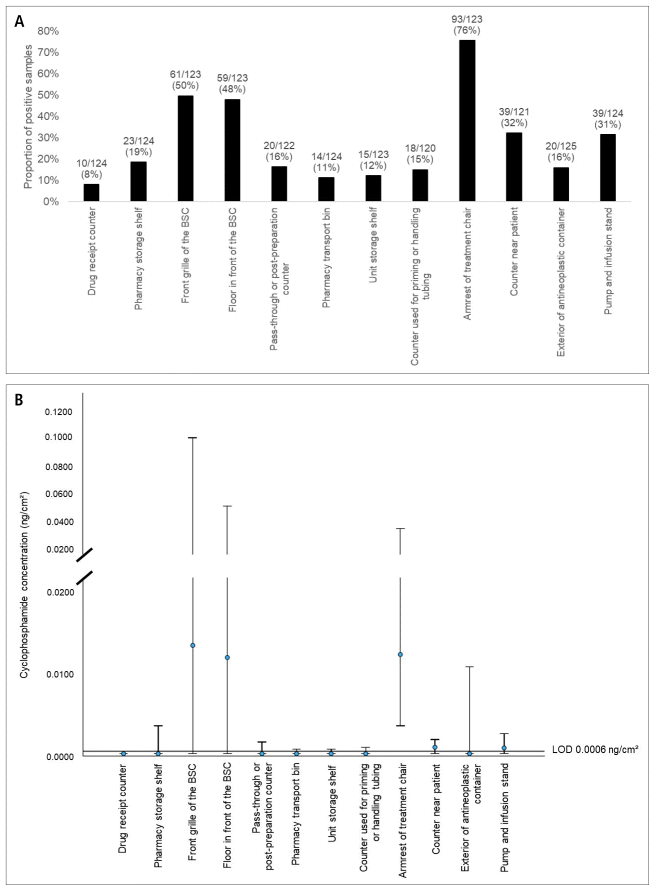
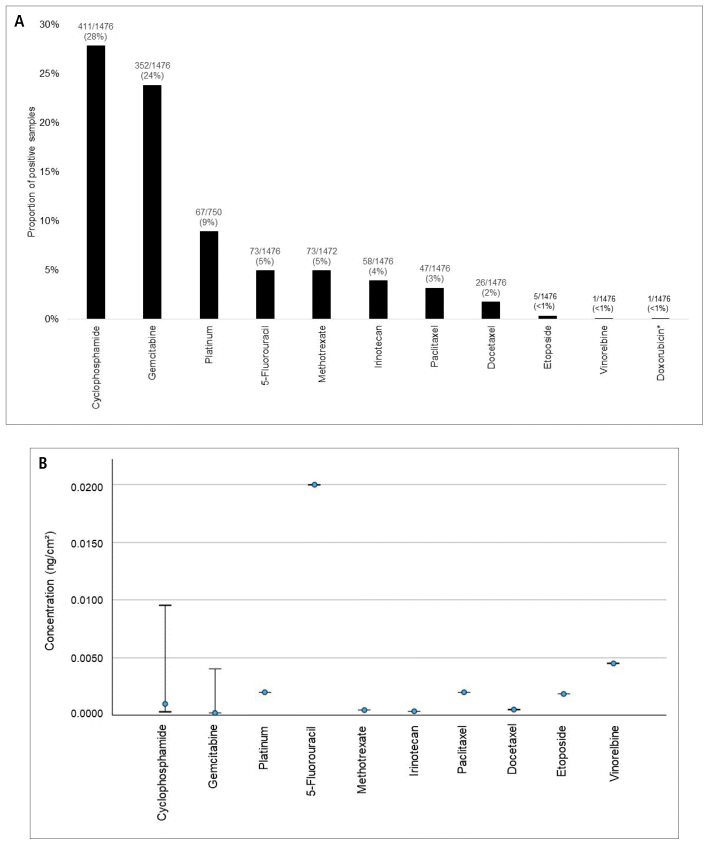
A total of 126 Canadian centres participated over the period January to April 2023. Cyclophosphamide (411/1476, 28%) and gemcitabine (352/1476, 24%) were frequently found on surfaces; less than 10% of samples were contaminated with the other 9 drugs. The 90th percentile of concentration was 0.0095 ng/cm2 for cyclophosphamide and 0.0040 ng/cm2 for gemcitabine. The armrest of a treatment chair (93/123, 76%) and the front grille inside the biological safety cabinet (61/123, 50%) were frequently contaminated with cyclophosphamide.
Conclusions
This monitoring program allowed centres to benchmark their contamination and helped increased awareness. Frequent decontamination, safe handling practices, and the use of personal protective equipment are mandatory.
Keywords: occupational exposure, surface monitoring, antineoplastic drugs, cyclophosphamide, gemcitabine
RÉSUMÉ
Contexte
L’exposition des travailleurs aux médicaments antinéoplasiques peut mener à des effets indésirables à long terme sur leur santé.
Objectif
Décrire la contamination des surfaces des établissements de santé à 11 antinéoplasiques.
Méthodologie
Les établissements participants ont échantillonné 12 surfaces standardisées, soit 6 dans les pharmacies d’oncologie et 6 dans les cliniques externes. Les échantillons étaient analysés par chromatographie liquide à ultra haute performance couplée à la spectrométrie de masse.
Résultats
Au total, 126 établissements canadiens ont participé entre janvier et avril 2023. Le cyclophosphamide (411/1476, 28 %) et la gemcitabine (352/1476, 24 %) étaient fréquemment mesurés sur les surfaces; moins de 10% des échantillons étaient contaminés avec les neuf autres médicaments dosés. Le 90e percentile de la concentration était de 0,0095 ng/cm2 pour le cyclophosphamide et de 0,0040 ng/cm2 pour la gemcitabine. Les bras des fauteuils d’administration (93/123, 76 %) et les grilles des enceintes de sécurité biologique (61/123, 50 %) étaient fréquemment contaminés avec le cyclophosphamide.
Conclusions
Ce programme de surveillance a permis aux établissements de comparer leur contamination et d’accroître la sensibilisation des travailleurs. La décontamination fréquente, les pratiques de manipulation sécuritaires et le port d’équipement de protection individuelle sont essentiels.
Mots clés: exposition professionnelle, surveillance environnementale, antinéoplasiques, cyclophosphamide, gemcitabine
INTRODUCTION
Hospitals commonly use antineoplastic drugs to treat patients. Approximately 36 000 Canadian health care workers are exposed to these hazardous drugs either when handling them directly or when touching contaminated surfaces.1 Adverse effects include genotoxic effects and adverse pregnancy outcomes.2,3
A Canadian initiative provides a pragmatic approach to monitoring surface contamination with antineoplastic drugs.4 This monitoring program helps to keep workers informed. Since its inception in 2008, the program has documented a reduction in surface contamination at participating health care centres. Many initiatives have contributed to this improvement. For guidance in this area, Quebec health care centres rely on the Association paritaire pour la santé et la sécurité du travail du secteur des affaires sociales (ASSTSAS) safe handling guidelines5 and the compounding standard of the Ordre des pharmaciens du Québec (OPQ).6 Other provinces have also established local safe handling guidelines or have adopted the standards of the National Association of Pharmacy Regulatory Authorities (NAPRA), which are derived from the OPQ standards, or they use the compounding guidelines for pharmacies set out by the Canadian Society of Hospital Pharmacists (now the Canadian Society of Healthcare-Systems Pharmacy).7–9
Following publication of the recently updated ASSTSAS guidelines (French version in 2021, English version in 2023), a survey of Quebec health care centres identified conformity gaps.10 A community of practice aimed to assist centres in prioritizing areas for improvement.10 Conformity with surface monitoring requirements was high (84%), as most Quebec centres participated in this national program.
The objective of the current article is to present results of the 2023 edition of the Canadian monitoring program for surface contamination with 11 antineoplastic drugs. The secondary objective was to describe safe handling practices reported by the participating centres.
METHODS
Our team invited 218 Canadian centres with more than 50 beds to participate in the 2023 program; invitations were sent by email in November 2022.
The sampling and analytical methods were described previously.4 For nearby centres, the same research assistant (M.D.) sampled the surfaces; for other centres, staff at each participating centre sampled the surfaces. The sampling of 12 standardized sites was performed at the end of a working day or before the beginning of the next shift, before surfaces were cleaned, so that data would reflect, to the extent possible, a worker’s potential exposure. The person taking samples wiped a 600 cm2 surface 4 times: once horizontally and once vertically with each side of the wipe supplied in the sampling kit. They also provided the research team with photographs and descriptions of the sites used for sample collection; sites that did not meet the study criteria were excluded from the analysis. In addition, centres answered a survey about their safe handling practices.
Each centre paid for analysis of its own samples. The Centre de toxicologie du Québec (CTQ), a public services laboratory, quantitatively analyzed the samples for 9 antineoplastic drugs: cyclophosphamide (limit of detection [LOD] 0.0006 ng/cm2), methotrexate (LOD 0.0009 ng/cm2), gemcitabine (LOD 0.0004 ng/cm2), 5-fluorouracil (LOD 0.04 ng/cm2), irinotecan (LOD 0.0007 ng/cm2), docetaxel (LOD 0.001 ng/cm2), paclitaxel (LOD 0.004 ng/cm2), vinorelbine (LOD 0.009 ng/cm2), and etoposide (LOD 0.0037 ng/cm2). The laboratory qualitatively analyzed the samples for 1 additional antineoplastic drug, doxorubicin (LOD 0.02 ng/cm2). Centres could also opt to quantify total soluble platinum, reflecting the 3 platinum-based drugs (cisplatin, carboplatin, and oxaliplatin). The method quantifies soluble organic platinum, with exclusion of inorganic platinum found in the environment from other sources, which is insoluble. The CTQ performed all of the analyses on the same 2 instruments, an ultra-performance liquid chromatography–tandem mass spectrometry system for the non-platinum-based antineoplastic drugs and an inductively coupled plasma mass spectrometry system for the platinum-based antineoplastic drugs.
Centres could access their individual monitoring results on a secure-access website, which also presented comparative data for all participating centres. Sampling sites at each centre that might need additional attention were colour-coded according to contamination thresholds. The program updates these thresholds every year. Using data from the 2023 edition of the program, any result above the 75th percentile appeared in orange, and any result above the 90th percentile appeared in red. The website also displayed historical data to allow monitoring of trends.
Descriptive statistical analyses (percentiles) were carried out with SPSS software (SPSS Statistics for Windows, version 29.0, IBM Corporation).
RESULTS
Participating Centres
Over the period January to April 2023, a total of 126 centres participated in the monitoring program. Three of these centres were participating for the first time. More than half of participating centres were in Quebec (70/126, 56%), with smaller numbers in Ontario (23/126, 18%), Saskatchewan (19/126, 15%), Manitoba (7/126, 6%), New Brunswick (6/126, 5%), and the Northwest Territories (1/126, 1%).
Over half of the centres (68/126, 54%) reported more than 5000 preparations of antineoplastic drugs during the previous year.
The most commonly used antineoplastic drugs (by weight, reported as median [minimum–maximum]) were 5-fluorouracil (1489 [6–13 853] g/year), gemcitabine (228 [2–3457] g/year), cyclophosphamide (141 [2–2000] g/year), and carboplatin (66 [0–1501] g/year). For the other antineoplastic drugs, the median total was less than 50 g/year.
Surface Contamination
The 2023 program generated results from 1476 of 1512 samples for the 9 antineoplastic drugs and 750 of 762 samples for platinum drugs, after exclusion of noncompliant samples. Overall, 411 (28%) of the 1476 samples were contaminated with cyclophosphamide, and 352 (24%) with gemcitabine. Contamination thresholds for the 75th and 90th percentiles were, respectively, 0.00099 ng/cm2 and 0.0095 ng/cm2 for cyclophosphamide, and less than 0.0002 ng/cm2 (i.e., less than the LOD) and 0.0040 ng/cm2 for gemcitabine. Contamination with the other drugs was lower, with less than 10% of samples contaminated and the 90th percentile being lower than the LOD (see Appendix 1). The sampling sites with the most contamination were the front grille of the biological safety cabinet (BSC), the floor in front of the BSC, and the armrest of the treatment chair (Figure 1).
| |
| |
|
FIGURE 1 Surface contamination with cyclophosphamide, by sampling site. A: Proportion of samples positive for cyclophosphamide. B: Concentration of cyclophosphamide contamination. For each sampling site, short bottom bar = median, circle = 75th percentile, short top bar = 90th percentile. The full-width horizontal line is the limit of detection (LOD). BSC = biological safety cabinet. |
Safe Handling Practices
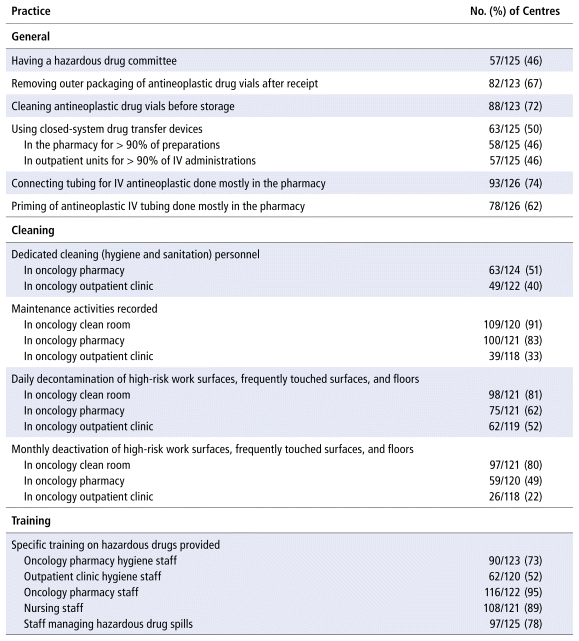
Fewer than half of the centres (57/125, 46%) had a hazardous drug committee, with the proportion being higher among Quebec centres (40/69, 58%). Common safe handling practices included cleaning antineoplastic drug vials upon receipt (88/123, 72% overall; 66/68, 97% for Quebec centres) and connecting the IV antineoplastic tubing at the pharmacy (93/126, 74% overall; 62/70, 89% for Quebec centres) (Table 1). Cleaning practices were generally more compliant with established safe handling practices in the oncology clean rooms than in the oncology outpatient clinics (Table 1).
TABLE 1 Safe Handling Practices Reported by Participating Centres
Among centres that participated in the 2022 program, most (98/121, 81%) reported that they had shared their results locally, mainly with the pharmacy (92/121, 76%) and care teams (75/121, 62%), but also with hygiene and sanitation staff (45/121, 37%), hazardous drug committees (26/121, 21%), the occupational health and safety department (22/121, 18%), and doctors (5/121, 4%).
DISCUSSION
A total of 126 centres participated in the 2023 edition of this Canadian monitoring program. Over the span of the program (since 2008), the concentration of contamination has decreased and has remained low and constant for the past few years.4 Quartucci and others11 also reported decreasing concentration for platinum and 5-fluorouracil contamination over a period of 21 years. In their 13-year analysis, Bláhová and others12 found that the proportion of positive samples decreased over time in some areas within the participating institutions, but the reverse was observed in other areas. The adoption of diverse safe handling strategies5–9 has progressively improved practices in centres handling these medications.
Although the concentrations of antineoplastic drugs measured on surfaces were low, the proportion of samples contaminated with these drugs was high. Cyclophosphamide was consistently the most frequently found contaminant on surfaces sampled in this monitoring program.4 Despite safe handling guidelines, the same sites remain frequently contaminated over successive years: the front grille of the BSC, the floor in front of the BSC, and the armrest of treatment administration chairs. Notably, armrests were the most frequently contaminated surface, but the concentration of contamination was lower than on the front grille of the BSC; more specifically, 76% and 50% of samples from armrests and grilles, respectively, were contaminated with cyclophosphamide, and the 90th percentiles of concentration were 0.036 ng/cm2 and 0.102 ng/cm2. Staff routinely handle drugs in these areas, so traces of contamination are to be expected at the end of a workday. However, other surfaces, such as storage and transport trays, also contained traces of antineoplastic drugs.
Monitoring of surface contamination serves as an indirect indicator of workers’ exposure. Safe handling practices and personal protective equipment further reduce or eliminate workers’ intake of contaminants. A recent study reported that 33% of gloves were contaminated with antineoplastic drugs.13 Villa and others14 showed that nurses with a “high glove wearing score” were less prone to internal contamination with antineoplastic drugs. In a recent study of French health care workers, more than half of workers were contaminated, and surface contamination was widespread.15 Another recent European study showed frequent contamination of surfaces, but fewer contaminated workers.16
The current study showed that the number of centres with a hazardous drug committee had increased since the previous edition, from 46 to 57 centres.4 This change is probably in response to the updated ASSTSAS guidelines and the identification of this topic as a priority for the community of practice. It is hoped that the creation of such committees will help leverage more improvements in other areas, such as training. Workers’ training has not improved significantly since the previous edition of the program.4 Workers’ training and certification are time-consuming processes. Villa and others14 recognized that “feeling sufficiently informed” was a factor contributing to reduced internal contamination of workers. Our monitoring program will further evaluate the association between the monitoring of the surface contamination and the adoption of safe handling practices.
CONCLUSION
For the 2023 edition of the Canadian monitoring program, measured concentrations of surface contamination with antineoplastic drugs were generally low, although some areas were frequently contaminated. Adherence to safe handling practices and the use of personal protective equipment are required as part of a prevention program. The number of centres with a hazardous drug committee has increased, which should help with continuous practice improvement. Continued surveillance is required to meet regulations.
Participation in a monitoring program such as ours is an opportunity to educate and train workers about safe handling practices. Centres that participate in the program benefit from a validated and standardized method, nationwide benchmarking, webinars, and personalized assistance.
References
1 Antineoplastic agents occupational exposures. CAREX Canada; 2024 [cited 2024 Jun 14]. Available from: https://carexcanada.ca/profile/antineoplastic_agents-occupational-exposures/
2 Vanneste D, Verscheure E, Srinivasan AN, Godderis L, Ghosh M. Systematic review of genotoxicity induced by occupational exposure to antineoplastic drugs. Arch Toxicol. 2023;97(6):1453–517.
Crossref PubMed
3 Liu S, Huang Y, Huang H, Hu S, Zhong X, Peng J, et al. Influence of occupational exposure to antineoplastic agents on adverse pregnancy outcomes among nurses: a meta-analysis. Nurs Open. 2023;10(9):5827–37.
Crossref PubMed PMC
4 Pinet E, Cirtiu CM, Caron N, Bussières JF, Tanguay C. Canadian monitoring program of the surface contamination with 11 antineoplastic drugs in 124 centres. J Oncol Pharm Pract. 2024;30(1):19–29.
Crossref
5 Bédard S, Bertrand G, Bussières JF, Chevrette A, Chouinard A, Ferland G, et al. Prevention guide: safe handling of hazardous drugs. Association paritaire pour la santé et la sécurité du travail du secteur affaires sociales; 1995 [revised 2023; cited 2025 Mar 30]. Available from: https://espacedoc.asstsas.qc.ca/cgi-bin/koha/opac-detail.pl?biblionumber=1464
6 Norme 2014.02. Préparation de produits stériles dangereux en pharmacie. Ordre des pharmaciens du Québec; 2023 [cited 2024 Jun 14]. Available from: https://www.opq.org/materiel-documentation/norme-2014-02-preparation-de-produits-steriles-dangereux-en-pharmacie/
7 Kennedy K, Vu K, Coakley N, Daley-Morris J, Forbes L, Hartzell R, et al.; Nursing Guideline Development Group. Safe handling of hazardous drugs. Version 3. Ontario Health, Cancer Care Ontario; 2022 Mar [cited 2024 Jun 14]. Available from: https://www.cancercareontario.ca/en/guidelines-advice/types-of-cancer/2161
8 Model standards for pharmacy compounding of hazardous sterile preparations. National Association of Pharmacy Regulatory Authorities [Canada]; 2016 [cited 2025 Mar 30]. Available from: https://www.napra.ca/publication/model-standards-for-pharmacy-compounding-of-hazardous-sterile-preparations/
9 Compounding: guidelines for pharmacies. Canadian Society of Hospital Pharmacists; 2014 [cited 2024 Jun 14]. Available from: https://www.cshp.ca/Site/Content/Resources/compounding-guidelines.aspx
10 Pinet E, Langlais A, Chouinard A, Bussières JF, Tanguay C. National survey of safe handling of hazardous drugs in hospital settings: use of an innovative approach. J Oncol Pharm Pract. 2024;30(8):1385–96.
Crossref
11 Quartucci C, Rooney JPK, Nowak D, Rakete S. Evaluation of long-term data on surface contamination by antineoplastic drugs in pharmacies. Int Arch Occup Environ Health. 2023;96(5):675–83.
Crossref PubMed PMC
12 Bláhová L, Bláha L, Doležalová L, Kuta J, Hojdarová T. Proposals of guidance values for surface contamination by antineoplastic drugs based on long term monitoring in Czech and Slovak hospitals and pharmacies. Front Public Health. 2023;11:1235496.
Crossref PubMed PMC
13 Dugheri S, Squillaci D, Cappelli G, Saccomando V, Fanfani N, Ceccarelli J, et al. Evaluation of the risk of occupational exposure to antineoplastic drugs in healthcare sector: part I - medical gloves. Arh Hig Rada Toksikol. 2023;74(3):187–97.
PubMed PMC
14 Villa A, Geshkovska A, Bellagamba G, Baldi I, Molimard M, Verdun-Esquer C, et al. Factors associated with internal contamination of nurses by antineoplastic drugs based on biomonitoring data from a previous study. Int J Hyg Environ Health. 2023;254:114264.
Crossref PubMed
15 Ndaw S, Remy A. Occupational exposure to antineoplastic drugs in twelve French health care setting: biological monitoring and surface contamination. Int J Environ Res Public Health. 2023;20(6):4952.
Crossref PubMed PMC
16 Korczowska E, Crul M, Wolc A, Meier K. Protecting the health care workforce from cytotoxic drugs contamination in the hospital wards: the results of the pan-European MASHA-2 project. Eur J Oncol Pharm. 2023;6(3):00. doi: 10.1097/OP9.0000000000000048
Crossref
Mathilde Dupré, DPharm, was, at the time of this study, a DPharm candidate with the Université Paris-Saclay, Orsay, France. She has since graduated and is now with the Unité de recherche en pratique pharmaceutique and the Pharmacy Department, CHU Sainte-Justine, Montréal, Quebec.
Ciprian Mihai Cirtiu, PhD, is with the Centre de toxicologie du Québec, Institut national de santé publique du Québec, Québec, Quebec.
Nicolas Caron, PhD, is with the Centre de toxicologie du Québec, Institut national de santé publique du Québec, Québec, Quebec.
Jean-François Bussières, BPharm, MSc, MBA, FCSHP, FOPQ, is with the Unité de recherche en pratique pharmaceutique and the Pharmacy Department, CHU Sainte-Justine, and the Faculty of Pharmacy, Université de Montréal, Montréal, Quebec.
Cynthia Tanguay, BSc, MSc, is with the Unité de recherche en pratique pharmaceutique and the Pharmacy Department, CHU Sainte-Justine, Montréal, Quebec.
Address correspondence to: Cynthia Tanguay, Pharmacy Practice Research Unit, Pharmacy Department, CHU Sainte-Justine, 3175, chemin de la Côte Sainte-Catherine, Montréal QC H3T 1C5, email: cynthia.tanguay.hsj@ssss.gouv.qc.ca
(Return to Top)
Competing interests: None declared.
Funding: None received.
Acknowledgements: The authors would like to thank all the centres for their participation in the program.
Submitted: July 2, 2024
Accepted: October 24, 2024
Published: May 14, 2025
APPENDIX 1. Surface contamination by individual antineoplastic drugs.
| |
| |
|
A: Proportion of samples positive for the particular drug. *For doxorubicin, only qualitative analyses were performed; no concentration data are available. B: Concentration of each contaminating drug. For each drug, short bottom bar = median, circle = 75th percentile, short top bar = 90th percentile. |
© 2025 Canadian Society of Healthcare-Systems Pharmacy | Société canadienne de pharmacie dans les réseaux de la santé
Canadian Journal of Hospital Pharmacy, VOLUME 78, NUMBER 2, 2025