Amy Wiebe, Ruth Pecson, Maggie Coupland, and Katelyn HalpapeTo cite: Wiebe A, Pecson R, Coupland M, Halpape K. Role of pharmacists in addiction medicine in Canada’s publicly funded health care systems: a qualitative study. Can J Hosp Pharm. 2025;78(2):e3680. doi: 10.4212/cjhp.3680
ABSTRACT
Background
Canadians face unprecedented substance-related harms, affecting their health, livelihoods, and relationships. While medications are commonly used for withdrawal, harm reduction, and treatment, the role of pharmacists in addiction medicine care settings remains unclear.
Objective
To explore the roles, activities, facilitators, barriers, and value added of pharmacists working in the area of substance use disorder in Canada’s publicly funded health care systems.
Methods
This qualitative study was based on virtual interviews conducted from January 26 to February 14, 2024, with 15 pharmacists practising in Canada. Participants were included if they provided direct patient care within a publicly funded system with a component of their focus in addiction medicine. Interviews were transcribed and analyzed using NVivo 12 software, and thematic analysis was employed to identify key themes. Narratives were developed to demonstrate the wide variety of workplaces, roles, and responsibilities of the participants.
Results
The 15 participating pharmacists, from 7 provinces, described diverse activities, including provision of education, gathering of information, assessment, prescribing and administration of medications, harm reduction, support of care transitions, policy development, and strengthening of therapeutic alliances. Areas of focus included being surprised by working in “grey” areas, experiencing barriers relating to the scope of their positions, and adding value by having specialized knowledge about medications.
Conclusions
Pharmacists in Canada play diverse roles in substance use disorder care, with the potential to expand system capacity and improve medication management. However, systemic support and innovation are needed to encourage their increased involvement, and further research is needed to evaluate outcomes associated with implementation of these roles.
Keywords: hospital pharmacy services, addiction medicine, substance use disorder, primary care, ambulatory care, pharmacist
RÉSUMÉ
Contexte
Les Canadiens sont confrontés à des méfaits sans précédent liés aux substances, qui affectent leur santé, leurs moyens de subsistance et leurs relations. Bien que des médicaments soient couramment utilisés pour le sevrage, la réduction des méfaits et le traitement, le rôle des pharmaciens dans le domaine des soins en médecine des dépendances demeure flou.
Objectif
Examiner les rôles, les activités, les facilitateurs, les obstacles et la valeur ajoutée des pharmaciens travaillant dans le domaine des troubles liés à l’usage de substances au sein des systèmes de santé financés par les deniers publics.
Méthodologie
Cette étude qualitative se basait sur des entretiens virtuels réalisés du 26 janvier au 14 février 2024 avec 15 pharmaciens pratiquant au Canada. Les participants étaient inclus s’ils prodiguaient des soins directs aux patients au sein d’un système financé par l’État, avec un aspect de leur pratique axé sur la médecine des dépendances. Les entretiens ont été transcrits et analysés à l’aide du logiciel NVivo 12, et une analyse thématique a été employée pour identifier les thèmes clés. Des scénarios ont été élaborés pour illustrer la grande diversité des lieux de travail, des rôles et des responsabilités des participants.
Résultats
Les 15 pharmaciens qui ont participé à l’étude, en provenance de 7 provinces, ont révélé une diversité d’activités, notamment la sensibilisation des patients, la collecte d’informations, l’évaluation, la prescription et l’administration de médicaments, la réduction des risques, le soutien pour les transitions de soins, l’élaboration de politiques et le renforcement des alliances thérapeutiques. Les domaines d’intérêt comprenaient le fait d’être surpris de travailler dans des zones « floues », l’expérience d’obstacles liés à la portée de leurs fonctions, et la valeur ajoutée associée à la détention de connaissances spécialisées sur les médicaments.
Conclusions
Les pharmaciens au Canada jouent divers rôles dans les soins liés aux troubles de l’usage de substances, avec un potentiel d’élargir la capacité du système et d’améliorer la gestion de la médication. Cependant, le soutien systémique et l’innovation sont nécessaires pour encourager une plus grande implication, et des recherches supplémentaires sont requises pour évaluer les résultats associés à la mise en œuvre de ces rôles.
Mots-clés: services des pharmacies d’hôpitaux, médecine des dépendances, trouble lié à l’usage de substances, soins primaires, soins ambulatoires, pharmacien
Canadians are facing unprecedented levels of substance-related harms, which are leading to devastating health outcomes and are severely affecting their livelihoods.1 When all substances are accounted for, more than 200 Canadians die each day because of substance use.1 Of concern, in the context of an increasingly toxic drug supply, more than twice as many people died as a result of substance use in 2020 as died in 2007.2 Furthermore, more than 44 000 Canadians died from opioid toxicity in the 7 years between 2016 and 2023, averaging about 22 Canadians each day.1–3 In 2020, opioids surpassed alcohol, for the first time ever, in terms of the most years of productive life lost of any substance, primarily due to the large number of young people dying from opioid toxicity.2
Substance use–related health issues result in more than 500 Canadians being admitted to hospital daily, which surpasses the combined number of hospital admissions for heart attack and stroke.4 To address these concerns, it is becoming more and more common for specialized acute care teams to be established, often on a consultant basis, to support the management and care of hospitalized people who use substances.5,6 The composition of these teams is highly variable, and although they are often led by prescribers, they may also be supported by other providers, such as a nurse, social worker, dietitian, pharmacist, occupational therapist, and/or peer support worker.5,6 Given the high volumes of admissions and the limited availability of funding and specialized providers, patient needs commonly exceed what these teams can manage.5
Canadian addiction medicine teams in acute care and other publicly funded health care settings often use medications to assist with substance withdrawal, harm reduction, and the treatment of substance use disorders (SUDs). However, the integration of pharmacists into these teams is not well documented.5,6 Existing studies from the United States have described pharmacists in roles such as promotion of harm reduction strategies (e.g., dispensing of naloxone kits, education about safe injection, and provision of sterile injection supplies), initiation and modification of medication therapy (e.g., buprenorphine–naloxone and naltrexone) in the emergency department, medication reconciliation, patient education, and pain management for people with SUD.6–11 Higher-level administrative roles have also been described, including the provision of staff education, policy development, and creation of medication management order sets.6,7,9,12–14
To our knowledge, no Canadian studies have explored the role of pharmacists working in publicly funded health care settings who are actively involved in the care of individuals with SUD. Therefore, we conducted this study to answer the following research question: “What roles are pharmacists who work in the area of SUD management holding in Canada’s publicly funded health care systems?” We aimed to explore the roles, activities, facilitators, barriers, and value added of pharmacists working in the area of SUD in Canada’s publicly funded health care systems.
This qualitative study involved semistructured interviews conducted virtually with publicly funded pharmacists working in addiction medicine across Canada. This research was approved by the University of Saskatchewan Research Ethics Board (Beh 4448) and was conducted in accordance with the ethical standards of the responsible committee(s) on human experimentation (institutional and national) and the Helsinki Declaration.
Individuals were eligible to be included if they met the following criteria: a pharmacist who was working in Canada and whose role involved some direct patient care; who was currently working in an area of a publicly funded system (e.g., inpatient, outpatient, or emergency department setting) in addiction medicine (or where a component of practice was in addiction medicine, such as an HIV clinic); who had a role with some dedicated focus on SUD screening or was supporting the pharmacotherapy of SUD with or without withdrawal management and/or was offering harm reduction supports; and who spoke English. The following individuals were excluded: pharmacists in an opioid stewardship role exclusively focused on pain management; pharmacists in a community-based, retail pharmacy setting; and pharmacists in an administrative role with no direct patient care.
Recruitment involved broad distribution by email of a poster with an invitation to the study through snowball sampling, the Canadian Society of Hospital Pharmacists (now the Canadian Society of Healthcare-Systems Pharmacy), and the META:PHI listserv (Women’s College Hospital), as well as distribution directly to pharmacy leaders (e.g., directors/managers within hospital settings) across Canada. Interested individuals were invited to contact the lead author by email, at which time eligibility for the study was confirmed. Recruitment was open from January 18 to February 9, 2024, and the sample size was limited to 15 participants for feasibility.
Participation was voluntary, and individuals were not compensated for their involvement. Before beginning the interview, each participant provided written or verbal informed consent whereby they agreed to involvement in the study, recording of the interview, and sharing of de-identified information through oral presentation and publication.
One team member (A.W.) conducted the semistructured virtual interviews through the Zoom video conferencing platform (https://zoom.us/) during January and February 2024, using an interview guide (Appendix 1; not pilot tested). At the end of each interview, demographic information was collected verbally. Interviews were audio- and video-recorded and subsequently transcribed verbatim by 2 of the other team members (R.P., K.H.). Participants reviewed their transcripts and provided clarification if needed. The de-identified transcripts were submitted to a research team member not involved in the interviewing or transcribing (M.C.), for completion of qualitative data analysis and thematic coding. Coding, analysis, and compilation of the results was supported by NVivo 12 software (Lumivero). Participants were classified according to various demographic factors (i.e., age of participant, gender, type of workplace, primary focus of workplace, practice in an urban or rural setting, and years of practice). Other relevant demographic factors (e.g., training and whether a pharmacist previously held their role) were extracted to contextualize the roles of pharmacists. The demographic factors are presented in quantitative formats.
The thematic analysis methodology of Braun and Clarke15 was used to examine themes across different aspects of the interviews. Familiarization with the data was achieved through repeated readings of the interview transcripts. Initial semantic themes, based on broad question categories (Appendix 1), were produced following data familiarization. An initial list of several categories comprehensive of any significant concept was then amalgamated into a set of fewer, broader themes. Narratives were developed to accurately present the full scope of positions that participating pharmacists held. To develop these narratives, content coding was applied to each full interview, with a focus on job tasks and duties. Researchers paid particular attention to participants’ responses to the interview question “What does a typical day look like to you?” to contextualize the different tasks within their workplace and position. Extracted data were compiled, and a narrative was created for each participant. These narratives were contextualized within pharmacists’ specific workplaces, with removal of identifying information, and each participant who consented to their narrative’s release had an opportunity to verify its accuracy.
A preliminary report outlining the analysis conducted by one of the authors (M.C.) was shared among the coauthors for review. Any discrepancies were clarified and resolved.
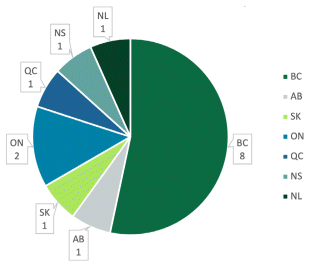
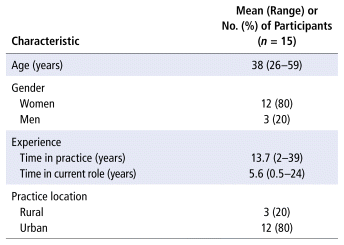
Twenty-seven pharmacists from across Canada responded to the recruitment invitation. Sixteen of these met the inclusion criteria, and 15 pharmacists completed the semistructured interview. The average interview time was 60 minutes. Participants’ demographic characteristics and practice settings are listed in Table 1. Geographically, most participants (53%, n = 8) were from British Columbia. Figure 1 summarizes the geographic distribution of participants.
TABLE 1 Key Demographic Characteristics of Participants
|
| ||
|
FIGURE 1 Geographic distribution of participants. NL = Newfoundland and Labrador, NS = Nova Scotia, QC = Quebec, ON = Ontario, SK = Saskatchewan, AB = Alberta, BC = British Columbia. | ||
Individual participant narratives are presented in the supplemental material.
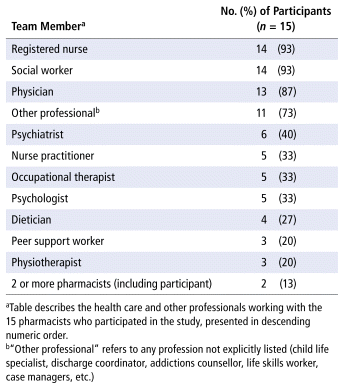
All of the 15 interviewed pharmacists worked standard business hours, Monday to Friday, approximately 0800 to 1600. All were full-time, with some holding multiple roles. About half (53%, n = 8) worked specifically in addiction medicine, whereas others worked in areas that commonly serve patients with SUD, such as infectious diseases, psychiatry, and primary care. Of the 15 participants, 60% (n = 9) worked alongside a prescriber with a specialization in addiction medicine. Nearly all pharmacists collaborated in teams with a nurse and a social worker (93%, n = 14), and most worked with a physician (87%, n = 13) (Table 2). Most pharmacists were the sole pharmacist on their team (87%, n = 13).
TABLE 2 Distribution of Professionals in Participants’ Multidisciplinary Teams
Participants reported either directly seeing all patients in their unit or receiving referrals to see specific patients from prescribers, nurses, or other allied health care professionals. Many participants were informally consulted through verbal communication. Most participants (n = 9) did not hold scheduled appointments to meet with patients and instead incorporated patient interactions throughout their workday. Other participants (n = 4) indicated that they made appointments and also saw patients on an as-needed basis. The remaining 2 participants only saw patients during booked appointments. Most participants (n = 9) indicated that they saw patients exclusively in person; the other participants (n = 6) indicated that they used a mixed-methods approach and used the telephone or virtual communication in their practice.
All participants made medication recommendations either verbally or through written documentation and emphasized this activity as a key component of their role and responsibilities. Only one participant prescribed independently. A small number of participants (n = 3) indicated that they administered medications (i.e., injections). Specifically, the medications administered by participants were extended-release buprenorphine and vaccines in settings or circumstances where trained nursing staff were not available to provide this care.
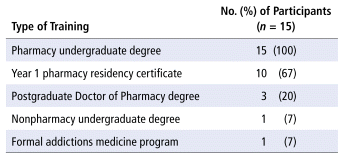
Participants reported several educational pathways, including postsecondary education degrees, pharmacy practice residencies, and formal certificates or credentials (Table 3). Additionally, participants highlighted self-directed learning methods, such as attending conferences, reading peer-reviewed literature, delivering presentations, and learning on the job, as valuable avenues for expanding their knowledge and skills.
TABLE 3 Formal Training of Participants
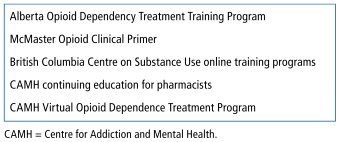
Some specific training courses described by participants are listed in Box 1, and various other training activities, on topics such as cultural safety, stigma, and motivational interviewing, were reported. Despite participants identifying numerous courses and formal education programs as helpful, many emphasized the significance of learning on the job as integral to their understanding and expertise: “I think it’s the experience, it’s the knowledge that you get over time. I didn’t learn all of this stuff in my residency. Obviously, it definitely gave me foundational knowledge, but I think a lot of it is just from being here doing it” (Participant 2).
BOX 1. Canadian Training Courses for Substance Use Disorders Reported by Participants
When asked about the training they would recommend for those entering their roles, many participants indicated that a residency year was key to performing well in their position: “I think you would need some type of clinical residency training for sure. I think you need that hands-on, team-based, fast-paced, independent thinking” (Participant 4).
While discussing informal or non-postsecondary training, participants noted that training on boundaries and self-care, as well as information about working with people living with trauma, would be beneficial for pharmacists entering the field of addiction medicine. Participants commented that these competencies are often not learned through formal training but can be incredibly beneficial for pharmacists to effectively support individuals with SUD: “Training on self-care and boundaries and all of that stuff that I’ve learned more of the hard way would be nice to do some more training in advance” (Participant 10).
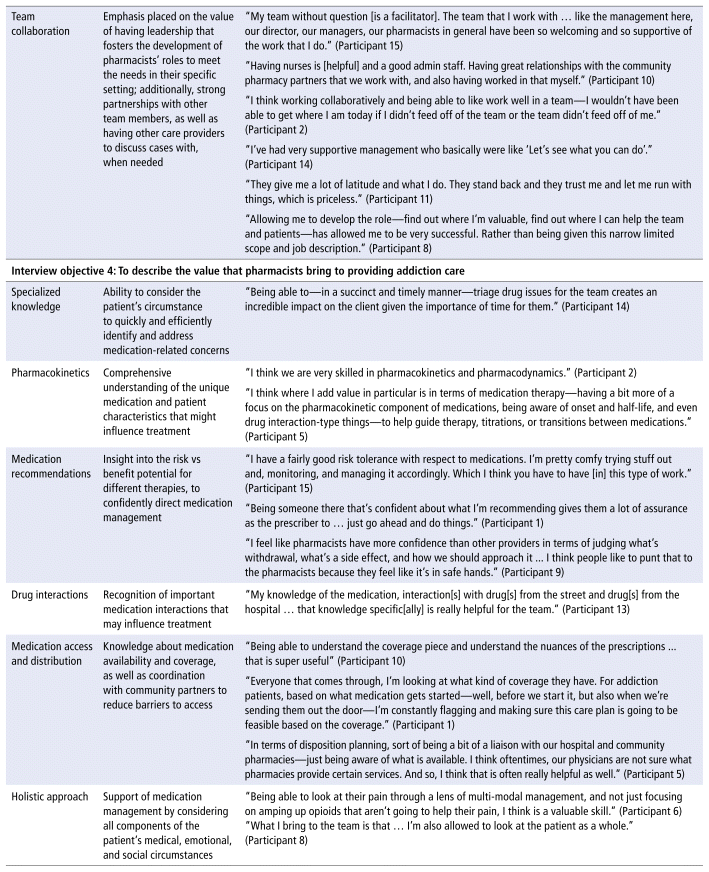
The 4 interview objectives, as well as several themes and supporting quotes, related to pharmacists’ work in caring for individuals with SUD are summarized in Table 4.
TABLE 4 Interview Objectives, Themes, and Supporting Quotations Related to Pharmacists’ Work
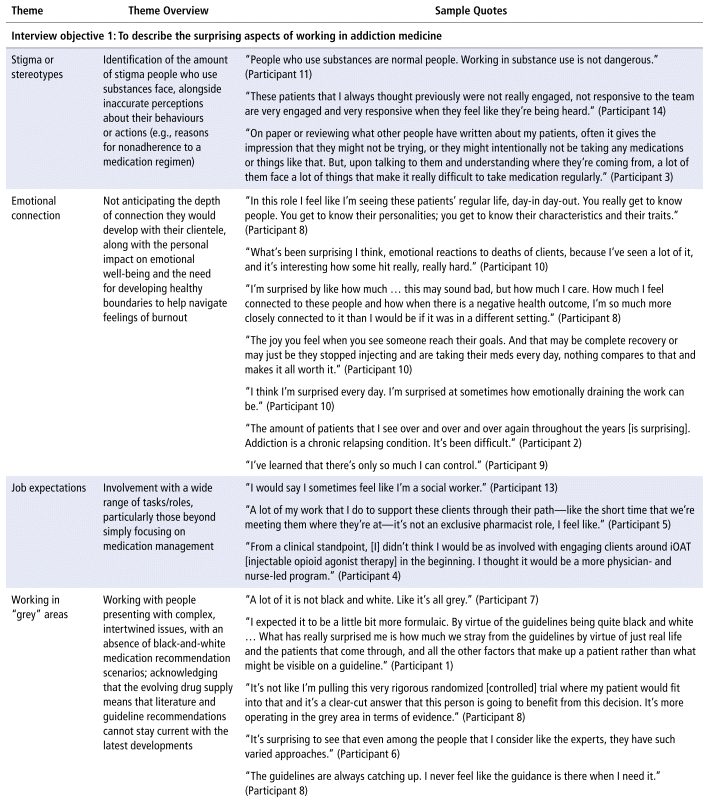
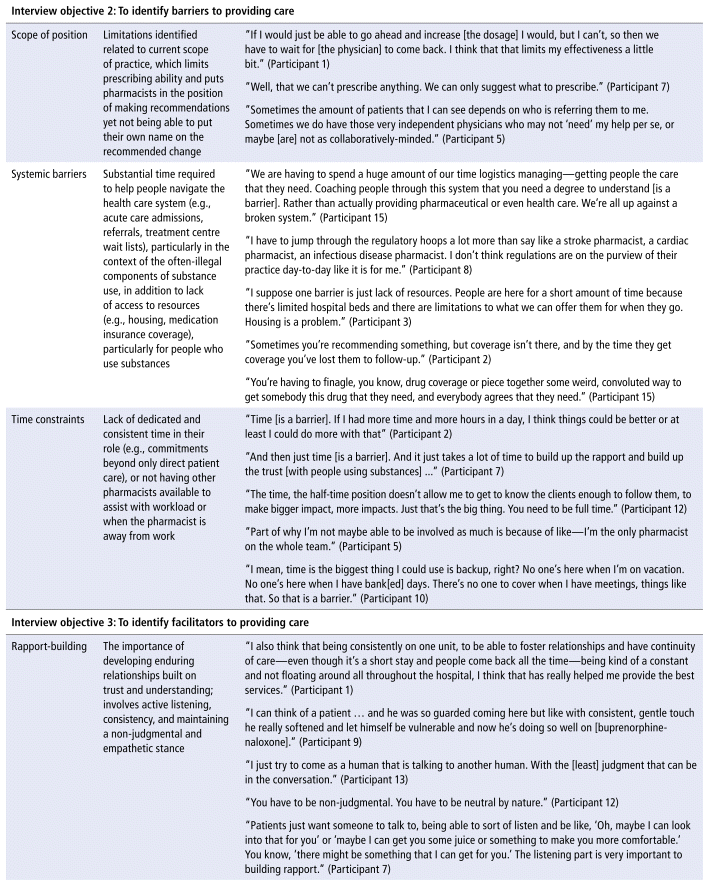
Participants were surprised by the inaccurate stereotypes of individuals with SUD, the emotional connections they formed with patients, the range of tasks or the primary focus of their work, and the absence of clearly established, evidence-based medication recommendation scenarios. Some participants described the stereotype that people who use substances may be purposely non-adherent with treatment or medication regimens. Through their work, participants were surprised to discover that this stereotype was commonly inaccurate, especially if they took a different approach to care and treatment. When discussing their relationships with patients, pharmacists expressed surprise at the depth of connection they felt with their patients. Conversely, given the emotionally impactful nature of their work, many participants noted their surprise at having to navigate feelings of burnout and indicated that maintaining boundaries was important to manage and compartmentalize the psychological impact of their work. Participants also reported being surprised by certain of their job tasks. One participant commented that “the[ir] involvement with quality improvement” surprised them (Participant 4), whereas another pharmacist was surprised that their daily tasks are “not just talking about meds all the time” (Participant 15). Some participants expressed feeling as though they were embodying roles or responsibilities typically associated with professions other than pharmacy (e.g., social work). Participants also found that the challenge of making decisions without concrete evidence or guidelines was a surprising but necessary part of their role. Participants elaborated on the challenges unique to providing care in addiction medicine, citing the dynamic nature of guidelines and the evolving landscape of substance use alongside the changing drug supply. These factors were identified as distinct barriers that necessitated ongoing adaptation and responsiveness in delivering care to individuals with SUD.
Although participants generally reported being very satisfied in their current roles, they also identified various barriers that had an impact on their effectiveness in providing care. Their responses were categorized into 3 main themes: scope of position, systemic barriers, and time constraints.
Participants were also asked to discuss what facilitated their work in addiction medicine. They identified rapport-building with patients and the support from their team, including management, as important factors that assisted them in being successful in their roles.
Participants commonly cited their pharmacotherapy expertise and specialized knowledge as significant assets to their teams. Specifically, their proficiency in pharmacokinetics was underscored as particularly important in informing treatment decisions and optimizing patient outcomes. Participants noted that their teams appreciated the confidence they had in medication and dosage recommendations, especially for patients with multiple comorbidities. Participants also highlighted navigating drug coverage issues and understanding medication distribution processes as important roles. Some of the participants indicated that knowledge of the substances being used in their local unregulated drug supply (e.g., benzodiazepines) contributed to their medication recommendations and expertise in the context of a multidisciplinary team.
Near the conclusion of the interviews, participants were invited to take part in envisioning an optimal future for pharmacists working in addiction medicine. This exercise aimed to capture participants’ perspectives on the ideal role of pharmacists in SUD.
Participants suggested various pharmacist-to-patient ratios, with an average of 1:20.
Participants desired increased integration of pharmacists into multidisciplinary teams. They also advocated for a community of practice or national organization for pharmacists working in addiction medicine to allow them to connect with peers and to facilitate shared learning. Participants also discussed the need for wrap-around care at the community level, including the expansion of teams in community-based primary care settings to include pharmacists.
This study provides valuable insights into the roles and contributions of pharmacists in supporting people living with SUD within Canada’s publicly funded health care systems. The existing literature is limited and stems predominantly from the United States.6–11 As such, this research fills a significant gap by shedding light on specific contexts and practices within Canada.
Given the physiological changes involved with chronic substance use and the critical role of pharmacological therapy in withdrawal and maintenance treatment of SUD, pharmacists can provide valuable support for people with SUD. For example, pharmacists are instrumental in identifying drug interactions (and thus avoiding harmful medication combinations), monitoring for medication adverse effects (e.g., decreased seizure threshold, QT interval prolongation), optimizing guideline-concordant treatment, and enhancing prescription adherence.16,17 These considerations, among others, are essential in the care of people living with SUD. The findings of this study highlight a multifaceted landscape in which pharmacists effectively address these challenges through their specialized expertise in pharmacotherapy.
Additionally, people with SUD often face barriers to accessing resources, and social determinants can increase difficulties in navigating the health care system. This study highlights pharmacists’ contributions through direct patient education as well as through support of health care system navigation. Participants highlighted key roles in addressing medication cost or access barriers, managing prescriptions, facilitating transitions between community and acute care, and connecting patients with other providers when needed. These roles, which have also been described by others, further highlight the adaptable skill sets of pharmacists.17,18
Themes identified in this study highlight that pharmacists may be most effective in their roles when they are dedicated to the role on a full-time basis. Consistent time allocation allows for investment in relationship-building with patients as well as integration into the teams supporting these individuals. Furthermore, as pharmacists can fulfill a variety of roles, flexibility and innovation are essential in developing addiction medicine positions that are tailored to each location’s specific needs and resources.
In envisioning a “best case scenario”, participants advocated for increased pharmacist integration into multidisciplinary teams; similarly, the benefit of collaboration was a key theme identified in the interviews. This vision aligns with a guideline recommendation that calls for “the development of a multidisciplinary and actionable roadmap to improve clinical care strategies”.19
This study also highlights the importance of ongoing training and professional development for pharmacists working in addiction medicine. Similarly, the need for enhanced education to care for individuals living with SUD was identified in an online survey of pharmacists in British Columbia.20 In our study, participants emphasized the value of both formal education and experiential learning in preparing pharmacists for their roles. Moving forward, initiatives aimed at enhancing training opportunities and fostering a community of practice for pharmacists in addiction medicine could further support the delivery of high-quality care.
This study had some limitations, including its focus on a specific subset of pharmacists, which may make it challenging to generalize the findings to different regions and populations within Canada. Data saturation was deemed difficult to achieve, given the broad range of practice settings. Future research should address these limitations through the conduct of larger-scale studies encompassing a more diverse sample of pharmacists across various health care settings and geographic locations. Additionally, future research that explores measurable outcomes associated with pharmacists’ involvement in addiction medicine care (e.g., implementation of SUD-related medication recommendations and/or treatment initiation and retention) would be helpful. Demonstration of patient-important outcomes alongside the cost-effectiveness of pharmacist involvement will assist with advocacy efforts to expand their utilization as well as provide quality improvement metrics to assist with optimizing pharmacists’ contributions in this area.
This study has provided an understanding of the roles undertaken by pharmacists in SUD management within Canada’s publicly funded health care systems. By recognizing pharmacists as valuable partners in addressing SUD, health care stakeholders can work toward enhancing support structures and leveraging pharmacists’ expertise to improve patient care and outcomes in this complex domain.
1 Canadian drugs and substances strategy: overview. Health Canada; 2023 [cited 2024 Apr 17]. Available from: https://www.canada.ca/en/health-canada/services/substance-use/canadian-drugs-substances-strategy.html
2 Canadian substance use costs and harms. Canadian Centre on Substance Use and Addiction; 2020 [cited 2024 Apr 17]. Available from: https://csuch.ca/substance-use-costs/current-costs/
3 Federal, Provincial, and Territorial Special Advisory Committee on Toxic Drug Poisonings. Key findings: opioid- and stimulant-related harms in Canada. Public Health Agency of Canada; 2019 [cited 2024 Jul 8]. Available from: https://health-infobase.canada.ca/substance-related-harms/opioids-stimulants/
4 Hospital stays for harm caused by substance use. Canadian Institute for Health Information; [cited 2024 May 14]. Available from: https://yourhealthsystem.cihi.ca/hsp/inbrief#!/indicators/080/hospital-stays-for-harm-caused-by-substance-use/;mapC1;mapLevel2;/
5 Englander H, Jones A, Krawczyk N, Patten A, Roberts T, Korthuis PT, et al. A taxonomy of hospital-based addiction care models: a scoping review and key informant interviews. J Gen Intern Med. 2022;37(11): 2821–33.
Crossref PubMed PMC
6 Raphael C, Fedoruk E. Practice spotlight: pharmacists of the Centre for Addiction and Mental Health. Can J Hosp Pharm. 2008;61(5):346–7.
7 Tran TH, Swoboda H, Perticone K, Ramsey E, Thompson H, Hill K, et al. The substance use intervention team: a hospital-based intervention and outpatient clinic to improve care for patients with substance use disorders. Am J Health Syst Pharm. 2021;78(4):345–53.
Crossref PubMed
8 Bishop LD, Rosenberg-Yunger ZRS. Pharmacists expanded role in providing care for opioid use disorder during COVID-19: a qualitative study exploring pharmacists’ experiences. Drug Alcohol Depend. 2022;232:109303.
Crossref
9 Coon SA, Hill LG, Hutchison RW, Arnold LM, Jarrett JB, Ottney AR, et al. Mobilizing pharmacists to address the opioid crisis: a joint opinion of the ambulatory care and adult medicine practice and research networks of the American College of Clinical Pharmacy. J Am Coll Clin Pharm. 2020;3(8):1493–513.
Crossref
10 Andrews LB, Bridgeman MB, Dalal KS, Abazia D, Lau C, Goldsmith DF, et al. Implementation of a pharmacist-driven pain management consultation service for hospitalised adults with a history of substance abuse. Int J Clin Pract. 2013;67(12):1342–9.
Crossref PubMed
11 Smith A, Hansen J, Colvard M. Impact of a pharmacist-led substance use disorder transitions of care clinic on post discharge medication treatment retention. J Subst Abuse Treat. 2021;130:108440.
Crossref
12 Ehrhard K, Colvard M, Brabson J. Addition of a clinical pharmacist practitioner to an inpatient addiction triage team and related medication outcomes. Ment Health Clin. 2022;12(4):219–24.
Crossref PubMed PMC
13 Clinical Pharmacist Practitioner (CPP) role in substance use disorders (SUD) June 2023. US Department of Veterans Affairs, Veterans Health Administration, Pharmacy Benefits Management, Clinical Pharmacy Practice Office; 2023 Jun [cited 2024 May 16]. Available from: https://www.pbm.va.gov/PBM/CPPO/Documents/ExternalFactSheet_CPPRoleinSubstanceUseDisorders_508.pdf
14 Irwin MN, Walkerly A. Role of the pharmacist in acute care interventions for opioid use disorder: a scoping review. J Am Coll Clin Pharm. 2022;5(2):193–202.
Crossref
15 Braun V, Clark V. Using thematic analysis in psychology. Qual Res Psychol. 2006;3(2):77–101.
Crossref
16 Dimitropoulos E, Bertucci S, Wong K. Integration of a clinical pharmacy specialist into a substance use disorder intensive outpatient treatment program to improve prescribing rates of alcohol use disorder pharmacotherapy. Subst Abus. 2018;39(2):190–2.
Crossref PubMed
17 Compton WM, Jones CM, Stein JB, Wargo EM. Promising roles for pharmacists in addressing the U.S. opioid crisis. Res Social Adm Pharm. 2019;15(8):910–6.
Crossref
18 Kosobuski L, O’Donnell C, Koh-Knox Sharp CP, Chen N, Palombi L. The role of the pharmacist in combating the opioid crisis: an update. Subst Abuse Rehabil. 2022;13:127–38.
Crossref
19 CRISM National Guideline Review Committee. CRISM national guideline for the clinical management of opioid use disorder. Canadian Research Initiative in Substance Misuse; 2020 [cited 2024 Jun 10]. Available from: https://crism.ca/wp-content/uploads/2018/03/CRISM_NationalGuideline_OUD-ENG.pdf
20 Mihic T, Ng JCY, Yong A, Yee A, Siu JTP. Knowledge, attitudes, and practices of pharmacists in caring for patients with substance use disorders. J Am Coll Clin Pharm. 2022;5(2):132–40.
Crossref
Address correspondence to: Dr Katelyn Halpape, College of Pharmacy and Nutrition, University of Saskatchewan, 2A20.01 Health Sciences, 107 Wiggins Road, Saskatoon SK S7N 5E5, email: Katelyn.halpape@usask.ca
Competing interests: For activities not directly related to the study reported here, Katelyn Halpape has received grant funding from Health Canada’s Substance Use and Addictions Program and Indigenous Services Canada. She has also received an honorarium for work as a chapter editor on the Clinical Handbook of Psychotropic Drugs. No other competing interests were declared.
Funding: The Canadian Research Initiative in Substance Matters (CRISM) – Prairie Node provided grant funding to support the data analysis.
Acknowledgements: The authors would like to extend gratitude to Dr Mona Kwong for her support of this project in her roles as the Pharmacy Advisor and Director of the Addiction Pharmacy Fellowship Program at the British Columbia Centre on Substance Use.
Submitted: July 9, 2024
Accepted: October 24, 2024
Published: May 14, 2025
Supplemental material: The supplemental material associated with this article, available at https://doi.org/10.4212/cjhp.3680, consists of participant narratives.
First, please tell me about the setting you currently work in. What type of environment is it (acute care, ED, ambulatory care)? How long have you been there? Full-time or part-time?
What patient population do you serve? (Examples: Anyone who uses substances? Specific to already diagnosed substance use disorders? People living with HIV who may also use substances? Only alcohol/opioids/stimulants/cannabis, etc.? All age groups vs adult specific vs child and youth?)
Do you work as part of a multidisciplinary or interdisciplinary team?
What does a typical day look like for you and what role do you play on the team? Prompting questions:
How are patients/clients identified for you to see?
Prompting questions:
How do you meet with patients?
Prompting questions:
How were you trained to fulfill your role?
Prompting questions:
Do you think this training would be necessary for others to fulfill a similar role?
Are you currently involved in training others (e.g., students)?
What components of the work that you do now have surprised you? Are there elements to your work that differ from what you expected before starting the role?
What components of your training and skill set as a pharmacist do you feel allow you to optimize the care of patients/clients who use substances? In what ways do you add value to the team?
What has allowed you to be successful in your role? What has been helpful? (Prompt: for key success factors)
What types of barriers do you encounter that you feel limit your ability to serve your patients/clients and colleagues to your fullest? (Prompt: for key barriers)
If you could envision a best-case scenario for pharmacists being involved in supporting people who use substances, what would that look like?
Prompting questions:
In closing, I’d just like to gather some demographic data to help us capture the perspectives of participants. You are welcome to indicate “prefer not to disclose” for any of the questions:
Age:
Gender:
Location of current practice (urban or rural):
Education beyond undergraduate degree:
How many years have you been a pharmacist:
© 2025 Canadian Society of Healthcare-Systems Pharmacy | Société canadienne de pharmacie dans les réseaux de la santé
Canadian Journal of Hospital Pharmacy, VOLUME 78, NUMBER 2, 2025