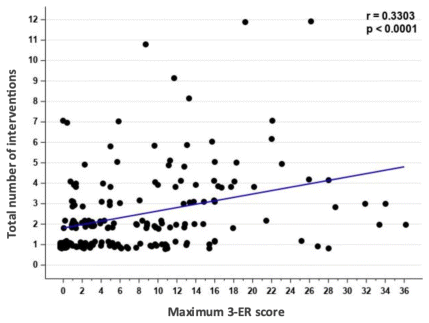
FIGURE 1 Total number of interventions by pharmacists as a function of each patient’s maximum 3-ER score.
Justine Falanga-Duchesneau, Gabrielle Plante, Julie Racicot, Isabelle Taillon, and Julie MéthotTo cite: Falanga-Duchesneau J, Plante G, Racicot J, Taillon I, Méthot J. Description of pharmacist interventions based on pharmaceutical care and a vulnerability scoring tool in a tertiary care centre. Can J Hosp Pharm. 2025;78(4):e3687. doi: 10.4212/cjhp.3687
ABSTRACT
Background
Following a restructuring of its pharmacy practices and activities, the pharmacy department of the Institut universitaire de cardiologie et de pneumologie de Québec developed a patient prioritization tool to optimize its delivery of pharmaceutical care. This tool assigns a vulnerability score to patients according to their medications and certain vulnerability factors established in the literature. The tool identifies vulnerable patients who need pharmaceutical care on a mandatory basis (within 1 day) or a priority basis (between 1 and 3 days).
Objective
To describe pharmacist interventions carried out for patients admitted to the study institution, in terms of pharmaceutical care provided in relation to scoring with the prioritization tool.
Methods
This prospective study involved patients admitted to the study institution for at least 48 hours between May 10 and May 19, 2023. The prioritization tool was applied for all included patients, who were followed prospectively throughout their stay. The pharmacists recorded their interventions on a data collection form. Data were analyzed using frequency analysis, and relationships between variables were expressed using the Pearson correlation coefficients and percentages.
Results
Of the 393 patients seen during the study period, 304 were included in the study. Of these, 186 had a priority designation and 64 had a mandatory designation, according to the prioritization tool. The pharmacists performed a total of 1023 interventions, with 194 of the 304 included patients receiving at least 1 pharmacist intervention. The number of interventions for each patient increased with the person’s vulnerability score. The most frequent activities were chart review (n = 453, 44.3%), followed by the prescription (n = 115, 11.2%), dose adjustment (n = 64, 6.3%), and discontinuation (n = 64, 6.3%) of a medication. The mean response time was 1.25 days for patients deemed to need pharmaceutical care on a mandatory basis and 1.57 days for patients deemed to need care on a priority basis.
Conclusion
In this study, the number of interventions per patient increased with the person’s vulnerability score. Although pharmacists responded faster than the recommended time for patients deemed to need care on a priority basis, the response time for patients needing care on a mandatory basis could be improved.
KEYWORDS: pharmaceutical care, pharmaceutical interventions, prioritization tool, vulnerability
RÉSUMÉ
Contexte
À la suite d’une restructuration de ses pratiques et de ses activités pharmaceutiques, le Département de pharmacie de l’Institut universitaire de cardiologie et de pneumologie de Québec a mis au point un outil de priorisation des patients pour optimiser la prestation de ses soins pharmaceutiques. Cet outil attribue un score de vulnérabilité aux patients selon les médicaments qu’ils prennent et des facteurs de vulnérabilité qui ont été établis dans la littérature. Il identifie les patients vulnérables ayant besoin de soins pharmaceutiques à titre systématique (dans la journée) ou à titre prioritaire (entre 1 et 3 jours).
Objectifs
Décrire les interventions réalisées par les pharmaciens auprès des patients admis à l’Institut en matière de soins pharmaceutiques offerts par rapport au score obtenu à l’aide de l’outil de priorisation des patients.
Méthodologie
Cette étude prospective comprenait des patients admis à l’Institut pendant au moins 48 heures entre le 10 et le 19 mai 2023. L’outil de priorisation a été utilisé pour tous les patients de l’étude, et ceux-ci ont été suivis prospectivement pendant leur séjour à l’hôpital. Les pharmaciens ont consigné leurs interventions sur un formulaire de collecte des données. Les données ont fait l’objet d’une analyse de fréquence, et des coefficients de corrélation de Pearson et des pourcentages ont été utilisés pour exprimer les relations entre les variables.
Résultats
Sur les 393 patients admis pendant la période de l’étude, 304 ont été inclus dans l’étude. Selon l’outil de priorisation, 186 de ceux-ci avaient besoin de soins pharmaceutiques à titre prioritaire et 64 à titre systématique. Les pharmaciens ont effectué 1023 interventions au total. Pour 194 des 304 patients inclus, au moins 1 intervention a été effectuée. Le nombre d’interventions par patient augmentait selon son score de vulnérabilité. Les activités les plus fréquentes étaient l’analyse de dossiers (n = 453, 44,3 %), suivi par la prescription d’ordonnances (n = 115, 11,2 %), l’ajustement de dose (n = 64, 6,3 %), et la cessation d’un médicament (n = 64, 6,3 %). Le délai d’intervention moyen était de 1,25 jour pour les patients considérés comme nécessitant des soins pharmaceutiques à titre systématique, et de 1,57 jour pour ceux considérés comme ayant besoin de soins à titre prioritaire.
Conclusion
Dans cette étude, le nombre d’interventions par patient augmentait selon son score de vulnérabilité. Bien que les pharmaciens intervenaient plus rapidement que le délai recommandé pour les patients jugés nécessiter des soins à titre prioritaire, le délai de réponse pour ceux nécessitant des soins à titre systématique pourrait être amélioré.
Mots-clés: soins pharmaceutiques, interventions pharmaceutiques, outil de priorisation, vulnérabilité
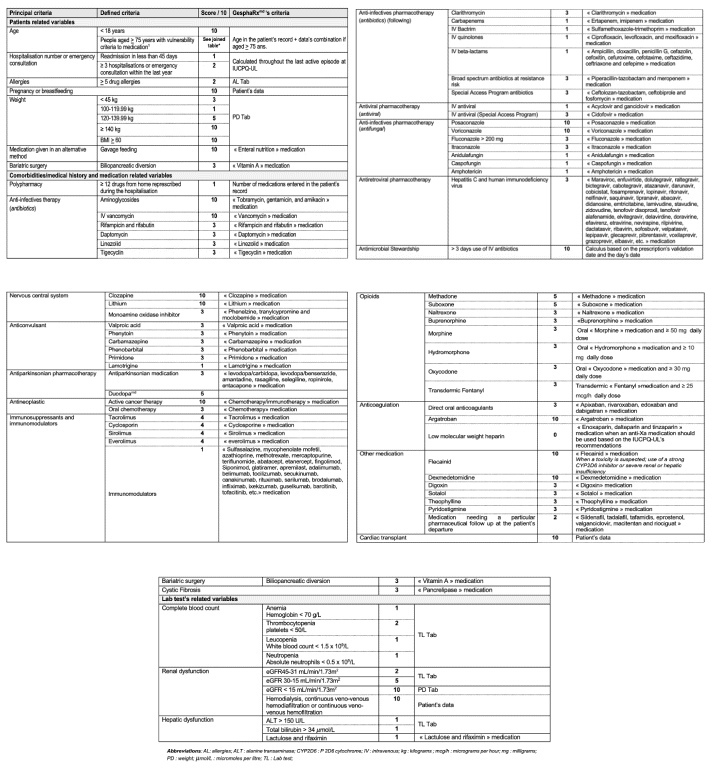
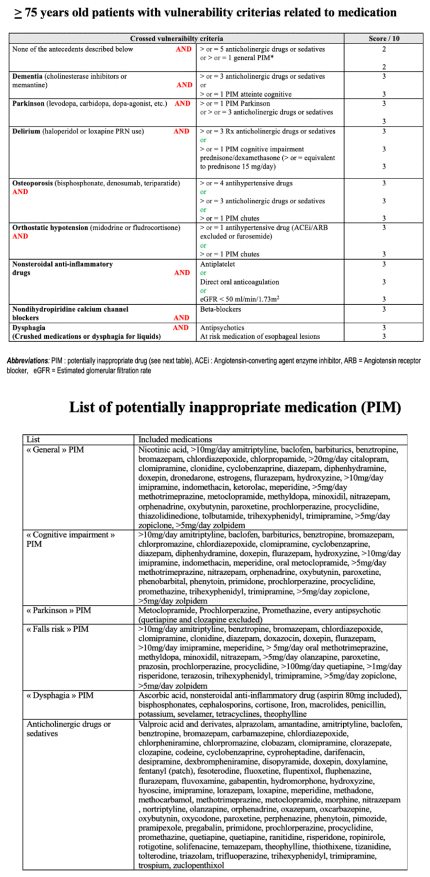
The health care system in the province of Quebec has faced a labour shortage for many years, even as health care needs are growing, which means delivering services with fewer staff members.1,2 A number of recommendations have been made in the pharmaceutical sector to ensure that Quebec health care institutions can provide quality care and prioritize patients according to their needs.3,4 In 2016, in accordance with these recommendations, the pharmacy department of the Institut universitaire de cardiologie et de pneumologie de Québec began restructuring its pharmaceutical care based on the institution’s mission, its specialties, and the vulnerability criteria established for its patient population. Patients who meet one or more of the vulnerability criteria are divided into 2 categories: those needing care on a mandatory basis and those needing care on a priority basis, depending on their vulnerability score (Appendix 1). Pharmacists must respond within 24 hours for patients meeting the criteria for mandatory care, whereas the target response time for patients meeting the priority criteria is 24 to 72 hours. Pharmacists may also be asked to get involved in a patient’s case either to address a medication-related concern or for a consultation (Appendix 2). According to the current staffing model, each department is covered by a clinical pharmacist, who oversees patients’ overall pharmacotherapy, including activities such as medication reconciliation, access to off-formulary medications, monitoring of antibiotic use, and home IV antibiotic therapy.
In 2017, the institution’s scope of pharmaceutical care was enhanced in line with developments reported in the literature. During this period, the pharmacy department developed an electronic patient prioritization tool to allow pharmacists to identify vulnerable patients, specifically those presenting with mandatory or priority vulnerability criteria. Using GesphaRx software, our institution created its own tool based on the pharmaceutical care already being provided and an exhaustive literature review of international prioritization systems.5,6 A number of countries in Europe, Asia, and Oceania (Australia and New Zealand) have systems to prioritize vulnerable patients at health care institutions.7 Articles from Australia, New Zealand, and the United Kingdom have identified 17 main vulnerability criteria, which were added to the vulnerability score.5 As a result, this score is now based on a variety of patient characteristics, such as medications, laboratory values, and comorbidities that require particular vigilance.
The electronic prioritization tool is generated from the 3-ER report produced by GesphaRx software. This 3-ER tool has replaced the previous tool (based mainly on patients’ medications) and has improved the prioritization of vulnerable patients.
At the time of publication, in late fall 2025, all of the vulnerability criteria that apply to pharmaceutical care at our centre are included in the 3-ER tool. Each criterion has a score from 1 to 10. A score of 10 is assigned only for vulnerability criteria that require a mandatory response. The scores for all criteria are summed to generate an overall vulnerability score for each patient (often between 0 and 50, but can be higher). Pharmacists use their patients’ daily score reports to respond as soon as possible to those with a mandatory designation. The overall vulnerability score is then used to prioritize all other patients. Although other prioritization tools exist in Quebec, our centre’s tool is the only one known to be deployed and used on a daily basis for all clinical departments of a hospital, including the emergency department. Other health care institutions that use prioritization tools do so only in certain departments or when carrying out activities such as medication reconciliation.6,8–11
The institution’s pharmacy department has evaluated its pharmaceutical care on a number of occasions and has modified the prioritization tool accordingly. For example, Pelletier-St-Pierre and others12 showed that a care model based on a prioritization tool allowed pharmacists to perform twice as many interventions as they could with a non–prioritization care model in 3 clinical departments of our centre. Furthermore, 88% of the interventions had a major and significant clinical impact.12 A previous study also showed that this prioritization model led to interventions with greater clinical impact than a non–prioritization care model,13 while another study determined that, compared to previous versions, the latest version of the 3-ER tool identifies more vulnerable patients, thanks to the combination of different data points.6 The system also sorts patients in descending order of vulnerability.6 However, few studies have described how interventions are carried out in practice with this type of tool, and this topic has not been covered in much detail elsewhere in North America. Furthermore, only a few studies have described the implementation of this type of tool in specific departments.14,15 To our knowledge, this study is one of the first in Canada to do so.
The primary objective of the current study was to describe pharmacists’ interventions carried out for patients admitted to the study institution, according to the pharmaceutical care offered and the score derived from the electronic prioritization tool. The secondary objectives were to determine the number of interventions performed by pharmacists in relation to each patient’s vulnerability score, to describe the nature of interventions performed by the pharmacists, to evaluate the response time for the first intervention in relation to the categorization of each patient’s need for care (mandatory or priority), and to describe vulnerable patients hospitalized at the study institution.
For this descriptive, longitudinal, single-centre study, data were collected prospectively from May 10 to June 9, 2023. The research was conducted in compliance with applicable standards, starting with a privacy impact assessment related to conducting a research project without the need for patient consent. Following the privacy impact assessment, provincial authorization was granted for access to information in patients’ medical records. The protocol was then approved by the institution’s research ethics committee. The participating pharmacists provided written consent for details about their interventions to be collected and included in the study. Information was collected about pharmacists’ interventions for patients admitted to 10 departments within our centre: cardiology; coronary care; cardiac surgery; cardiac surgical intensive care; bariatric, general, and thoracic surgery; cardiac transplantation; geriatrics; internal medicine; respirology; and pulmonary intensive care.
The GesphaRx software was used to compile a list of patients admitted daily to each department. During the weeks of data collection, each participating pharmacist printed out the 3-ER report for their department daily to identify the most vulnerable patients (those with a mandatory or priority vulnerability designation for one or more criteria). Any patients with multiple priority criteria, resulting in a 3-ER score greater than 10, were still considered to have a priority (not mandatory) designation, despite the high cumulative score.
The pharmacists filled out a daily data collection form describing, for each intervention, the type of intervention, the time and context of the intervention, and the method by which the intervention was documented. These forms were then collected, and the information was compiled in an Excel spreadsheet (Microsoft Corporation). If the information entered on the form required clarification, a member of the research team leading this study consulted either the patient’s record or the clinical pharmacist in charge of the patient. Pharmacists in Quebec can now prescribe medications and laboratory tests for many conditions, as set out in legislation, and an advanced practice partnership agreement was also in effect for all care units at the study institution,16 giving pharmacists greater latitude to initiate treatments. For this study, the compiled prescriptions were those written by pharmacists or by other prescribers as per the pharmacists’ recommendations.
When clinical pharmacists were not available (during evenings, weekends, and public holidays), clinical interventions were carried out by the dispensing pharmacists. Data for these interventions were not compiled in the study. However, any follow-up interventions carried out by the clinical pharmacist upon their return were included.
Patients included in the study were those admitted to one of the above-mentioned departments in the study institution between May 10 and May 19, 2023, inclusive. Patients transferring from another health care institution were included, whereas patients seen only in the emergency department and those whose stay was less than 48 hours were excluded. However, interventions performed by emergency department pharmacists were compiled and were included in the study if the patient was subsequently admitted. For included patients, data were collected from the moment of admission (during the 9 prespecified inclusion days in May 2023) until their discharge or until June 9, 2023, for those still hospitalized at that time. Therefore, data for each individual patient were collected for a maximum of 31 days. The end date of June 9 was chosen based on the availability of the research team members and also because the 6 study patients still in hospital on that date had been admitted for at least 21 days, which is 3 times the institution’s average length of stay.
Data analyses were performed using SAS version 9.4 (SAS Institute Inc), with support from the biostatistician of the institution’s research centre. Descriptive variables describing pharmacists’ interventions (i.e., the main outcome of the study) were summarized using frequency distributions, means and standard deviations, or medians and interquartile ranges. The quantitative variables addressing secondary objectives (i.e., number of pharmacist interventions performed based on the vulnerability score and on the categorization) are represented as proportions. Finally, frequencies and percentages were calculated for qualitative variables addressing the secondary objectives, such as the nature of the interventions. Relationships between the total number of pharmacist interventions or the response time for the first intervention after patients received a priority or mandatory score and the patient’s maximum 3-ER score were expressed using the Pearson correlation coefficient. Statistical significance was defined by a 2-tailed p value less than 0.05.
Of the 393 patients hospitalized between May 10 and May 19, 2023, 304 were included in the study. The mean patient age was 69.8 years, and 135 (44.4%) were female. The mean and median lengths of stay were 8.1 and 6.0 days, respectively. The population studied was similar to the client profile described in the 2022/23 annual management report of the Institut universitaire de cardiologie et de pneumologie de Québec.17 Of the 304 patients included, 194 (63.8%) received at least one intervention performed by a pharmacist, and the total number of interventions provided by pharmacists was 1023.
Figure 1 shows the number of interventions as a function of each patient’s vulnerability score, based on the maximum 3-ER score. The pharmacists performed more interventions for patients with higher 3-ER scores (p < 0.001). On average, the pharmacists carried out 3.1 interventions per day for patients with a mandatory designation and 2.0 interventions per day for those with a priority designation. For both categories, the maximum number of daily interventions was 12.
|
| ||
|
FIGURE 1 Total number of interventions by pharmacists as a function of each patient’s maximum 3-ER score. | ||
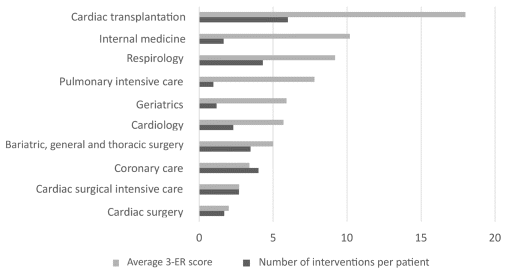
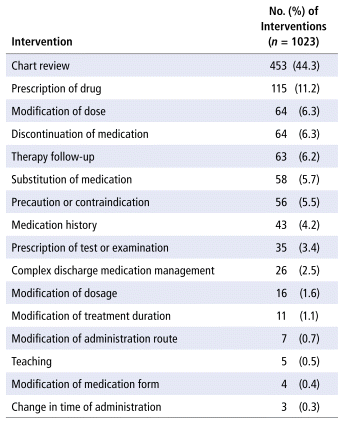
The 1023 interventions were then categorized in terms of types of pharmaceutical care provided (Table 1). The most frequent intervention was chart review (44.3%), followed by the prescription (11.2%), dose adjustment (6.3%), and discontinuation (6.3%) of a medication. Of the 570 interventions other than chart reviews, 320 (56.1%) were carried out independently by pharmacists. The remaining 250 interventions (43.9%) were suggestions, of which 206 (82.4%) were accepted. The 3 clinical departments with the highest number of interventions per patient were cardiac transplantation, respirology, and the coronary care unit (Figure 2). Along with internal medicine, cardiac transplantation and respirology were the departments whose patients had the highest vulnerability scores.
TABLE 1 Types of Interventions Carried Out by Pharmacists at the Institut universitaire de pneumologie et cardiologie de Québec
|
| ||
|
FIGURE 2 Level of patient vulnerability (expressed as the 3-ER score) and number of pharmacist interventions by clinical department. | ||
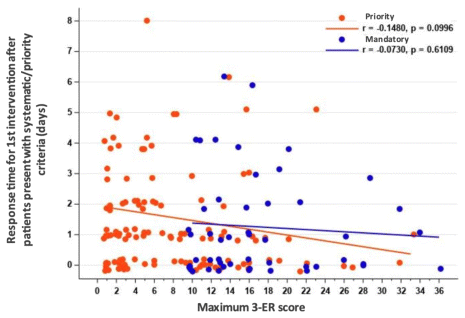
We also evaluated the mean response time per intervention (in days)—specifically, the time from when the patient was designated by the pharmacist as needing care on a mandatory or priority basis and the intervention itself. Response time was 1.25 days for patients with a mandatory designation and 1.57 days for those with a priority designation. In this regard, day 1 was the day when the intervention criterion appeared in the 3-ER tool. Figure 3 shows the response time for the first intervention in relation to the maximum 3-ER vulnerability score. No statistically significant relationship was observed.
|
| ||
|
FIGURE 3 Response time for the first intervention after patients were designated as needing care on a priority or mandatory basis, as a function of their maximum 3-ER score. | ||
Of the 304 patients included in the study, a total of 250 (82.2%) were considered vulnerable: 186 (61.2%) who met a priority intervention criterion and 64 (21.1%) who met a mandatory intervention criterion at least once during their hospital stay. Notably, individual patients could have both a priority and a mandatory designation; such patients were categorized as having the mandatory designation. The pharmacists performed at least one intervention for 135 (72.6%) of the 186 patients meeting a priority criterion and 59 (92.2%) of the 64 patients meeting a mandatory criterion.
The results of this study have been highly anticipated in our centre, given the aim of showing how pharmacists are involved in the various clinical departments of the Institut universitaire de cardiologie et de pneumologie de Québec following extensive restructuring.
Most patients admitted to this centre have some level of vulnerability, and pharmacists are essential in providing quality care for this patient population. During the current study, pharmacists performed interventions for over 60% of the entire patient population, including 77.6% (194/250) of the patients designated as “vulnerable” (i.e., needing care on a priority or mandatory basis). The pharmacists carried out the majority of their interventions independently. Where interventions could not be completed independently, approval from a health care specialist (usually a physician) was needed; in these cases, over 80% of pharmacists’ suggestions were accepted. Approval for an intervention was required, for example, when the pharmacist saw a potential problem but could not evaluate the patient’s physical condition. Pharmacists’ proactivity in such situations clearly characterizes the institution’s pharmacy practice and reflects the constant evolution of pharmaceutical care with the application of new clinical acts.16
Certain patients did not receive any interventions from a pharmacist. These patients may have met a mandatory or priority intervention criterion for a certain period only, after which they no longer appeared on the list of patients identified by the 3-ER tool. The number of patients who received interventions depended on available pharmacist resources, which explains why some patients in certain departments with limited pharmacist resources, such as internal medicine, may not have been seen. Furthermore, we believe that the number of interventions was not strongly affected by the exclusion of interventions performed during evenings, weekends, and holidays. These interventions were performed by dispensing pharmacists, who are not involved in the clinical care of patients; furthermore, such interventions could not be related to categorization with the 3-ER tool, so results could have been biased.
The intervention response time was 1.25 days for patients with a mandatory designation and 1.57 days for those with a priority designation. For the “priority” patients, pharmacists responded faster than the established timeframe (between 1 and 3 days), whereas for the “mandatory” patients, the response time was longer than the specified timeframe (within 1 day). While the latter response time could be improved, there was no statistically significant relationship between response time and the patient’s vulnerability score. Furthermore, response time in this study was probably overestimated, since the day on which the intervention criterion was assigned was not included. As a result, the response time increased for patients with assignment of an intervention criterion on a holiday or over the weekend, when clinical pharmacists were not on duty in the care units. Despite this overestimation, most patients were seen either on the day or the day after the vulnerability score was assigned.
This study had multiple strengths. First, its prospective nature limited information bias. The small number of exclusion criteria will make it easier to reproduce the study in other centres, and the results are more generalizable than would be the case for a study with more extensive exclusion criteria. In fact, only patients seen exclusively in the emergency department and those hospitalized for less than 48 hours were excluded from the analysis, which limited selection bias. The fact that included patients came from a multitude of clinical departments means that the results can be generalized to a large population and the study lends itself to reproducibility. Although the 3-ER tool has not been validated in the literature, it has been developed at our site over many years and was evaluated and compared with an earlier tool in a previous study,6 to ensure the new tool had at least equal performance and reliability for clients at the institution. Given that internal evaluation has shown that the 3-ER tool is efficient, a further step could be to validate it externally. Additionally, the data collection form mainly consisted of items to be checked off, which limited the subjectivity of the data. The pharmacists participating in the study also received training to ensure they filled out the data collection form consistently. The interventions of different pharmacists within the same department were evaluated to fully reflect pharmacy practice at the study institution.
This study also had some limitations. Despite the use of a standardized data collection form, it is possible that some pharmacist interventions, particularly those involving verbal communication, were not documented for inclusion in the analysis; however, it is estimated that these represented a minimal proportion of all interventions. It is also possible that some pharmacists performed more interventions than usual after being informed of the study.
Our institution is a university hospital centre that provides tertiary care and has pharmacists available in all clinical departments. Pharmaceutical care and partnership agreements are in effect in all of these departments. These results may therefore be less generalizable to other Quebec hospitals that do not have this level of resources. However, even in a non–tertiary care setting or a centre with limited pharmacist coverage, the 3-ER tool can be used, with a few adaptations to the particular centres’ population. The study institution also has a teaching mission. Staff in the pharmacy department supervise both pharmacy residents (who have completed their Doctor of Pharmacy degree and are doing a Master’s degree to gain qualifications to work in health care institutions) and pharmacy students (who are completing their Doctor of Pharmacy degree). During the study period, only pharmacy students were under supervision. The interventions of pharmacy students were included in the analysis, representing the reality of a teaching institution.
This was a seminal study for pharmaceutical practice and the development of pharmaceutical care in health care institutions. This report presents a profile of the interventions that pharmacists performed, based on the pharmaceutical care provided at the Institut universitaire de cardiologie et de pneumologie de Québec and the prioritization tool used for admitted patients. The institution’s pharmacists mainly carried out their interventions independently, and the number of interventions increased with increasing vulnerability score. Patients deemed to need care on a priority basis were seen by a pharmacist faster than the established timeframe, whereas the response time for patients deemed to need care on a mandatory basis could be improved. Most patients admitted to the study institution are considered vulnerable, meaning that pharmacists must manage a significant workload to provide the range of care offered within the facility. Although the use of a prioritization tool in pharmacy departments optimizes pharmaceutical care, this remains an underdeveloped practice. We hope that this research can lead other centres to integrate this type of tool into their daily practice, providing benefit to more vulnerable patients.
1 Rapport d’activités 2021. Association des pharmaciens des établissements de santé du Québec; 2021 [cited 2022 Nov 26]. Available from: https://www.apesquebec.org/system/files/2024-01/20220601_2021_rapport_activites.pdf
2 A portrait of Canada’s growing population aged 85 and older from the 2021 Census. Statistics Canada; 2022 [cited 2023 Jan 23]. Available from: https://www12.statcan.gc.ca/census-recensement/2021/as-sa/98-200-X/2021004/98-200-x2021004-eng.cfm
3 Chapitre 6 : Médicaments et services pharmaceutiques. In: Rapport du Vérificateur général du Québec à l’Assemblée nationale pour l’année 2014–2015. Vérification de l’optimisation des ressources. Vérificateur général du Québec; 2014 [cited 2022 Nov 27]. Available from: https://www.vgq.qc.ca/Fichiers/Publications/rapport-annuel/2014-2015-VOR-Printemps/fr_Rapport2014-2015-VOR-Chap06.pdf
4 Marceau N. Recommandations sur la pratique de la pharmacie en établissement de santé. Axe 1 : Soins pharmaceutiques. Association des pharmaciens des établissements de santé du Québec; 2018 Apr [cited 2022 Nov 26]. Available from: https://www.apesquebec.org/sites/default/files/publications/ouvrages_specialises/20180424_publications_pubspec_projet1.pdf
5 Darveau R, Sanctuaire A, Fortin M, Thibeault C, Boisvert JA, Taillon I, et al. Mise au point d’un outil informatique permettant de prioriser les usagers en lien avec l’offre de soins pharmaceutiques de l’Institut universitaire de cardiologie et de pneumologie de Québec – Université Laval. Pharmactuel. 2021;54(4):265–70.
6 Brochu D, Bureau J, Métivier F, Boisvert J, Taillon I, Racicot J. Évaluation et optimisation d’un outil informatique permettant de prioriser la prise en charge des usagers en lien avec l’offre de soins pharmaceutiques en centre universitaire. Pharmactuel. 2022;55(1):65–71.
7 Deawjaroen K, Sillabutra J, Poolsup N, Stewart D, Suksomboon N. Clinical usefulness of prediction tools to identify adult hospitalized patients at risk of drug-related problems: a systematic review of clinical prediction models and risk assessment tools. Br J Clin Pharmacol. 2021;88(4):1613–29.
Crossref PubMed
8 Bolduc C, Rouleau R, Demers MF, Guénette L. Description de l’utilisation d’instruments quantifiant la complexité d’un régime médicamenteux chez une population issue du projet PEPS du Centre intégré universitaire de santé et de services sociaux de la Capitale-Nationale. Pharmactuel. 2021;54(2):94–104.
9 2019 American Geriatrics Society Beers Criteria® Update Expert Panel. American Geriatrics Society 2019 updated AGS Beers Criteria® for potentially inappropriate medication use in older adults. J Am Geriatr Soc. 2019;67(4):674–94.
Crossref PubMed
10 O’Mahony D, O’Sullivan D, Byrne S, O’Connor MN, Ryan C, Gallagher P. STOPP/START criteria for potentially inappropriate prescribing in older people: version 2. Age Ageing. 2015;44(2):213–8.
Crossref PMC
11 Cossette B, Taseen R, Roy-Petit J, Villemure MP, Grondin M, Ricard G, et al. A pharmacist-physician intervention model using a computerized alert system to reduce high-risk medication use in primary care. Eur J Clin Pharmacol. 2019;75(7):1017–23
Crossref PubMed
12 Pelletier-St-Pierre A, Racicot J, Taillon I. Évaluation des interventions du pharmacien dans trois secteurs cliniques différents (cardiologie, pneumologie et médecine interne) selon le modèle décrit dans la nouvelle offre de soins pharmaceutiques de l’IUCPQUL. Pharmactuel. 2020;53(3):140–9.
13 Racicot J, Plante-Proulx A, Taillon I, Pelletier-St-Pierre A, Lacroix C. Évaluation des interventions du pharmacien dans trois secteurs cliniques différents (cardiologie, pneumologie et médecine interne) selon le modèle traditionnel et le modèle décrit dans la nouvelle offre de soins pharmaceutiques de l’Institut universitaire de cardiologie et de pneumologie de Québec – Université Laval. Pharmactuel. 2018;51(3):170–9.
14 Weant KA, Acquisto NM, Doyno CR, Gregory H, Rech MA, Schlobohm CJ, et al. Development of an emergency medicine pharmacy intensity score tool. Am J Health Syst Pharm. 2023;80(4):215–21.
Crossref
15 Brax AD, Sapko MM, Cole JW, Landgrave LC, Magers JK, Pierson SM. Implementation of an electronic pharmacy scoring tool to prioritize clinical pharmacists’ daily workflow at a pediatric institution. Am J Health Syst Pharm. 2023;80(2):68–74.
Crossref
16 Guide d’exercice : les activités professionnelles du pharmacien. Ordre des pharmaciens du Québec; 2020 Dec [cited 2023 Jan 23]. Available from: https://www.opq.org/wp-content/uploads/2020/12/Guide_exercice_nouv_act_fev_2022.pdf
17 Rapport annuel de gestion 2022–2023 [Annual management report 2022/23]. Institut universitaire de cardiologie et de pneumologie de Québec – Université Laval; 2022 [cited 2023 Dec 23]. Available from: https://www.iucpq.ca/app/uploads/2024/06/rapport_annuel_iucpq-ulaval_2022-2023_vf_web.pdf
Address correspondence to: Justine Falanga-Duchesneau, Institut universitaire de cardiologie et de pneumologie de Québec, 2725, chemin Sainte-Foy, Québec QC G1V 4G5, email: justine.falanga-duchesneau.iucpq@ssss.gouv.qc.ca
Competing interests: For activities unrelated to the study reported here, Julie Racicot is currently serving as president of the Association des pharmaciens des établissements de santé du Québec (A.P.E.S.). Isabelle Taillon received an honorarium from Bayer for work on the Guide d’utilisation : Les anticoagulants oraux direct - Guide AOD 3.0 and has served on the Comité régional des services pharmaceutiques de la Capitale-Nationale and the Conseil d’administration of the Institut universitaire de cardiologie et de pneumologie de Québec. No other competing interests were declared.
Funding: None received.
Acknowledgements: The authors thank all of the pharmacists of the Institut universitaire de cardiologie et de pneumologie de Québec who participated in this study. They also thank Serge Simard, Biostatistician at the Research Centre of the Institut universitaire de cardiologie et de pneumologie de Québec, for carrying out the statistical analyses. Finally, they thank Amy Butcher for her help with English translation of the article.
Submitted: July 18, 2024
Accepted: August 1, 2025
Published: November 12, 2025
In line with the Institut universitaire de cardiologie et pneumologie de Québec strategic planning, the Institute’s pharmacy department has a mission, among others, to increase the accessibility and continuity of pharmaceutical care for its patients. This involves prioritizing the provision of pharmaceutical care while also respecting the main objectives of Quebec’s Health and Social Services System (Système québécois de santé et de services sociaux) strategic plan, notably ensuring the safety and the relevance of health care and the optimal use of the workforce.
The Institute’s pharmacy department is also tasked with achieving and maintaining the highest standards of quality, safety, and performance. In alignment with the prioritization of pharmaceutical care, performance indicators will be developed and periodically monitored to ensure the clinical relevance of interventions. The analysis of these diverse indicators will further facilitate ongoing enhancement of care. Pharmaceutical care encompasses all clinical activities carried out by pharmacists at the hospital, including liaison with the patients, their families, and other health care professionals to ensure optimal continuity of care.
This document outlines the general elements of pharmaceutical care provided by the Institute’s pharmacy department and is contingent upon the available resources and pharmacists assigned to various clinical departments. In a context of resource scarcity and continual increases in care complexity, a workforce plan has been established to ensure accessibility to pharmaceutical care and to meet the needs of clientele and other professionals. This initiative encompasses all acts reserved for pharmacists in accordance with the provincial Pharmacy Act, revised in 2016 and subsequently in 2021. A partnership agreement for hospitalized clientele was ratified in January 2022. It governs all pharmaceutical acts (initiation, modification, and cessation) that can be performed by pharmacists working at the Institute in connection with the prevailing pharmaceutical care at the Institute and the new legislative framework.
Vulnerable populations have been targeted and are covered by all forms of pharmaceutical care provided by the Institute. These populations have been identified in alignment with the strategic planning of the province’s Health and Social Services System, the practice standards of the Ordre des pharmaciens du Québec, and based on evidence, the complexity of pharmacotherapy, and the severity index of diseases.
Through their interventions, pharmacists contribute to improving the quality of care, avoiding admissions, reducing length of hospital stay, preventing readmissions, and decreasing costs. All interventions are carried out with the aim of achieving the following objectives: (1) medication is appropriate and safe for the patient’s condition, (2) therapeutic targets are met, (3) treatment adherence is maximized, (4) the best therapeutic option for the patient considers costs associated with pharmacotherapy, and (5) continuity of pharmaceutical care is ensured.
The following intervention and consultation modes have been established to ensure efficient management. The target response time for a consultation or an intervention may vary from less than 24 hours up to 72 hours, depending on the clinical case or the day (weekday, weekend, holiday).
This approach to pharmaceutical care is a dynamic process that defines the acts that can be performed by all pharmacists within the pharmacy department of the Institute. A specific form of pharmaceutical care for each clinical department of the Institute has been developed based on this document and in collaboration with the medical staff, and these forms of care are periodically reassessed based on changes in practice and available resources. Depending on staffing levels and work organization, pharmacists are committed to ensuring the coverage of mandatory intervention and consultation criteria.
*Translated and adapted, with permission, from Offre de soins pharmaceutiques générale (Institut universitaire de cardiologie et pneumologie de Quebec, Département de pharmacie, Comité de Leadership; 2017). The complete original version of this publication is available only in French.
© 2025 Canadian Society of Healthcare-Systems Pharmacy | Société canadienne de pharmacie dans les réseaux de la santé
Canadian Journal of Hospital Pharmacy, VOLUME 78, NUMBER 4, 2025