Madison Lai, Karen Dahri, Gigi Wong, and Michael LegalTo cite: Lai M, Dahri K, Wong G, Legal M. Exploring the views of British Columbians regarding the environmental impact of medication use. Can J Hosp Pharm. 2025;78(2):e3707. doi: 10.4212/cjhp.3707
ABSTRACT
Background
Pharmaceuticals affect planetary health through environmental contamination from human excretions, improper drug disposal, and greenhouse gas emissions, derived from manufacturing as well as from use. Research suggests that patients will choose environmentally friendly options for minor ailments, but not severe conditions. To date, no Canadian research has explored patients’ views on this topic.
Objectives
To characterize the views of British Columbians regarding medication-related environmental sustainability and to determine how these views relate to medication decisions.
Methods
A web-based survey was distributed across British Columbia from October 30, 2023, to February 29, 2024. Residents of British Columbia at least 18 years of age who could complete an online survey in English were eligible to participate. Descriptive statistics and thematic analysis were used.
Results
A total of 255 responses were received. When presented with a scenario related to stroke, more than half of respondents (51%) preferred the medication with higher efficacy and greater environmental harm; in contrast, for scenarios involving the common cold and asthma, more than half chose the medication with lower efficacy and lower environmental harm (54% and 59%, respectively). When cost was introduced, only 54% stated they would choose the more environmentally friendly medication if it was more expensive, whereas 97% would do so if it was less expensive. Themes from open-ended questions focused on cost, manufacturer considerations, and education.
Conclusions
Respondents were willing to choose the environmentally friendly medication for less serious conditions, but not for conditions perceived as life-threatening and/or debilitating. Cost may be a barrier to accessing environmentally friendly options. Public education opportunities may help to inform more sustainable choices. Additionally, there may be value in manufacturer regulations or policies to ensure that the environmental impact of medications is considered.
Keywords: sustainability of medications, environment, patient perception, medication choice, medication preference
RÉSUMÉ
Contexte
Les produits pharmaceutiques influencent la santé de la planète par la contamination de l’environnement due aux excrétions humaines, par l’élimination inadéquate des médicaments et par les émissions de gaz à effet de serre, provenant à la fois de la fabrication et de l’utilisation des produits. Des recherches indiquent que les patients choisiront des options écologiques pour des affections mineures, mais pas pour des problèmes graves. À ce jour, aucune recherche canadienne n’a exploré l’opinion des patients à ce sujet.
Objectifs
Caractériser les opinions des habitants de la Colombie-Britannique concernant la durabilité environnementale liée aux médicaments et la manière dont leurs opinions influencent leurs décisions concernant les médicaments.
Méthodologie
Un sondage en ligne a été distribué en Colombie-Britannique du 30 octobre 2023 au 29 février 2024. Les résidents de la Colombie-Britannique âgés d’au moins 18 ans pouvant remplir un sondage en ligne en anglais étaient admissibles à y participer. Des statistiques descriptives et une analyse thématique ont été utilisées.
Résultats
Au total, 255 réponses ont été reçues. Lorsqu’un scénario lié à un accident vasculaire cérébral (AVC) leur a été présenté, plus de la moitié des participants (51 %) préféraient le médicament plus efficace, mais ayant aussi un plus grand impact environnemental; en revanche, pour les scénarios impliquant le rhume et l’asthme, plus de la moitié ont choisi le médicament ayant une moindre efficacité et un impact environnemental moins important (54 % et 59 %, respectivement). Lorsque le coût a été ajouté aux scénarios, seulement 54 % ont déclaré qu’ils choisiraient le médicament plus respectueux de l’environnement s’il était plus cher, tandis que 97 % le feraient s’il était moins cher. Les thèmes des réponses aux questions ouvertes portaient sur le coût, les considérations relatives aux fabricants et l’éducation.
Conclusions
Les participants étaient prêts à choisir des médicaments respectueux de l’environnement pour des affections moins graves, mais pas pour des problèmes perçus comme menaçant la vie ou débilitants. Le coût pourrait constituer un obstacle au choix des options écologiques. L’information du public pourraient aider à l’éclairer sur des choix plus durables. De plus, il pourrait être utile d’instaurer des réglementations ou des politiques pour les fabricants afin de s’assurer que l’impact environnemental des médicaments soit pris en compte.
Mots-clés: durabilité des médicaments, environnement, perception des patients, choix des médicaments, préférence médicamenteuse
Medications are an essential part of life for many; recently, however, there has been growing attention to the environmental impact of pharmaceuticals leading to increased global planetary health burden.1–4 One key concern is the greenhouse gas (GHG) emissions from pharmaceuticals, with the Canadian health care system estimated to have generated 33 million tonnes of GHG emissions from 2009 to 2015.1,2 This is thought to be about 50% higher than emissions from the automotive sector globally.1
Prescribed and nonprescribed medications represented 25% of total GHG emissions from Canadian health care over the period 2009 to 2015.2 The use of unnecessary prescriptions contributes to the carbon footprint and also leads to adverse patient outcomes.3,5 The rise in global temperatures over the years has resulted in an increased incidence of wildfire devastation in Canada, as well as heat-related illnesses and deaths.6 Among the leading causes of pharmaceutical pollution are pressurized metered dose inhalers (pMDIs), due to their hydrofluorocarbon (HFC) propellants, such as HFC-134a and HFC-227ea, which are potent propellants in terms of global warming potential.4 It was estimated that pMDI use in England accounted for 13% of National Health Service carbon emissions.4 Additionally, using one pMDI inhaler can have the same carbon footprint as driving up to 170 km in a gas-powered car.5
Pharmaceutical pollution is not limited to GHG emissions; the introduction of chemical contaminants to the environment also has an influence.7 For example, improper drug disposal leads to contamination of land and/or water supplies that affects all living species.7 A less familiar route of environmental entry, which accounts for 88% of pharmaceutical pollution, is excretion after human consumption, with excreted material finding its way through the wastewater system.8
Many strategies have been proposed to facilitate a more conservative, “greener” type of prescribing that could help to mitigate the planetary impact of medications. Deprescribing is one strategy to help reduce the environmental impact of medications.9 For example, proton pump inhibitors are often inappropriately prescribed or overused, thus contributing to polypharmacy and increasing the risk of harm in older individuals.10 Decreasing unnecessary use can in turn reduce the effect of these medications related to their production and elimination. Another potential area to facilitate less environmental pollution is the proper disposal of medications. In a study of an educational intervention provided by pharmacy students, the baseline (pre-intervention) survey showed that 27.2% of patients flushed their medications down the toilet, 34.6% threw them into the trash, and only 30.9% reported receiving previous education on safe medication disposal.11 These inappropriate methods of medication disposal can lead to drugs leaching into water systems and can increase the risk of harm to species in the environment.7
The move toward greener prescribing involves collaboration among the prescriber, the pharmacist, and the patient. One step toward collaborative greener prescribing is identifying how a patient’s views on environmental sustainability influence their medication decisions.5,12,13 In a 2023 study conducted in Sweden, patients were willing to consider alternative, more environmentally friendly medication options for treatment of less severe diseases.12 However, for more severe conditions, patients indicated that they would prioritize their health over environmental sustainability.12 Similar results were found in the United States, where there was a higher willingness to accept an environmentally friendly but less effective medication in the case of minor ailments or drugs used in agriculture.13 A potential barrier to patients being more willing to make sustainable choices may be their lack of knowledge about the environmental risks of pharmaceuticals.
There is a gap in the literature examining how patients in Canada perceive the environmental risk of pharmaceuticals. It is also unknown whether their perceived risk would influence their medication decisions and whether their perceptions are similar to those of patients in other countries. The objectives of this study were to characterize the views of British Columbians on medication-related environmental sustainability and to determine how these views relate to their medication decisions.
This study was a descriptive, exploratory, cross-sectional survey conducted in British Columbia. Respondents were recruited through posters and business cards with a QR code linking to the online survey, distributed in community centres in Metro Vancouver, as well as several hospital sites within Vancouver Coastal Health (VCH), Fraser Health Authority, and Providence Health Care. Additional recruitment avenues were websites (VCH Research Institute, REACH BC [health research platform]), online newsletters (Research Insider newsletter, University of British Columbia [UBC] pharmacy alumni newsletter, UBC pharmacy undergraduate society newsletter), and the Fraser Health patient engagement network. The survey was offered only in English, and potential respondents gave informed consent by clicking the “I consent” option on the consent information page before progressing to the rest of the survey.
Interested individuals were eligible to respond if they were residents of British Columbia, were at least 18 years old, and could complete an online survey in English. The survey was active from October 30, 2023, to February 29, 2024. There was no specific target sample size, and multiple modes of recruitment (outlined above) were used to try to maximize the number of responses. Anyone with the survey link or QR code who met the eligibility criteria could take part in the survey. All survey answers were anonymous, and answers could not be changed once submitted.
This study was approved by the University of British Columbia Behavioural Research Ethics Board.
The survey questions were developed by the research team based on the current literature and modelled after prior studies.12,13 The questions were reviewed and refined by 3 patient partners and 2 content expert pharmacists. The online survey was developed and distributed using the University of British Columbia’s Qualtrics platform.
The survey consisted of 48 questions (many with Likert-scale response options) that covered initial screening and demographic characteristics, evaluation of environmental risk perception, 4 scenarios (3 of them focused on medication choice), and suggested policy changes. The scenarios involved the common cold, stroke, asthma, and heartburn. The range of scenario conditions was based on scenarios used in prior studies and was intended to include options that differed in severity and acuteness.12,13 For the questions that focused on medication choice, respondents could choose between medication 1 (higher efficacy but higher environmental harm) and medication 2 (lower efficacy but lower environmental harm). The common cold and asthma scenarios focused on a treatment perspective, whereas the stroke scenario was from a prevention stance. The survey was distributed to the general public, and the medication decisions were meant to reflect situations in which the respondent was an outpatient or had a non-critical condition. For the suggested policy changes, respondents were presented with 4 policy options that aimed to reduce environmental harm and were asked to rank their level of agreement with these options. Survey questions are available upon request to the corresponding author.
At the end of the survey, respondents had the option to enter a draw for 1 of 4 $25 Canadian e-gift cards. To prevent fraudulent responses and multiple submissions, BOT detection, security scan monitor, and RelevantID tools were all enabled with the online survey software.
Descriptive statistics were used to report frequencies and percentages for each Likert-scale question; thematic analysis was used for the open-ended questions (NVivo qualitative data analysis software, QSR International Pty Ltd, version 14, 2023). Respondents were not required to answer every question and could withdraw at any time by closing their browser. All answers were anonymous, which meant that the sample size was variable, depending on how many individuals chose to respond to each question. If the respondent chose to enter the optional e-gift card draw, they consented to providing their email address and were reassured that their answers to the survey would remain anonymous.
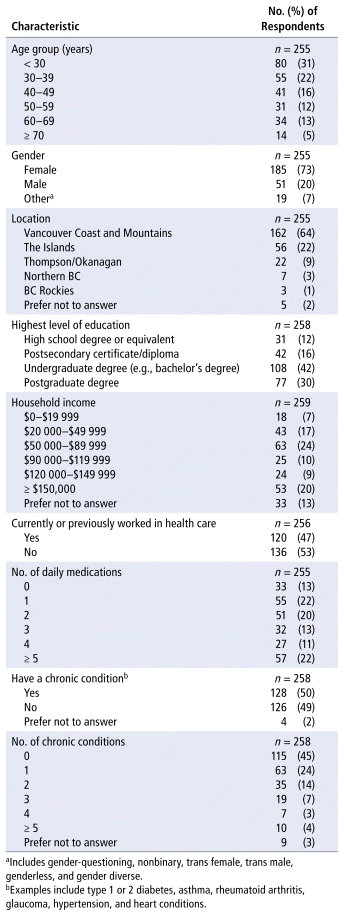
In total, 272 respondents accessed the survey and provided consent. Of these, 255 answered at least one of the survey questions beyond the demographics section. In terms of demographics, 73% of respondents were female, 31% were less than 30 years old, and 64% lived in the Vancouver Coast and Mountains region (Table 1). Many of the respondents had an undergraduate or postgraduate degree (42% and 30%, respectively), and almost half (47%) had previous experience in health care.
TABLE 1 Characteristics of Respondents™
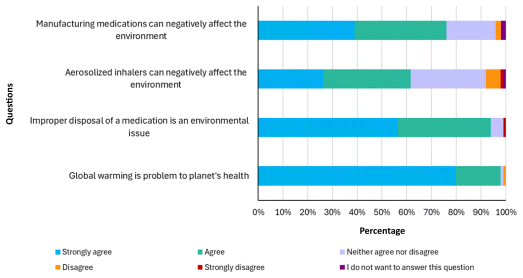
In terms of respondents’ answers to questions for evaluation of environmental risk perception, 39% strongly agreed and 37% agreed that the process of manufacturing medications can have a significant negative impact on the environment, 35% agreed and 30% were neutral that aerosolized inhalers can have a significant negative impact on the environment, 56% strongly agreed and 37% agreed that improper disposal of medication is an environmental issue, and 79% strongly agreed and 18% agreed that global warming is a problem for the planet’s health (Figure 1).
|
| ||
|
FIGURE 1 Responses to environmental risk questions. Number of respondents: 253 to 255. | ||
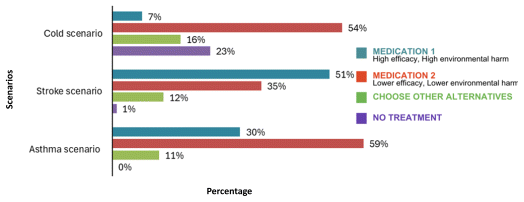
There was a slight preference for medication 2 (the option with lower efficacy and lower environmental harm) in the common cold and asthma scenarios (selected by 54% and 59% of respondents, respectively). When it came to the stroke scenario, respondents preferred medication 1, the option with higher efficacy and higher environmental harm (selected by 51%) (Figure 2).
|
| ||
|
FIGURE 2 Choice of medication under 3 medical scenarios: efficacy vs environmental impact. Number of respondents: 237 to 246. | ||
In the asthma scenario, respondents were introduced to a new inhaler (designated inhaler 3) that was as effective as their current inhaler, but more environmentally friendly. When told that inhaler 3 would cost $20 less every refill, 97% choose it as the preferred option. However, when told that inhaler 3 would cost $20 more every refill, only 54% choose it.
In the heartburn scenario, 92% of respondents agreed with stopping a medication if they had been symptom-free for the past few years. Those who agreed to stop the medication were then asked to rank 5 reasons for stopping, from most to least likely; decreasing the risk of adverse health effects was the most likely reason (70%), cost savings (16%) and reducing pill burden (11%) were the next most likely reasons, and decreasing carbon emissions from manufacturing (2%) and using less plastic (1%) were the least likely reasons (scenario prompts are available by request to the corresponding author).
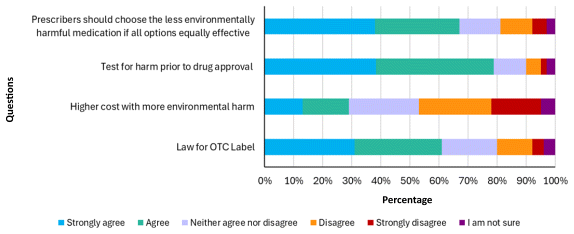
When asked whether Canada should have a law dictating that all over-the-counter medications have a label indicating the extent of environmental harm, 31% strongly agreed and 30% agreed. In contrast, when asked whether medications that are more harmful to the environment should cost more, 25% disagreed and 17% strongly disagreed, whereas 25% remained neutral. Many respondents expressed support for a law requiring prescribers to choose the option with less environmental harm, if all medication alternatives were equally effective (38% strongly agreed and 29% agreed). Similarly, there was strong support for mandating manufacturers to test drugs for environmental harm before being granted drug approval (38% strongly agreed and 40% agreed) (Figure 3).
|
| ||
|
FIGURE 3 Respondents’ willingness to support suggested policy changes. OTC = over the counter. Number of respondents: 235 or 236. | ||
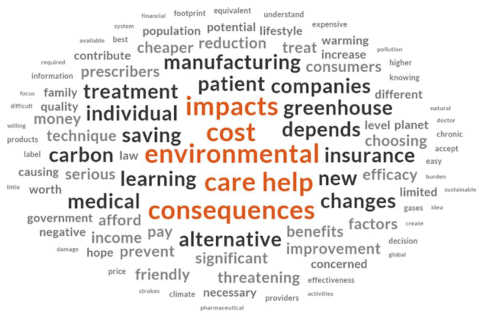
Themes that were developed from responses to the open-ended questions included recognition of cost, manufacturers’ environmental responsibility, environmental impact testing and reporting during drug development, and learning and education (Figure 4).
|
| ||
|
FIGURE 4 Word cloud reflecting themes generated from all open-ended survey questions. | ||
For many, cost was a common concern and the ultimate deciding factor determining whether a respondent would choose a medication with less environmental impact. However, respondents who indicated being more financially secure did not seem to have this sentiment in relation to cost.
“I’m currently in a strained financial situation and must make difficult choices based on my income.”
“I am in a position to be able to afford the increase and it would be worthwhile for me to increase the cost to offset environmental effects.”
Another theme that emerged was related to manufacturers and drug companies. Many respondents felt that environmental responsibility should start at the manufacturing level, rather than placing the onus on the consumer. The impact on emissions of any proposed measures was thought to be insignificant at the consumer level relative to the impact at the manufacturing level, and many felt there should be mandatory reporting of environmental impact.
“The people purchasing medications often have no choice, but the manufacturers should be [required] to work on developing more environmentally friendly options.”
“I think there should be transparency and mandatory reporting of the carbon footprint and environmental impact of all medications and supplements.”
Some respondents felt that opportunities for learning and education could be beneficial in increasing the chance that patients would choose options with less environmental impact. Some felt it would be too restrictive to have a “law” requiring prescribers to choose options with less environmental impact; rather, there should be more focus on educational opportunities about environmental consequences. Similarly, many felt that providing consumers with more information on the environmental effects of medications could help guide informed decision-making. However, being better informed might also lead to feelings of guilt at the individual level and might dissuade people from taking necessary medications.
“I think that educating prescribers about environmental costs should be a bigger priority—perhaps a warning screen for certain medications before they prescribe to alert them to environmental impacts? Or a required environmental committee/group within hospitals, health authorities, etc., that holds clinicians and administrators accountable [for] the environmental impacts of their clinical choices.”
“I haven’t considered this before, and I think it would influence people’s decisions if they had more information about the impact.”
“Having [environmental impact] on the label may dissuade folks from taking needed medication.”
To our knowledge, this is the first study to provide insights on the influence of environmental impact on medication choices within a Canadian population. Factors that contributed to decision-making by study respondents included perceptions of how life-threatening or debilitating the condition is, cost, and how much information is available for the consumer. In this sample of British Columbians, there was a clear willingness to prioritize the environment, even if medication efficacy were decreased, when the condition was perceived as less severe.
Our findings are consistent with findings in prior studies in other countries. Håkonsen and others12 sampled a Swedish population and discovered a stronger willingness to take environmental considerations into account for minor ailments compared with more serious conditions. Dohle and others13 reported similar findings for a US population, where the environmental impact of a drug had little effect on decision-making when it came to severe diseases, such as cancer.
Our study also highlights the effect of environmental risk perception and its relation to decision-making. The majority of respondents were in agreement when asked if improper drug disposal was an environmental issue. However, when asked if aerosolized inhalers had a negative impact on the environment, nearly a third of respondents remained neutral. A previous study showed a low level of knowledge about environmental risk among patients and health care professionals.14 However, in another study, experts perceived a higher environmental risk associated with pharmaceuticals in the ecosystem as well as in treated wastewater, whereas lay people still had a low level of risk perception.15 This difference between experts and non-experts may indicate that having a higher level of knowledge about the environmental impact of medications could influence decisions about medications.
Educational initiatives targeting patients, prescribers, and pharmacists may be of benefit. Prescribing unnecessary medications and improper drug disposal can lead to further GHG emissions and increased environmental risk.1 Additionally, through non-adherence with prescribed therapy, patients increase their risk of preventable hospitalizations, adding to the burden on the health care system and the planet.1 In a study that explored the types of pharmaceutical-related environmental information that were of interest to a Finnish population, medication disposal and the environmental effects of pharmaceutical residues were deemed the most interesting, with information about these topics mostly obtained through the media.16 Additionally, lay people preferred technological or awareness-type measures to stratify environmental risk management.15 When student groups in a Swedish university were asked to rank preferences for medications with different levels of environmental harm, pharmacy students were less likely to choose environmentally friendly options that had lower efficacy.17 That study was similar to ours, in that the researchers presented respondents with conditions with differing severity and medication choices with differing levels of environmental harm; the results highlighted a potential gap in pharmacy curricula related to the environmental impact of medications. Similarly, Müller and others18 found that 76.6% of clinicians reported lacking the necessary knowledge to advise patients about climate change in the shared decision-making process. Our study suggests support for policy changes related to informing consumers about the environmental impact of medications. There is also an opportunity to offer education initiatives to both health care professionals and consumers. These findings could be explored further through public and health care professional education initiatives.
In relation to the manufacturing side, we found that a higher cost for environmentally friendly medications could be a barrier to their acceptance by consumers. As such, cost will likely play a role in whether a person would consider environmental impact as a factor in their medication decisions. Many respondents felt that manufacturers should be playing a larger role in terms of regulating their environmental impact and including impact reports during drug development. Belkhir noted that in 2015, the pharmaceutical industry contributed more carbon emissions than the automotive industry (52 vs 46.4 megatonnes CO2 equivalent).19 As such, there may be value in pursuing manufacturer regulations or policy options to mitigate overall environmental impact.
This study had several limitations. The survey was offered only in the English language, most respondents were young women living in the Vancouver Coast and Mountains region, and many were well educated, having at least an undergraduate degree. Given that British Columbia has a highly diverse population, these factors may limit the generalizability of our results. Another consideration is the potential for the intention–behaviour gap, given that the scenarios were hypothetical and the results may not be predictive of what a person would do when faced with medication choices in real life. An individual’s personal or family medical history and health literacy may be other factors influencing their decisions. Finally, our survey was limited to residents of British Columbia, and our findings may not be representative of the rest of Canada.
In this sample from one Canadian province, respondents were willing to choose the medication with less environmental harm for less serious conditions, but not if the condition was perceived to be life-threatening and/or debilitating. The cost of a medication may be a barrier to accessing environmentally friendly options. To ensure that environmental impact is considered in medication decision-making, it may be of value to consider educational opportunities for the public, as well as regulatory or policy options.
1 Richie C. Environmental sustainability and the carbon emissions of pharmaceuticals. J Med Ethics. 2022;48(5):334–7.
2 Eckelman MJ, Sherman JD, MacNeill AJ. Life cycle environmental emissions and health damages from the Canadian healthcare system: an economic-environmental-epidemiological analysis. PLoS Med. 2018; 15(7):e1002623.
Crossref PubMed PMC
3 Sustainability policies [website]. Royal Pharmaceutical Society; 2021 Oct 21 [cited 2023 Jul 11]. Available from: https://www.rpharms.com/recognition/all-our-campaigns/policy-a-z/sustainability-policy/policies
4 Woodcock A, Beeh KM, Sagara H, Aumônier S, Addo-Yobo E, Khan J, et al. The environmental impact of inhaled therapy: making informed treatment choices. Eur Respir J. 2022;60(1):2102106.
Crossref PMC
5 Sustainable pharmacy and prescribing [webpage]. CASCADES (Creating a Sustainable Canadian Health System in a Climate Crisis ) Canada; 2024 [cited 2023 Jul 11]. Available from: https://cascadescanada.ca/action-areas/pharmacy-and-prescribing/
6 Romanello M, Di Napoli C, Drummond P, Green C, Kennard H, Lampard P, et al. The 2022 report of the Lancet Countdown on health and climate change: health at the mercy of fossil fuels. Lancet. 2022;400(10363):1619–54.
Crossref PubMed PMC
7 Qadar Z, Thane G, Haworth-Brockman M. A call to action: an evidence review on pharmaceutical disposal in the context of antimicrobial resistance in Canada. Project no. 569. National Collaborating Centre for Infectious Diseases; 2021 [cited 2023 Jul 11]. Available from: https://nccid.ca/publications/a-call-to-action-an-evidence-review-on-pharmaceutical-disposal-in-the-context-of-antimicrobial-resistance-in-canada/
8 Water [webpage]. OECD [Organisation for Economic Co-operation and Development]; [cited 2023 Aug 7]. Available from: https://www.oecd.org/water/Summary%20Note%20-%20OECD%20Workshop%20on%20CECs.pdf
9 Reducing the adverse environmental impacts of prescribing. In: Therapeutics Letter No. 143. University of British Columbia, Therapeutics Initiative; 2023 [cited 2023 Jul 10]. Available from: https://www.ti.ubc.ca/2023/06/20/143-reducing-the-adverse-environmental-impacts-of-prescribing/
10 Farrell B, Pottie K, Thompson W, Boghossian T, Pizzola L, Rashid FJ, et al. Deprescribing proton pump inhibitors: evidence-based clinical practice guideline. Can Fam Physician. 2017;63(5):354–64.
PubMed PMC
11 Abrons J, Vadala T, Miller S, Cerulli J. Encouraging safe medication disposal through student pharmacist intervention. J Am Pharm Assoc. 2010;50(2):169–73.
Crossref
12 Håkonsen H, Dohle S, Rhedin H, Hedenrud T. Preferences for medicines with different environmental impact – a Swedish population-based study. Environ Adv. 2023;12:100358.
Crossref
13 Dohle S, Campbell VEA, Arvai JL. Consumer-perceived risks and choices about pharmaceuticals in the environment: a cross-sectional study. Environ Health. 2013;12:45.
Crossref PubMed PMC
14 Luís S, Moura R, Lima ML, Poggio L, Aragonés JI, Camilo C. Judging pharmaceutical environmental risk by its cover? The effects of prescription medication and disease severity on environmental risk perception. Risk Anal. 2022;42(10):2231–42.
Crossref
15 Luís S, Lima ML, Poggio L, Aragonés JI, Courtier A, Roig B, et al. Lay people and experts’ risk perception of pharmaceuticals in the environment in southwestern Europe. Regulat Toxicol Pharmacol. 2020;117:104783.
Crossref
16 Alajärvi L, Martikainen J, Timonen J. Experience of the adequacy and appropriateness of pharmaceuticals-related environmental information and preferred information channels among Finns. Eur J Pharm Sci. 2023;191:106589.
Crossref PubMed
17 Håkonsen H, Hedenrud T. Would pharmacy students advocate green pharmacy given their preference for medicines with environmental impact? Am J Pharm Educ. 2024;88(5):100694.
Crossref PubMed
18 Müller F, Skok JI, Arnetz JE, Bouthillier MJ, Holman HT. Primary care clinicians’ attitude, knowledge, and willingness to address climate change in shared decision-making. J Am Board Fam Med. 2024; 37(1):25–34.
Crossref
19 Belkhir L. Big pharma emits more greenhouse gases than the automotive industry. In: The Conversation. McMaster University; 2019 May 27 [cited 2024 May 10]. Available from: https://theconversation.com/big-pharma-emits-more-greenhouse-gases-than-the-automotive-industry-115285
Address correspondence to: Dr Karen Dahri, Department of Internal Medicine, Vancouver General Hospital, 855 West 12th Avenue, Vancouver BC V5Z 1M9 , email: karen.dahri@vch.ca
Competing interests: For activities and projects not directly related to the study reported here, Karen Dahri has received grants from the Canadian Institutes of Health Research, the University of British Columbia (UBC) Students as Partners Fund, and the BC Ministry of Health; consulting fees from TRC Healthcare; honoraria from Pear Tree Healthcare, the Association of Faculties of Pharmacy of Canada, UBC Continuing Pharmacy Professional Development, and BC primary care pharmacists; and support for travel related to her role as the BC delegate for the Canadian Society of Hospital Pharmacists (now the Canadian Society of Healthcare-Systems Pharmacy [CSHP]). For activities and projects not directly related to the study reported here, Gigi Wong has received honoraria from UBC Continuing Pharmacy Professional Development, the Canadian Policy and Science Conference, and the Pharmacy Technician Society of British Columbia; serves on or advises the CSHP Sustainability Task Force, the Fraser Health Planetary Health Steering Committee, the Greencare network, and the Canadian Coalition for Green Health Care; and has contributed to resources for CASCADES (Creating a Sustainable Canadian Health System in a Climate Crisis) Canada. No other competing interests were declared.
Funding: The project was supported by the unrestricted research start-up grants of the primary investigator.
Submitted: August 21, 2024
Accepted: October 24, 2024
Published: May 14, 2025
© 2025 Canadian Society of Healthcare-Systems Pharmacy | Société canadienne de pharmacie dans les réseaux de la santé
Canadian Journal of Hospital Pharmacy, VOLUME 78, NUMBER 2, 2025