Kylie Landry, Meghan MacKenzie, Sarah Burgess, Paul Bonnar, Yahya Shabi, Glenn Patriquin, Volker Eichhorn, and Karolynn HollandTo cite: Landry K, MacKenzie M, Burgess S, Bonnar P, Shabi Y, Patriquin G, et al. Implementation of piperacillin–tazobactam continuous infusions for critically ill patients: a single-centre retrospective chart review. Can J Hosp Pharm. 2025;78(3):e3710. doi: 10.4212/cjhp.3710
ABSTRACT
Background
In critically ill patients, pharmacokinetic variability can lead to inadequate antimicrobial concentrations. Antimicrobial resistance to β-lactam antibiotics is increasing among the nonfermenting gram-negative bacilli (NFGNB). Current guidelines recommend optimizing β-lactam pharmacokinetics/pharmacodynamics with prolonged infusion of these antibiotics. In 2019, a protocol for continuous infusion of piperacillin–tazobactam (P/T) was implemented in 2 intensive care units (ICUs) as a quality improvement initiative.
Objectives
The primary objective was to describe and evaluate implementation of the practice change to continuous infusion of P/T. The secondary objectives were to describe ICU mortality and length of stay (LOS), identify safety incidents related to the protocol, and determine the prevalence of NFGNB and associated minimum inhibitory concentrations of P/T.
Methods
This single-centre retrospective study involved a convenience sample of 200 patients who received 2 or more doses of P/T during an ICU admission between October 2020 and October 2022. Data on drug administration, characteristics of the hospital stay, and patient outcomes were collected from patients’ digital records and the Critical Care Database of the study institution. Eight criteria for successful implementation of the protocol were established, with implementation deemed successful if at least 6 of these criteria were met.
Results
Implementation of the continuous-infusion protocol was successful for 156 (78.0%) of the 200 ICU patients, 41 (20.5%) of the patients died during the ICU admission, and the median LOS in the ICU was 4.9 (interquartile range 2.4–10.7) days. No safety incidents were identified. The prevalence of NFGNB was 3.1% for all ICU patients over the 2-year study period.
Conclusions
Implementation of the continuous-infusion protocol was successful in most patients. Areas for improvement include editing the order set, providing interprofessional education, and enhancing interprofessional collaboration.
KEYWORDS: continuous infusion, piperacillin, tazobactam, critical care
RÉSUMÉ
Contexte
Chez les patients gravement malades, la variabilité pharmacocinétique peut entraîner des concentrations insuffisantes d’antimicrobiens. La résistance antimicrobienne aux antibiotiques β-lactamines augmente parmi les bacilles à Gram négatif non fermentescibles (BGNnF). Les recommandations actuelles préconisent d’optimiser la pharmacocinétique/pharmacodynamique des β-lactamines avec des perfusions prolongées des antibiotiques β-lactamines. En 2019, un protocole continu de pipéracilline-tazobactam (P/T) a été mis en place dans 2 unités de soins intensifs (USI) dans le cadre d’une initiative d’amélioration de la qualité.
Objectifs
L’objectif principal consistait à décrire et à évaluer la mise en œuvre du changement de pratique vers les perfusions continues de pipéracilline-tazobactam (P/T). L’objectif secondaire consistait, quant à lui, à décrire la mortalité en USI, la durée du séjour (DDS), les incidents de sécurité liés au protocole, ainsi que la prévalence des BGNnF et les concentrations minimales inhibitrices associées de P/T.
Méthodologie
Cette étude rétrospective monocentrique impliquait un échantillon de convenance de 200 patients ayant reçu 2 doses ou plus de P/T lors d’une admission en USI entre octobre 2020 et octobre 2022. Les données sur l’administration des médicaments, les caractéristiques du séjour à l’hôpital et les résultats des patients ont été recueillis à partir des dossiers numériques des patients et de la base de données des soins intensifs de l’institution de l’étude. Huit critères de mise en œuvre réussie du protocole ont été définis. Pour que la mise en œuvre soit considérée comme réussie, il fallait respecter au moins 6 critères.
Résultats
La mise en œuvre du protocole de perfusion continue a été réussie pour 156 (78,0 %) des 200 patients en USI, 41 (20,5 %) des patients sont décédés lors de leur admission en USI et la DDS médiane en USI était de 4,9 jours (intervalle interquartile de 2,4 à 10,7 jours). Aucun incident de sécurité n’a été identifié. La prévalence des BGNnF était de 3,1 % pour tous les patients en USI pendant la période d’étude de 2 ans.
Conclusions
La mise en œuvre du protocole de perfusion continue a été réussie pour la plupart des patients. Les domaines d’amélioration comprennent la modification de l’ensemble de commandes, l’offre de formations interprofessionnelles et le renforcement de la collaboration interprofessionnelle.
Mots-clés: perfusion continue, pipéracilline-tazobactam, soins intensifs
Pharmacokinetic variability in critically ill patients creates challenges for antimicrobial dosing. Increased volume of distribution and augmented renal clearance can cause inadequate serum concentrations, which in turn can affect patient outcomes.1,2 Antimicrobial resistance to β-lactam antibiotics is increasing, particularly for the nonfermenting gram-negative bacilli (NFGNB).1,3,4 Infections with NFGNB are more likely for patients in the intensive care unit (ICU) than for other hospitalized patients.1,3,4 To optimize the pharmacokinetic/pharmacodynamic (PK/PD) properties of β-lactam antibiotics, guidelines recommend prolonged infusions of these drugs for patients infected with bacteria having a high minimum inhibitory concentration (MIC) or with NFGNB, for critically ill patients with septic shock or high severity score, and for those with lower respiratory tract infections.1,2,5 There is no consensus on the optimal PK/PD target for β-lactam antibiotics. In the literature, PK/PD targets for percent of the dosing interval with free drug concentration above the MIC (%fT > MIC) range from 50%–100% fT greater than 1–4 times the MIC1,6 to 100% fT greater than 4–8 times the MIC.2 Improved clinical outcomes have been shown with 100% fT greater than the MIC.7
Several studies and systematic reviews have examined the outcomes of P/T administered by prolonged infusion in the population of critically ill patients.8–14 In their 2020 meta-analysis, Fawaz and others9 calculated a number needed to treat of 18 favouring prolonged over intermittent infusion of P/T for the outcome of death. Higher rates of clinical and microbiologic cure and shorter duration of hospital stay were reported for patients who received prolonged infusions.9
Based on guideline recommendations and evidence for prolonged infusions, a quality improvement project was completed in 2019 at the Queen Elizabeth II Health Sciences Centre (QEII HSC), Central Zone, Nova Scotia Health, Halifax, Nova Scotia (unpublished data). The project retrospectively evaluated patients admitted to 2 QEII HSC ICUs between January 2017 and December 2018 with culture of NFGNB (specifically Pseudomonas spp. or Acinetobacter spp.) from blood, sputum, or urine. During that period, dosing of P/T for critically ill patients with normal renal function entailed intermittent infusions, specifically 3.375 g IV over 30 minutes, administered every 6 hours.15 The project found that the MIC of P/T was 8/4 mg/L for 28 of the 44 isolates of Pseudomonas spp. for which MIC data were available. PK/PD modelling showed that the target of 4–8 times the MIC for 100% of the dosing interval2 would not have been achieved. Subsequently, on October 30, 2019, a practice change, including a protocol for continuous infusion of P/T, was implemented in collaboration with the Department of Critical Care and the Division of Infectious Diseases.
Published evidence for potential harms of P/T by continuous infusion is scarce. There are, however, potential barriers to implementation and possible untoward effects of administering P/T by continuous infusion rather than intermittent infusion. We anticipated several potential issues that could arise, including IV line access issues, compatibility concerns related to concurrent therapy, interruption of the infusion, and administration errors if standardized order sets and pump libraries were not used.
We hypothesized that for all patients admitted to the QEII HSC ICUs who received P/T after the practice change, P/T was ordered and administered according to the continuous infusion protocol (available by request to the corresponding author). The primary objective of this study was to describe and evaluate implementation of the change to continuous infusion of P/T in the population of critically ill patients. The secondary objectives included describing ICU morality and length of stay (LOS), describing the prevalence of NFGNB in QEII HSC ICUs, reporting MICs of P/T for NFGNB, and determining whether safety incidents related to continuous infusion of P/T were reported.
This study was approved by the Nova Scotia Health Research Ethics Board (file 1028843). The need for consent was waived, on the basis of study design.
The practice change involved creation of a standardized order set for critically ill patients being treated empirically with P/T and/or those with a positive culture result for Pseudomonas spp. or Acinetobacter spp. The continuous-infusion order set was developed through literature review and multidisciplinary stakeholder collaboration. It specified P/T 3.375 g IV as a one-time loading dose infused over 30 minutes, followed immediately by 3.375 g IV infused over 6 hours, every 6 hours. For patients with compromised renal function, including those with creatinine clearance below 20 mL/min, those receiving intermittent hemodialysis, and those undergoing sustained low-efficiency dialysis, the 3.375 g IV loading dose was followed by 2.25 g IV infused over 6 hours, every 6 hours. To support standardized information distribution, a guidance document was circulated within relevant departments and reviewed in medication safety huddles with front-line staff. Formal education sessions were provided as departmental grand rounds in the Departments of Critical Care and Pharmacy, as well as through the Nova Scotia branch of the Canadian Society of Hospital Pharmacists (now the Canadian Society of Healthcare-Systems Pharmacy).
In this single-centre retrospective observational study, we examined records for patients admitted to 2 ICUs in the QEII HSC, a tertiary centre in Halifax. These level 1 ICUs consisted of a 12-bed medical–surgical–neurological ICU and an 8-bed medical–surgical ICU. Patients were included if they were at least 16 years old, had been admitted to the ICU between October 1, 2020, and October 1, 2022, and had received 2 or more doses of P/T. If a patient had more than one course of P/T treatment, the first course was included in the analysis. Patients were excluded if their P/T dose had been dispensed from an automated dispensing cabinet without documentation of administration in the medication administration record or nursing notes.
To create the sample of patients eligible for inclusion, reports generated by BDM Pharmacy software (BDM Healthware Inc) identified patients for whom 2 or more doses (vials) of P/T were dispensed from automated dispensing cabinets in the ICUs between October 1, 2020, and October 1, 2022; this generated a list of 827 patients. Each patient was assigned a unique identifier, which was entered into a computer-based random number generator, with the random numbers being used to determine the order in which patients were screened. Patients’ digital health records were screened for inclusion until a convenience sample of 200 was reached. Additional characteristics of the patients and their hospital stays were retrieved from the institution’s Critical Care Database. Patients were considered immunocompromised if there was history of solid organ transplant, hematopoietic stem cell transplant, active cancer, HIV with CD4 count below 200, use of immunomodulating biologic drugs, or treatment with more than 20 mg/day prednisone equivalents (as determined during admission medication reconciliation). Meeting minutes from medication safety huddles and safety improvement and management system reports were screened for safety incidents associated with continuous infusion of P/T during the study period.
The microbiology laboratory provided a list of patients admitted to the QEII HSC ICUs between October 1, 2020, and October 1, 2022, who had a positive result on culture for NFGNB, along with data on the bacteria isolated; date, time, and site of the culture sample; bacterial susceptibility pattern; and MIC of P/T. The total number of patients admitted to the QEII HSC ICUs between October 1, 2020, and October 1, 2022, was retrieved from the Critical Care Database.
The research team proposed 8 criteria for successful implementation of the continuous-infusion protocol:
Implementation of the continuous-infusion protocol was considered successful if at least 6 of the 8 criteria were met.
ICU mortality was defined as patient death before transfer to another level of care or discharge from the ICU. The LOS in the ICU was defined as the duration (in days), calculated from the date of ICU admission to the date of ICU discharge, transfer to another level of care, or patient death, whichever occurred first.
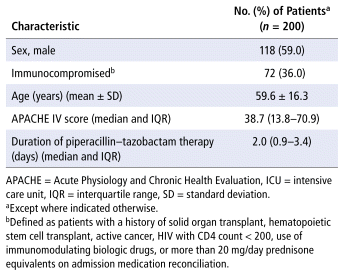
In the convenience sample of 200 patients, mean age was 59.6 (standard deviation 16.3) years, and 72 patients (36.0%) were immunocompromised (Table 1). The median duration of P/T therapy was 2.0 (interquartile range [IQR] 0.9–3.4) days.
TABLE 1 Characteristics of Patients Who Received Piperacillin–Tazobactam in the ICU
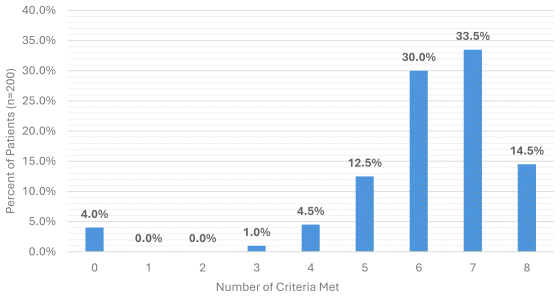
Overall, 156 patients (78.0%) met the definition of successful implementation of the continuous-infusion protocol for P/T (i.e., at least 6 of the 8 criteria; see Figure 1). The frequency for each criterion is summarized in Table 2, with further details provided below. Notably, 8 patients received P/T by intermittent infusion and therefore did not meet any criteria for successful implementation of the protocol.
|
| ||
|
FIGURE 1 Number of criteria for successful implementation met, as proportions of patients. | ||
TABLE 2 Criteria for Successful Implementationa
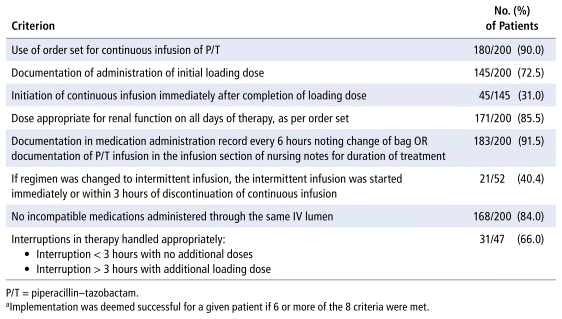
The continuous-infusion order set was used for 180 patients (90.0%). A total of 145 (72.5%) patients had documentation of an initial loading dose. Of the 46 patients who were known not to have received a loading dose, 26 had no order for such a dose. Seven of these 26 patients had not received any doses of P/T before admission to the ICU. The other 19 patients had received P/T before the ICU admission, with a median interval of 5.0 (IQR 3.3–9.5) hours from the last dose of intermittent infusion to the start of continuous infusion.
Among the 145 patients with documentation of a loading dose, the continuous infusion was started immediately after the loading dose for 45 (31.0%). When the continuous infusion was delayed, the median delay from the end of the loading dose, assuming the loading dose took 30 minutes to infuse, was 29 (IQR 10–30) minutes.
P/T was dosed appropriately for renal function on all days of therapy for 171 patients (85.5%). For 183 patients (91.5%), there was documentation in the medication administration record every 6 hours for a change of bag or documentation in the infusion section of nursing notes for the duration of treatment.
The infusion was changed from continuous to intermittent for 52 patients (26.0%). For 21 (40.4%) of these patients, the intermittent infusion regimen was started immediately or within 3 hours of the continuous infusion being stopped.
For 168 (84.0%) of the 200 patients, no incompatible medications were administered through the same IV lumen. Among the 32 patients with administration of incompatible medications, the most common were insulin (n = 8 patients), propofol (n = 5), and cisatracurium (n = 3).
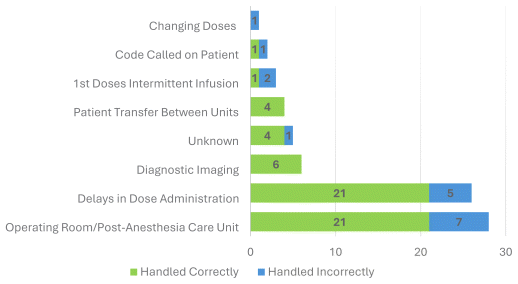
A total of 75 interruptions in therapy occurred, involving 47 patients. Of these 75 interruptions, 58 were handled correctly. Among the 17 interruptions handled incorrectly, the median duration of interruption was 4.0 (IQR 3.3–5.6) hours. The most common reasons for interruptions were delay of dose administration and the patient being in the operating room or postoperative care unit (Figure 2).
|
| ||
|
FIGURE 2 Reasons for interruption in therapy and whether they were handled correctly, based on 75 interruptions involving 47 patients. | ||
Of the 200 patients, 41 (20.5%) died in the ICU, 31 (19.9%) of the 156 patients in the successful implementation group and 10 (22.7%) of the 44 patients in the unsuccessful implementation group. The overall median LOS in the ICU was 4.9 (IQR 2.4–10.7) days. The median LOS was 5.2 (IQR 2.6–10.5) days for the successful implementation group and 3.7 (IQR 2.2–12.0) days for the unsuccessful implementation group.
There were no safety reports related to continuous infusion of P/T over the study period. Safety concerns mentioned during medication safety huddles included an administration issue: the IV bags were running out early because they were mixed to a total volume of 110 mL rather than 120 mL.
A total of 2453 patients were admitted to the ICUs over the study period, of whom 76 had one or more positive results on culture for NFGNB (total of 87 positive culture results). As such, the prevalence of NFGNB in our institution’s ICUs was 3.1%. Of the 87 positive results, 68 involved Pseudomonas spp. and 19 Acinetobacter spp. Forty-seven of the Pseudomonas spp. isolates were susceptible to P/T based on a susceptibility breakpoint of 16/4 mg/L. Among these 47 susceptible Pseudomonas spp. isolates, the MIC was less than or equal to 4/4 mg/L for 18, 8/4 mg/L for 22, and 16/4 mg/L for 3; MIC data were not available for the remaining 4 isolates. Sixteen of the 19 Acinetobacter spp. isolates were susceptible to P/T based on the same susceptibility breakpoint of 16/4 mg/L. Of the 16 susceptible Acinetobacter spp. isolates, the MIC was less than or equal to 4/4 mg/L for 8, 8/4 mg/L for 1, and 16/4 mg/L for 7.
Most of the patients in this study (78.0%) had successful implementation of the continuous-infusion protocol. Of the 8 criteria for successful implementation, the 2 most commonly met were use of a preprinted order set (90.0%) and appropriate dosing for renal function on each day of therapy (85.5%). No safety concerns were noted through our institution’s reporting systems for continuous infusions.
One area for improvement would be increasing compliance with the use of a loading dose. A total of 46 patients were known not to have received a loading dose, and for 26 of these, no loading dose was ordered. Frequently, when a loading dose was not ordered, the prescriber stated that the patient had received P/T in the emergency department or another unit, but in these cases, the previous dose was administered a median of 5 hours earlier. Given that the half-life of P/T is 1 hour, drug concentrations would be negligible at that point for most patients with normal renal function. This observation is concerning, as missed loading doses prolong the time to achieve target concentration.
Another area for quality improvement would be increasing appropriate handling of interruptions in therapy. Forty-seven patients experienced a total of 75 interruptions, of which only 58 were handled correctly. The most common reasons for therapy interruption longer than 3 hours were the patient being out of the ICU (i.e., in the operating room or postanesthesia care unit) and delays in dose administration. For the 17 interruptions handled incorrectly, the median duration was 4 hours. This duration represents 4 half-lives of P/T, so it can be expected that only 6.25% of the pre-interruption concentration would remain. This observation is concerning, as these patients were not given an additional loading dose after the interruption, so the concentration of P/T would be below target and potentially below MIC for an extended period.
The findings of this study are similar to those of previous studies evaluating implementation of prolonged infusion of P/T. One study found that challenges continued well after implementation of prolonged infusion protocols,16 which highlights the need for ongoing staff education and continuous quality improvement. Similar to our findings, other researchers have noted patients’ absence from the unit as a cause of delayed or missed doses.17 In this study, we did not compare the cost impact of prolonged versus intermittent infusions, as previous studies have done.17–20 The percentage of patients with successful implementation was lower in our study than in another study evaluating compliance with a prolonged infusion guideline for ceftazidime, cefepime, and imipenem–cilastatin21 (78% vs 89%, respectively). This difference could be explained by differing definitions of successful implementation, in that the previous study defined compliance as absence of overrides on smart infusion pumps, whereas our study had multiple criteria for successful implementation.
One limitation of this study was its retrospective design. As such, the information available for analysis was limited to what was documented at the time of patient care. This limitation was mitigated by using the institution’s Critical Care Database, which prospectively collects patient data. Mortality and LOS were evaluated for interest. The proportion of patients who died was higher in the unsuccessful implementation group than in the successful implementation group (22.7% vs 19.9%, respectively). Unfortunately, however, we cannot draw conclusions from these rates, given the retrospective study design and the lack of control for potential confounders. Median LOS was shorter in the unsuccessful implementation group, which could be explained by the higher mortality rate.
Sample size was another limitation. This study was based on a convenience sample of 200 of the 827 patients who received P/T in 2 ICUs over a 2-year period. It is unknown whether evaluating a convenience sample yields representative outcomes. It is possible that different results would have been evident if the entire population had been evaluated. The median duration of P/T therapy was short, at 2.0 days. It is difficult to determine whether this is a sufficient duration to see benefits or deem implementation as successful.
The strengths of this study include the specification of criteria felt to be important for implementing a continuous-infusion protocol; to our knowledge, this is the first study to do so. Our data collection was thorough, gathering details on specific areas for improvement, including reasons for interruptions and reasons for absence of loading doses. These data have assisted our institution in implementing quality improvement measures, specifically modifying the order set to include a statement about the need to give an additional loading dose if therapy is interrupted for more than 3 hours. Additionally, there has been ICU team education by means of a poster presentation during departmental Critical Care Research days and circulation by email (with subsequent discussion during medication safety huddles) of a 1-pager outlining these study findings and areas for improvement. Our study contributes information about the safety of P/T by continuous infusion, in that our search yielded no safety reports at our institution during the study period. The study assessed a unique protocol and local microbiologic data. The research team included pharmacists, critical care and infectious disease personnel, and nurse quality leaders, and the resulting collaboration captured many different perspectives.
This study is relevant to practice because it demonstrated that an evidence-based, guideline-recommended practice is feasible. Furthermore, it has contributed to continuous quality improvement at our institution. Recent studies have shown reduced 90-day mortality22 and higher rates of clinical cure at 14 days23 with prolonged relative to intermittent infusion of β-lactam antibiotics, and our study can guide other institutions looking to implement prolonged or continuous infusions. In addition, a similar process could be used for implementing prolonged infusions for other antimicrobials at our institution.
Since completion of this study, recommended P/T dosing is 4.5 g IV q6h for Pseudomonas aeruginosa, based on Clinical Laboratory Standards Institute breakpoints.24 Subsequently, in July 2023, the QEII HSC ICUs implemented an order set specifying P/T 4.5 g IV as a one-time loading dose for all patients with suspected or known infection with Pseudomonas spp. or Acinetobacter spp. This loading dose is to be followed by 4.5 g IV (for patients with creatinine clearance > 40 mL/min), 3.375 g IV (for those with creatinine clearance 20–40 mL/min or receiving continuous renal replacement therapy), or 2.25 g IV (for those with creatinine clearance < 20 mL/min, those receiving intermittent hemodialysis, and those undergoing sustained low-efficiency dialysis) every 6 hours, administered over 6 hours. We believe that use of a lower dose during the study period would not have changed the primary outcome related to successful implementation. Although LOS and mortality outcomes are difficult to predict, we do not think that using a lower dose would have had a significant effect on these outcomes. Local data showed that 85% of susceptible Pseudomonas spp. isolates had MIC less than or equal to 8/4 mg/L. Administration of P/T 3.375g IV q6h as an intermittent infusion has been suggested to be adequate for MICs up to 8/4 mg/L, with prolonged infusion needed for MICs up to 16/4 mg/L.6
This study demonstrated successful implementation of a continuous-infusion protocol for P/T at the study institution, without compromise of patient safety. Implementation was successful for 78.0% of the patients, according to prespecified criteria. Areas for improvement, which included increasing compliance with use of a loading dose and appropriate handling of interruptions in therapy, have been addressed through revision of the order set and interprofessional education.
1 Rhodes A, Evans LE, Alhazzani W, Levy MM, Antonelli M, Ferrer R, et al. Surviving Sepsis Campaign: international guidelines for management of sepsis and septic shock: 2016. Intensive Care Med. 2017;43(3):304–77.
Crossref PubMed
2 Guilhaumou R, Benaboud S, Bennis Y, Dahyot-Fizelier C, Dailly E, Gandia P, et al. Optimization of the treatment with beta-lactam antibiotics in critically ill patients—guidelines from the French Society of Pharmacology and Therapeutics (Société Française de Pharmacologie et Thérapeutique—SFPT) and the French Society of Anaesthesia and Intensive Care Medicine (Société Française d’Anesthésie et Réanimation—SFAR). Crit Care. 2019;23:104.
Crossref
3 Yadav SK, Bhujel R, Mishra SK, Sharma S, Sherchand JB. Emergence of multidrug-resistant non-fermentative gram negative bacterial infection in hospitalized patients in a tertiary care center of Nepal. BMC Res Notes. 2020;13:319.
Crossref PubMed PMC
4 Blondeau J, Charles MK, Loo V, Adam H, Gonzalez Del Vecchio M, Ghakis C, et al. A nested cohort 5-year Canadian surveillance of gram-negative antimicrobial resistance for optimized antimicrobial therapy. Sci Rep. 2023;13:14142.
Crossref PubMed PMC
5 Kalil AC, Metersky ML, Klompas M, Muscedere J, Sweeney DA, Palmer LB, et al. Management of adults with hospital-acquired and ventilator-associated pneumonia: 2016 clinical practice guidelines by the Infectious Diseases Society of America and the American Thoracic Society. Clin Infect Dis. 2016;63(5):e61–111.
Crossref PubMed PMC
6 Tamma PD, Harris PNA, Mathers AJ, Wenzler E, Humphries RM. Breaking down the breakpoints: rationale for the 2022 Clinical and Laboratory Standards Institute revised piperacillin–tazobactam breakpoints against Enterobacterales. Clin Infect Dis. 2023;77(11):1585–90.
Crossref
7 Roberts JA, Paul SK, Akova M, Bassetti M, De Waele JJ, Dimopoulos G, et al. DALI: defining antibiotic levels in intensive care unit patients: are current β-lactam antibiotic doses sufficient for critically ill patients? Clin Infect Dis. 2014;58(8):1072–83.
Crossref PubMed
8 Vardakas KZ, Voulgaris GL, Maliaros A, Samonis G, Falagas ME. Prolonged versus short-term intravenous infusion of antipseudomonal β-lactams for patients with sepsis: a systematic review and meta-analysis of randomised trials. Lancet Infect Dis. 2018;18(1):108–20.
Crossref
9 Fawaz S, Barton S, Nabhani-Gebara S. Comparing clinical outcomes of piperacillin-tazobactam administration and dosage strategies in critically ill adult patients: a systematic review and meta-analysis. BMC Infect Dis. 2020;20:430.
Crossref PubMed PMC
10 Chan JD, Dellit TH, Lynch JB. Hospital length of stay among patients receiving intermittent versus prolonged piperacillin/tazobactam infusion in the intensive care units. J Intensive Care Med. 2018;33(2):134–41.
Crossref
11 Gonçalves-Pereira J, Oliveira BS, Janeiro S, Estilita J, Monteiro C, Salgueiro A, et al. Continuous infusion of piperacillin/tazobactam in septic critically ill patients—a multicenter propensity matched analysis. PLoS One. 2012;7(11):e49845.
Crossref
12 Rafati MR, Rouini MR, Mojtahedzadeh M, Najafi A, Tavakoli H, Gholami K, et al. Clinical efficacy of continuous infusion of piperacillin compared with intermittent dosing in septic critically ill patients. Int J Antimicrob Agents. 2006;28(2):122–7.
Crossref PubMed
13 Yusuf E, Spapen H, Piérard D. Prolonged vs intermittent infusion of piperacillin/tazobactam in critically ill patients: a narrative and systematic review. J Crit Care. 2014;29(6):1089–95.
Crossref PubMed
14 Winstead EM, Ratliff PD, Hickson RP, Mueller JE, Judd WR. Evaluation of an alternative extended-infusion piperacillin–tazobactam dosing strategy for the treatment of gram-negative infections. Int J Clin Pharm. 2016;38(5):1087–93.
Crossref PubMed
15 Piperacillin tazobactam. In: IV drug therapy manual. Nova Scotia Health; 2021.
16 Rhodes NJ, Lopez J, Pham CK, Brake H, Fotis M, Harpe SE, et al. Implementation of an extended-infusion piperacillin-tazobactam dosing protocol: unexpected findings when monitoring safety and compliance with smart pump technology. Pharmacy (Basel). 2019;7(4):169.
Crossref
17 Heinrich LS, Tokumaru S, Clark NM, Garofalo J, Paek JL, Grim SA. Development and implementation of a piperacillin-tazobactam extended infusion guideline. J Pharm Pract. 2011;24(6):571–6.
Crossref PubMed
18 Schmees PM, Bergman SJ, Strader BD, Metzke ME, Pointer S, Valenti KM. Outcomes of an extended-infusion piperacillin-tazobactam protocol implementation in a community teaching hospital adult intensive care unit. Am J Health Syst Pharm. 2016;73(11 Suppl 3):S100–5.
Crossref PubMed
19 Maddox ML, DeBoer EC, Hammerquist RJ. Administration of extended infusion piperacillin-tazobactam with the use of smart pump technology. Hosp Pharm. 2014;49(5):444–8.
Crossref PubMed PMC
20 Xamplas RC, Itokazu GS, Glowacki RC, Grasso AE, Caquelin C, Schwartz DN. Implementation of an extended-infusion piperacillin–tazobactam program at an urban teaching hospital. Am J Health Syst Pharm. 2010;67(8):622–8.
Crossref PubMed
21 Hohlfelder B, Kubiak DW, Degrado JR, Reardon DP, Szumita PM. Implementation of a prolonged infusion guideline for time-dependent antimicrobial agents at a tertiary academic medical center. Am J Ther. 2016;23(6):e1768–73.
Crossref PubMed
22 Abdul-Aziz MH, Hammond NE, Brett SJ, Cotta MO, De Waele JJ, Devaux A, et al. Prolonged vs intermittent infusions of β-lactam antibiotics in adults with sepsis or septic shock: a systematic review and meta-analysis. JAMA. 2024;332(8):638–48.
Crossref PubMed PMC
23 Dulhunty JM, Brett SJ, De Waele JJ, Rajbhandari D, Billot L, Cotta MO, et al. Continuous vs intermittent β-lactam antibiotic infusions in critically ill patients with sepsis: the BLING III randomized clinical trial. JAMA. 2024;332(8):629–37.
Crossref PubMed PMC
24 CLSI M100: Performance standards for antimicrobial susceptibility testing. 34th ed. Clinical and Laboratory Standards Institute; 2024.
Address correspondence to: Kylie Landry, Pharmacy Department, Nova Scotia Health, Central Zone, 1796 Summer Street, Halifax NS B3H 3A7, email: Kylie.Landry@nshealth.ca
Competing interests: Meghan MacKenzie received speaker’s fees from the Canadian Society of Hospital Pharmacists (now the Canadian Society of Healthcare-Systems Pharmacy), Nova Scotia Branch, for a presentation on the topic of this article (before implementation of the practice change). For activities not directly related to the study reported here, Paul Bonnar has received speaker’s fees from bioMérieux (Antimicrobial Resistance Symposium) and Paladin Labs and travel support from AXDEV Group Inc; Glenn Patriquin has received grants (to his institution) from Research Nova Scotia and Sona NanoTech, has received travel support from Dalhousie University, and serves as chair of a committee of the Association of Medical Microbiology and Infectious Disease (AMMI) Canada. No other competing interests were declared.
Funding: None received.
Submitted: February 19, 2025
Accepted: May 13, 2025
Published: August 13, 2025
© 2025 Canadian Society of Healthcare-Systems Pharmacy | Société canadienne de pharmacie dans les réseaux de la santé
Canadian Journal of Hospital Pharmacy, VOLUME 78, NUMBER 3, 2025